

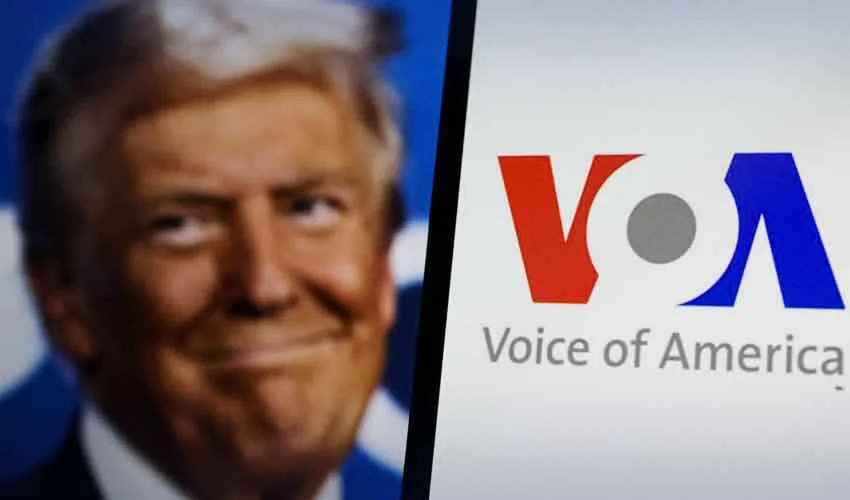

The Trump administration has informed lawmakers that it will move forward with shutting several overseas offices of Voice of America. The decision comes despite a federal judge’s ruling that directed the broadcaster to maintain its full operations. Officials described the closures as part of a broader plan to scale back US-funded international media outlets.
Notice outlines global closures
According to a report by the New York Times, a notice dated November 25 reached Congress last week. The memo was issued by Kari Lake, who leads the agency overseeing VOA and remains a strong ally of President Donald Trump. The document outlines plans to close six overseas news bureaus and four overseas marketing offices.
The closures will affect staff in Jakarta, Islamabad, Nairobi and Prague. Additionally, VOA will shut radio stations in Germany, Thailand and Botswana. Officials said broadcasting may continue through external contractors when necessary. However, they confirmed that the administration intends to significantly reduce VOA’s presence abroad.
Administration presses ahead with cuts
The Trump administration first sought to shut down parts of VOA earlier this year. Officials described the effort as a move to reduce the size of federal broadcasters and redirect resources. Other US-funded media outlets, including Radio Free Asia, have also faced proposed cuts.
However, a federal judge suspended Trump’s executive order in April. The court instructed the administration to restore VOA’s services and maintain its operations. Despite that ruling, officials are now pursuing the closures through administrative decisions rather than executive authority. Lawmakers have raised concerns about the move and questioned its compliance with the court’s directive.
Critics warn of reduced US influence
Voice of America has long provided independent news to countries with limited press freedoms. Critics of the decision warn that shuttering overseas bureaus could weaken US soft power. They argue that these closures will reduce access to reliable and uncensored information for millions of global audiences.
Supporters of the cuts maintain that VOA can continue serving its mission through remote operations. They argue that third-party contractors can handle some broadcast functions without maintaining large offices abroad. Officials said the goal remains to streamline operations while preserving essential programming.
