

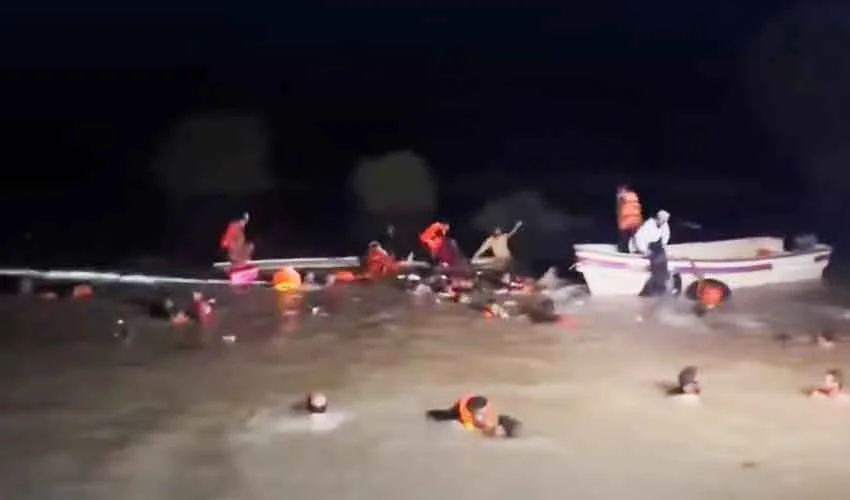

In a devastating incident that highlights the ongoing flood crisis in southern Punjab, a rescue boat carrying displaced families capsized in Jalalpur Pirwala, resulting in the tragic deaths of at least five people — including four children and an elderly woman. The accident occurred near the Wachha Sandila area in the Chenab River, where high flood levels and strong currents have submerged multiple villages and cut off thousands from immediate assistance.
Rising Waters and Rising Tragedies
The capsized boat was part of a rescue operation by Rescue 1122, tasked with evacuating flood-stranded residents from low-lying areas. Eyewitnesses and rescue officials reported that the boat, carrying over 20 people, struck a submerged tree due to reduced visibility and choppy waters. It quickly overturned before reaching safer ground. Local residents, already battling floodwaters themselves, rushed to the scene and managed to pull several survivors from the river, but five victims were pronounced dead. Among the deceased were two infants — a six-month-old and a three-month-old — along with a six-year-old girl, a 12-year-old girl, and 80-year-old Bakht Bibi.
This was not an isolated case. Similar incidents have occurred in nearby districts, where overcrowded boats, lack of trained operators, and delayed official response have led to fatal consequences. Just days earlier, boats carrying flood victims capsized in Darabpur and Noorwala villages. Although some passengers survived in those instances, lives were still lost, underscoring a pattern of risk and vulnerability in Pakistan’s rescue infrastructure.
Anger Mounts Over Delays and Poor Safety Protocols
The incident has sparked a wave of anger across the region, with citizens and civil society questioning the safety protocols in place for emergency rescue operations. Survivors and witnesses claimed that not enough life jackets were provided and that many of the boats used were not designed for heavy river currents. Local rescuers criticized the delay in deploying proper boats and trained personnel, particularly in hard-to-access rural areas.
Flood-hit families in Punjab’s southern belt have been left stranded for days, with many forced to pay private boatmen to escape rising waters. These boats, often overloaded and unregulated, increase the risk of capsizing. While the government has deployed additional rescue units and boats to the region following this latest tragedy, critics argue that response measures remain reactive rather than proactive.
The overall flood situation in Punjab remains dire. With several rivers in high flood and rainfall continuing in parts of Gilgit-Baltistan and northern Punjab, the humanitarian challenge is growing. Relief agencies estimate that thousands remain in makeshift camps, awaiting food, medical care, and permanent shelter.
