

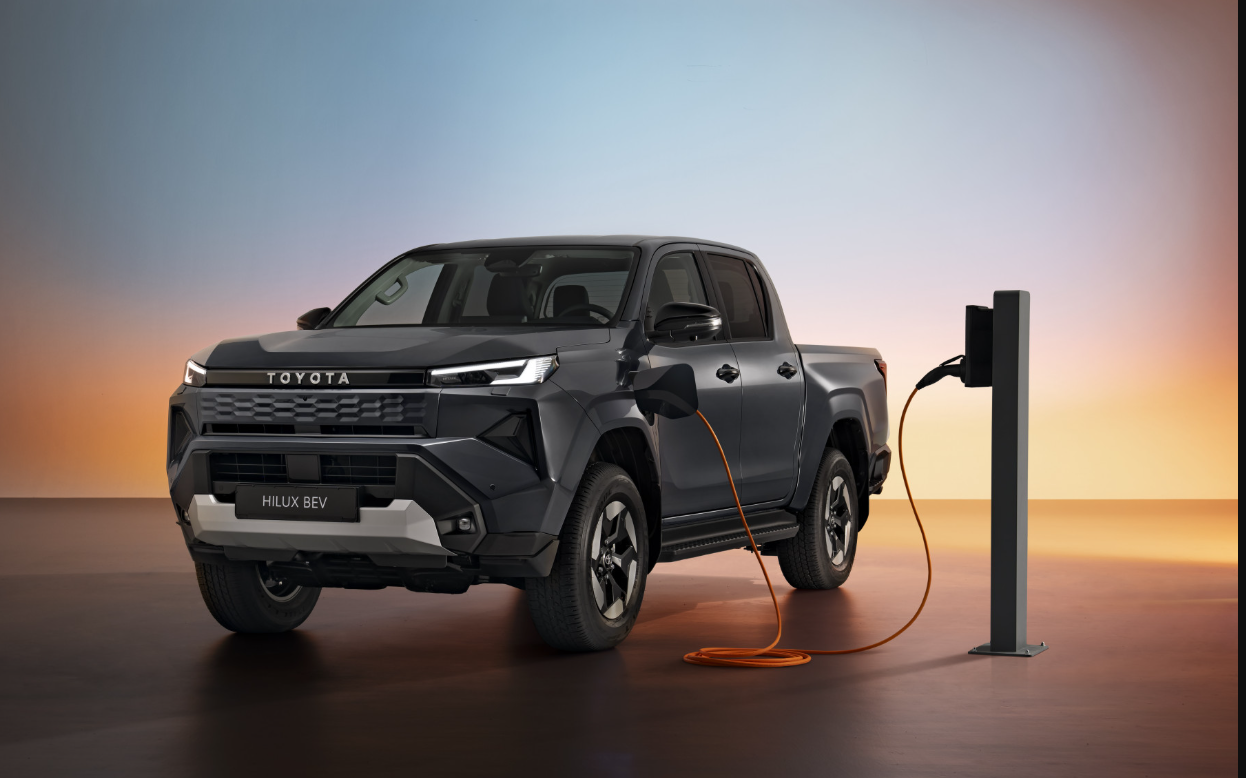

Toyota has officially revealed the all-new ninth-generation Hilux, marking a significant evolution of its iconic pick-up truck. This generation introduces battery electric (BEV) and hydrogen fuel cell variants, alongside traditional diesel and petrol engines. Designed under Toyota’s multipath philosophy, the Hilux now offers multiple powertrain options to suit diverse customer needs and local driving conditions.
The first Hilux BEV and the Hybrid 48V are set to lead the rollout, with hydrogen fuel cell versions scheduled for 2028. Toyota aims to balance Quality, Durability, and Reliability (QDR) with innovative electrification technology.
Multipath Philosophy: Tailored Powertrain Options
Toyota’s multipath approach acknowledges that a single solution cannot satisfy all drivers. Customers in Western Europe will primarily see the BEV and Hybrid 48V models, while Eastern European markets will retain diesel and petrol engines. This strategy ensures maximum market reach without compromising Hilux’s legendary toughness.
Tough and Agile Design with Enhanced Handling
The Hilux adopts a “Tough and Agile” exterior design, inspired by the latest Land Cruiser. Key updates include:
-
Slim LED headlights and a bold front grille (or aero design on BEV)
-
Redesigned side and rear steps for convenience
-
Double Cab body style as standard
Inside, the cabin features a 12.3-inch customizable driver combimeter and central touchscreen, a horizontally designed console, and central AWD/off-road controls. The BEV model integrates a single-action shift-by-wire drive selector. Wireless charging, new USB ports, and connectivity via the MyToyota app enhance user experience.
Advanced Safety and Driver Assistance
The Toyota T-Mate package is significantly upgraded. New features include:
-
Low Speed Acceleration Suppression
-
Proactive Driving Assist
-
Emergency Driving Stop System
-
Blind Spot Monitor, Safe Exit Assist, and Driver Monitor Camera
Additionally, electric power steering improves handling and reduces kick-back during off-road driving. Over-the-air updates ensure safety and performance features remain current.
The Hilux BEV: Zero-Emission Power
The battery electric Hilux introduces zero-emission capability without compromising off-road performance. Key specs include:
-
59.2 kWh lithium-ion battery
-
Front and rear eAxles for permanent AWD
-
Approx. 240 km WLTP range
-
Payload ~715 kg, towing up to 1,600 kg
The BEV maintains body-on-frame construction and is designed for off-road durability, including wading capability equivalent to ICE models. Multi-Terrain Select adapts torque and braking for varied terrains, making the BEV as capable as traditional models.
Hilux Hybrid 48V: Versatile and Efficient
The Hybrid 48V system combines a 2.8-liter engine with a 48V motor-generator. Positioned under the rear seats, the battery preserves interior space. This model:
-
Supports up to 1-ton payload
-
Tows trailers up to 3,500 kg
-
Maintains 700 mm wading depth
It delivers smooth, quiet, and refined on-road and off-road performance, enhanced by Multi-Terrain Select and optional Panoramic View Monitor. Production begins in Spring 2026, making it the volume-seller in Europe.
Continuing ICE Models and Future Hydrogen Hilux
Traditional diesel and petrol engines remain available in Eastern European markets, ensuring regional preferences are met. Toyota also confirmed a hydrogen fuel cell Hilux for 2028, emphasizing the brand’s commitment to clean energy and wider hydrogen infrastructure deployment.
The all-new Toyota Hilux sets a new benchmark for pick-up trucks by combining advanced electrification, hybrid versatility, and traditional ICE reliability. With cutting-edge design, superior off-road capability, and innovative safety technologies, the Hilux is prepared to meet the evolving demands of global customers.
