

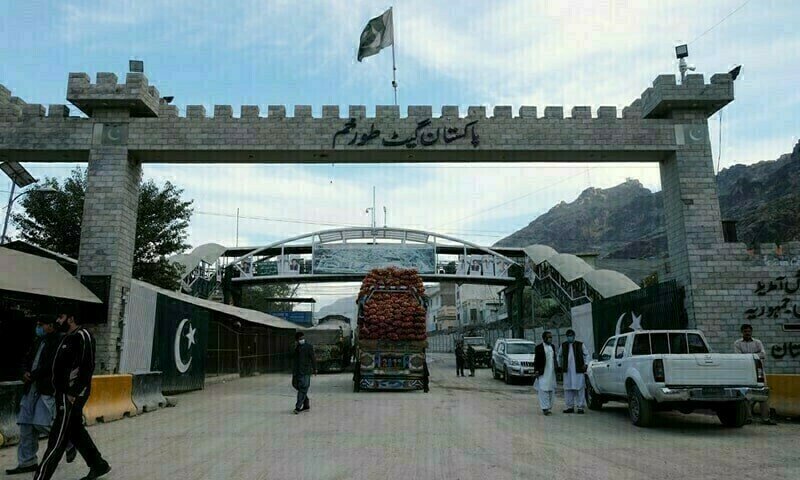

Pakistan and Afghanistan have agreed to a ceasefire on the Torkham border, effective until March 11, following a jirga meeting aimed at reducing tensions between the two nations’ forces.
The ceasefire decision was made after a meeting at the border involving tribal elders, traders, and representatives from both countries. The jirga from Khyber district included 40 members, comprising tribal leaders, scholars, and traders, while the Afghan delegation consisted of 25 members.
As part of the agreement, military construction on both sides of the border will be prohibited during the ceasefire. On March 11, the jirga will assess the disputed construction activities by Afghan forces, and a decision will be made regarding the reopening of the Torkham trade crossing once these disputes are resolved.
Security Situation in Kurram District Remains Critical
Meanwhile, the security situation in the Kurram district remains unstable, with the Thal Parachinar main highway and the Kharlachi border closed for the past 162 days. As a result, basic necessities have become scarce, and prices have surged drastically.
Essential items such as sugar, flour, ghee, and cooking oil are in short supply, with a 50kg bag of sugar now selling for Rs 13,000. The price of ghee has risen to Rs 500, butter to Rs 800, onions and tomatoes to Rs 300 per kilo, and oranges to Rs 600 per dozen. The cost of meat has also soared, with small meat priced at Rs 2,500 and bone-in meat at Rs 1,500.
The scarcity of petrol and diesel has made transportation difficult, especially for students and teachers. With attendance in schools and colleges remaining under 10%, teacher unions have called for the authorities to ensure fuel supply for students and teachers, as petrol and diesel are currently priced at Rs 1,000 per litre.
The closure of the Kharlachi border has also halted trade activities, resulting in billions of rupees in losses for traders. The trade union in Parachinar has urged the reopening of the Kharlachi border to resume all trade activities.
