

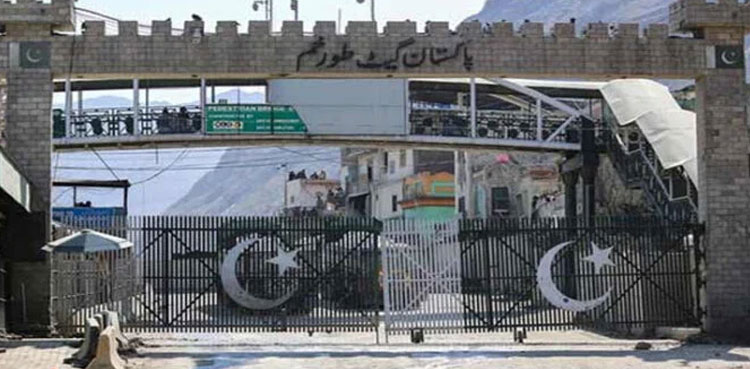

ISLAMABAD: The Foreign Office (FO) announced on Thursday that the closure of the Pakistan-Afghanistan Torkham border is “temporary,” and a decision on reopening it will be made based on developments in the coming days.
Pakistani and Afghan border forces had a skirmish on September 6, which caused injuries to at least two individuals, including a Frontier Corps (FC) official, resulting in the closure of the Torkham border.
Pakistan officials blamed the other side for initiating the daytime clash, which lasted for approximately two hours. It occurred after Afghan authorities began constructing a checkpoint in a restricted area near the main border crossing.
Although Afghan authorities already had a checkpoint known as the Larram Post in the vicinity, they initiated the construction of another post on a small hill without consulting with the Pakistani side.
On September 11, a meeting between Pakistani and Afghan border security officials to reach an agreement on reopening the border ended inconclusively.
Political activists, transporters, traders, Customs clearing agents, laborers, and representatives of local organizations held a protest against the extended closure of the Torkham border a day prior. They viewed the border closure as detrimental to people engaged in bilateral trade and manual labor. Protesters threatened to stage an indefinite sit-in at Zero Point if authorities did not reopen the border crossing within two days.
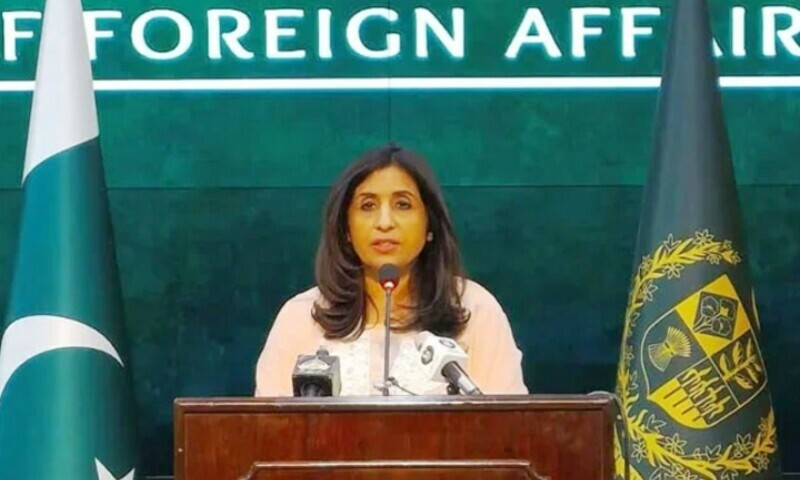
During a weekly press briefing, FO Spokesperson Mumtaz Zahra Baloch stated that Pakistan has been implementing the Afghanistan and Pakistan Transit Trade Agreement, signed in 2020, “in good faith.” She emphasized Pakistan’s commitment to facilitating its landlocked neighbor’s access to global trade.
Security Concerns Amidst Border Closure
Baloch also mentioned concerns about the misuse of the transit trade agreement, particularly the diversion of exports meant for Afghanistan back to Pakistan without paying the required customs duties and taxes. She indicated that Pakistan would engage with the Afghan government to address these concerns.
In response to a question about the border closure, Baloch expressed Pakistan’s concerns about security threats originating from Afghanistan, citing a September 6 incident in Chitral where militants attempted to enter Pakistan from Afghanistan. Afghan interim authorities must ensure that they do not allow the terrorists to use Afghan territory to threaten Pakistan, she emphasized.
The FO further stated that Afghan refugees found to have links to terrorism would face legal action in accordance with the law.
In a separate statement, Afghanistan’s Ministry of Foreign Affairs reported a meeting between Pakistan’s Chargé d’Affaires to Afghanistan and Afghanistan’s Foreign Minister. They discussed recent increases in terror incidents, the Torkham border closure, arrests of Afghan migrants in Pakistan, and transit issues for Afghan traders in Karachi. Both parties pledged to take immediate steps to address these problems and prevent future incidents.
