

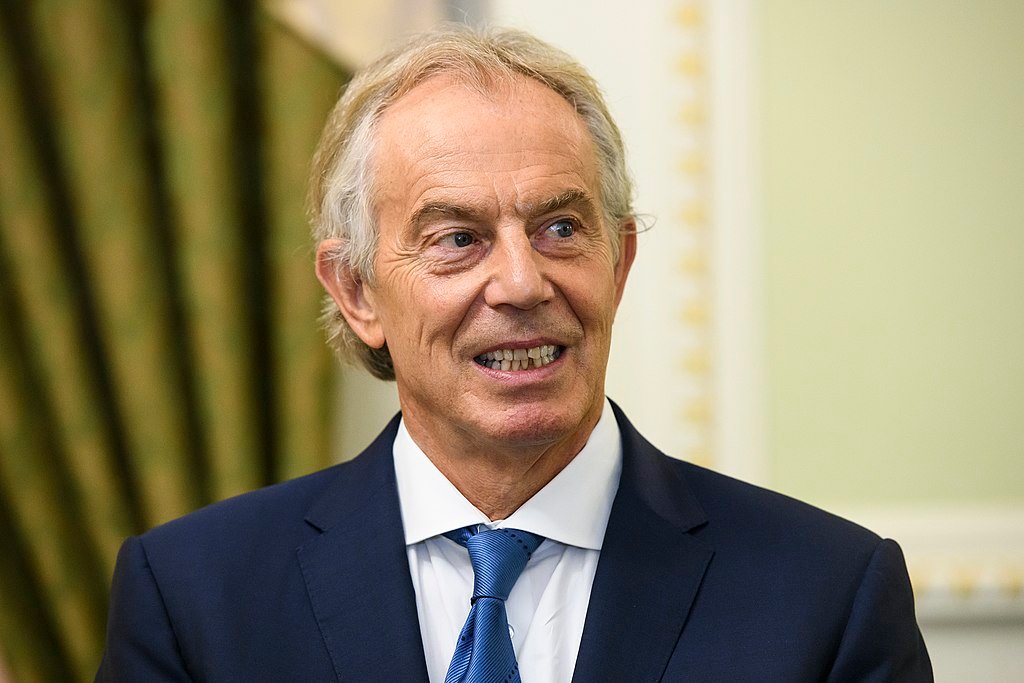

Former United Kingdom Prime Minister Tony Blair is reportedly being considered for a central role in a proposed Gaza transitional authority. The plan is part of a United States-led initiative designed to establish a temporary governing body for the Palestinian territory once the ongoing conflict subsides.
Blair has held discussions with American officials and other stakeholders regarding the structure of this transitional authority. Reports suggest that the initiative could receive support from both the United Nations and Gulf nations. Although the Tony Blair Institute for Global Change has not commented on these reports, sources familiar with the matter indicated that Blair has engaged in efforts aimed at halting the conflict and preparing for post-war governance.
Blair is no stranger to Middle East diplomacy. From 2007 until 2015, he served as a peace envoy representing the Quartet on the Middle East, which included the United Nations, the United States, the European Union, and Russia. His past experience, combined with his political stature, makes him a strong candidate for such a role. However, his involvement may also ignite controversy given his role in the 2003 Iraq invasion, a decision widely criticized after an official UK inquiry concluded that he acted on flawed intelligence.
According to reports, the proposed body would operate as the “Gaza International Transitional Authority.” It would seek a formal mandate from the United Nations and serve as the supreme political and legal authority in Gaza for a period of five years. After that, control would be transferred to the Palestinian people.
The authority’s structure is expected to include a secretariat of up to 25 members and a supervisory board of seven individuals. Initially, the headquarters would be set up in Egypt near Gaza’s southern border. Once conditions allow, the body would relocate to Gaza itself.
Supporters of the idea argue that such an arrangement could bring stability to Gaza during a highly volatile time. Former Israeli intelligence chief Yossi Cohen praised Blair personally, describing him as capable of handling this sensitive responsibility.
Despite the optimism of some, there are concerns about how the plan might unfold. Blair himself has reportedly rejected any suggestions of permanently displacing Gazans, insisting that the ultimate goal should be the return of governance to the Palestinian Authority in Ramallah. Nonetheless, controversy surrounds parallel proposals linked to transforming Gaza economically. Former U.S. President Donald Trump has publicly suggested turning Gaza into what he described as the “Riviera of the Middle East.” Critics warn that such visions may imply forced displacement of Palestinians, a scenario fiercely opposed by human rights advocates and Palestinian leaders alike.
Blair’s potential leadership of this transitional body remains under discussion. While his supporters see him as an experienced mediator with strong international networks, his detractors highlight his controversial legacy from past conflicts. Whether or not Blair ultimately accepts a role, the very idea reflects ongoing attempts by international powers to shape Gaza’s post-war future.
