

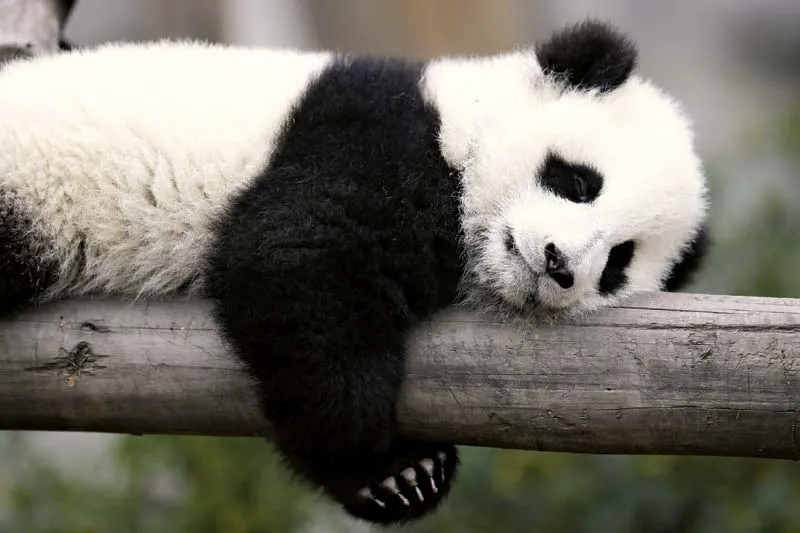

They are furry, fluffy, and undeniably adorable—giant pandas, the universal symbol of friendship in a world often divided.
So it’s no surprise that the arrival of two giant pandas in the United States made headlines, celebrated as the latest chapter in China’s successful “panda diplomacy.” Three-year-old Bao Li, meaning “precious vigour,” and female Qing Bao, or “green treasure,” landed in Washington, D.C., on Tuesday, where they will reside for the next ten years at the Smithsonian’s National Zoo.
The pair traveled from China on a FedEx cargo plane aptly named the “Panda Express.”
In a statement, the China Wildlife Conservation Association expressed optimism about this new phase of U.S.-China cooperation in giant panda conservation, emphasizing the potential for advancements in disease prevention, scientific exchanges, and wild panda conservation within the Giant Panda National Park.
Their arrival fills the gap left by the previous pandas at the zoo—Mei Xiang, Tian Tian, and their cub Xiao Qi Ji—who returned to China last November when their loan agreement expired.
A Symbol of Goodwill
This new chapter in panda exchanges reflects China’s longstanding strategy of promoting international goodwill through these beloved animals, a tradition that has often transcended political differences. The practice began in 1972 when China loaned pandas to the U.S. following President Richard Nixon’s historic visit to Beijing.
Over the years, pandas have served as cultural ambassadors, bridging divides even amid strained international relations. Despite ongoing challenges, such as trade disputes and geopolitical tensions, these pandas symbolize cooperation between the two nations.
Their arrival comes just weeks before the U.S. presidential election, prompting speculation about its diplomatic timing. Some believe this exchange may be part of China’s broader effort to maintain cultural ties and soft power, even as contentious issues loom over U.S.-China relations.
According to the World Wildlife Fund (WWF), the wild population of giant pandas reached around 1,860 by 2014, marking a 17% increase from the previous decade. In recognition of these conservation efforts, Chinese officials reclassified the species from ‘endangered’ to ‘vulnerable’ in 2021, a significant milestone for the protection of these iconic animals.
