

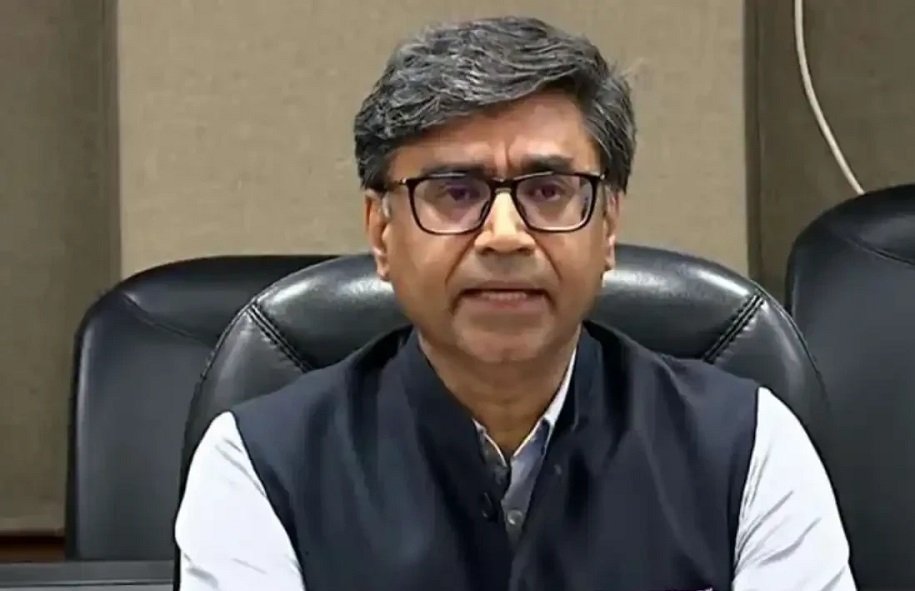

Indian Foreign Secretary Vikram Misri has publicly acknowledged that the recent four-day conflict between India and Pakistan concluded without any threat or indication from Pakistan regarding the use of nuclear weapons.
The statement, viewed as a significant admission, affirms that the military exchange remained firmly within the conventional warfare domain, underscoring that Pakistan matched India in conventional military capability during the confrontation.
Addressing a parliamentary panel investigating the Pahalgam attack, Misri clarified that despite elevated tensions, there was “no nuclear signaling” from Pakistan — a notable point, especially in light of public comments made by Pakistani officials during the conflict.
Misri further stated that the Modi government dismissed the idea of U.S. mediation, maintaining that the ceasefire was a “bilateral matter” between New Delhi and Islamabad. This comment appeared to refute American claims of brokering the de-escalation.
Responding to committee members who cited U.S. involvement, Misri reaffirmed that the decision to cease hostilities was made jointly by India and Pakistan, without any external diplomatic intervention.
Chinese Weapon Systems Not a Factor
On the subject of Pakistan’s use of Chinese-made military weapons, Misri downplayed their significance, asserting that the origin of Pakistan’s arms had no bearing on the outcome.
Clarification on Kirana Hills
In response to a reporter’s query, Misri acknowledged that India had not been aware of the presence of nuclear infrastructure at Kirana Hills, and confirmed that the site was not targeted during the hostilities — further underlining India’s intent to avoid nuclear escalation.
Ceasefire Finalized Through Military Channels
According to Indian media, Directors General of Military Operations (DGMOs) from both sides reached an agreement to suspend military actions on May 10, formally ending the intense but brief confrontation.
The skirmish erupted following the Pahalgam attack, prompting India to initiate “Operation Sindoor” on May 7. Pakistan responded swiftly and decisively after Indian missile strikes, retaliating by targeting 26 Indian military sites, as later confirmed by Indian sources.
While a ceasefire announcement was attributed to then U.S. President Donald Trump, Misri’s remarks reaffirm India’s stance that the de-escalation was mutually agreed upon, not externally enforced.
Following the announcement of the ceasefire, Misri faced criticism online, with some accusing him of conceding too much. Meanwhile, Pakistan reported the loss of 40 civilians and 11 personnel, according to the Inter-Services Public Relations (ISPR).
The recent developments have reopened discussions around nuclear restraint, conventional deterrence, and the fragile nature of peace in South Asia’s most volatile flashpoint.
