


Venice Film Festival: “Echoes of Silence”
The Voice of Hind Rajab: “A Child’s Cry That Shattered the World”
An article written and researched by HINA KASHIF
The 82nd Venice International Film Festival is organised by La Biennale di Venezia and directed by Alberto Barbera. It ran on the Lido di Venezia from 27 August to 6 September 2025. The Festival is officially recognized by the FIAPF (International Federation of Film Producers Association).
Venice International Film Festival. The Venice International Film Festival is the oldest film festival in the world and one of the most prestigious.
The Venice International Film Festival is the oldest film festival in the world and one of the most prestigious. The festival was organized for the first time in 1932, under the auspices of the President of the Biennale, Count Giuseppe Volpi di Misurata, the sculptor Antonio Maraini, and Luciano De Feo and obtained a great popularity, so as to become an annual event from 1935 onwards. The Venice Film Festival is today a prestigious event that presents every year a selection of world-class films, bringing some of the most successful directors and actors of our time on the red carpet at Lido di Venezia, continuing the tradition that adds the glamour charm that always marked the Festival to a high artistic value program.
The 82nd Venice Film Festival may have drawn its final curtain, but the buzz is far from over. From unexpected wins to red carpet surprises, this year’s edition left people talking — about the movies, the stars, the politics, and yes, the Oscar race.
Surprise Winners and a Global Shift in the Spotlight
The festival’s top prize, the Golden Lion, went to Jim Jarmusch’s understated and poetic Father Mother Sister Brother. It wasn’t the obvious frontrunner — many had their bets on The Voice of Hind Rajab, which ended up with the Grand Jury Prize, or No Other Choice. But Jarmusch’s film quietly resonated with the jury and marked a return to character-driven storytelling.
While Hollywood didn’t dominate the awards, the international presence was strong and refreshing. Benny Safdie did snag Best Director for The Smashing Machine, but beyond that, the spotlight shifted. Chinese actress Xin Zhilei took Best Actress for her role in The Sun Rises on Us All, Toni Servillo (Italy’s national treasure) won Best Actor for La Grazia, and Switzerland’s Luna Wedler was named this year’s breakout star with the Marcello Mastroianni Award for Silent Friend.
Seth Rogen’s Mystery Visit and a Versace Style Swap
Every year, there’s at least one unexpected celebrity presence in Venice — this year, it was Seth Rogen. Despite having no film in competition, he was seen at red carpets, press events, and after-parties. Rumor has it he’s gathering material for The Studio, his upcoming series. Whether it was research or just an elaborate hangout, his presence sparked plenty of chatter.
In another moment of viral charm, Amanda Seyfried and Julia Roberts had a mini fashion moment. It started when Seyfried commented on Julia’s Instagram post asking to borrow her Versace blazer outfit. Just days later, she turned up in the exact look — same blazer, shirt, jeans, and belt — just with a twist in the footwear. The secret behind the fashion déjà vu? They share a stylist: Elizabeth Stewart.
Gaza War Film The Voice of Hind Rajab Wins Silver Lion at Venice Film Festival, Spotlighting Tragedy and Global Conscience
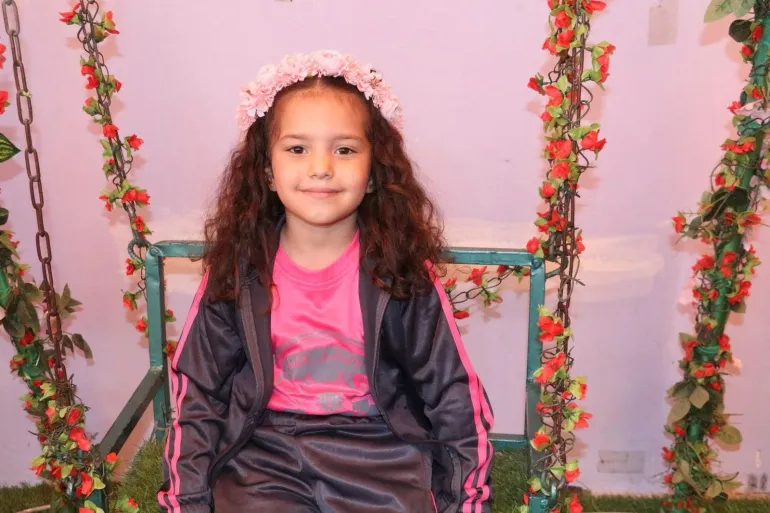
In one of the most emotionally charged moments of the 82nd Venice Film Festival, French-Tunisian director Kaouther Ben Hania’s The Voice of Hind Rajab took home the Silver Lion Grand Jury Prize, earning critical acclaim and a historic 23-minute standing ovation. The film, a haunting blend of documentary and drama, tells the true and heart-wrenching story of five-year-old Hind Rajab, a Palestinian child killed during Israel’s military assault on Gaza.
Ben Hania’s film lost the top Golden Lion prize to Jim Jarmusch’s Father Mother Sister Brother, but for many, The Voice of Hind Rajab was the emotional centerpiece of the festival — both artistically and politically.
A Child’s Voice Heard Across the World
“She Just Wanted to Live”: Heartbreaking Film on Hind Rajab Leaves Venice in Tears
It wasn’t just another movie premiere at the Venice Film Festival. It was something far deeper, far heavier — a shared moment of sorrow that left the room in silence, then in tears.
The Voice of Hind Rajab, directed by French-Tunisian filmmaker Kaouther Ben Hania, tells the true and unbearably tragic story of Hind Rajab, a five-year-old Palestinian girl who was killed in Gaza while pleading for help over the phone. The film doesn’t just recount her final moments — it lets us hear them.
Using real audio from Hind’s desperate phone call to the Palestine Red Crescent Society, the film puts viewers in the front seat of her final hours — trapped in a bullet-ridden car, surrounded by the bodies of her aunt, uncle, and cousins, all killed by Israeli fire. Her tiny voice, trembling with fear, kept asking if help was coming.
But help never made it.
Two ambulance workers were sent to find her. They were killed too.
When the film ended, there was no rush to clap — just silence. Then, slowly, the audience rose to their feet. The applause began softly, mixed with sniffles and sobs. For 23 minutes, people stood — not to celebrate, but to mourn. Some wept openly. Strangers embraced. It became a moment of collective heartbreak that went beyond cinema.
Ben Hania, accepting the flood of emotion, later said:
“Cinema cannot bring Hind back. But maybe it can make the world hear her. Maybe it can keep her voice alive.”
It’s hard to explain how a film can leave a room full of people feeling such deep grief for a child they never met. But Hind’s story — her innocence, her fear, her final plea — pierced through politics and screens and reached something profoundly human.
She wasn’t a symbol. She was just a little girl who wanted to live.
And for 23 minutes, the world stood still — listening to her voice echo long after it had been silenced.
Ben Hania incorporated real audio recordings of Hind’s calls into the film, giving the child a voice even in death. In her acceptance speech, the director said, “Cinema cannot bring Hind back, nor can it erase the atrocity committed against her. But it can preserve her voice — it can make it resonate across borders.”
She called for international accountability, stating, “Hind’s story is not just about one little girl — it’s the story of an entire people enduring genocide.”
Politics, Protest, and a Festival Changed by Gaza
The war on Gaza, which has reportedly claimed over 64,000 Palestinian lives, including more than 18,000 children, loomed heavily over this year’s festival. Even outside the cinema halls, protests, political speeches, and moments of solidarity underscored the humanitarian crisis unfolding in real time.
Jim Jarmusch, whose film won the Golden Lion, made his position clear by wearing a badge that read “Enough” at the awards ceremony — a silent protest against the ongoing bombardment of Gaza. Earlier, the director expressed unease over one of his film distributors having ties to companies linked to the Israeli military.
Other award winners also used their moments in the spotlight to speak out. Toni Servillo, who won Best Actor for La Grazia, saluted activists aboard a flotilla attempting to break the Israeli blockade of Gaza. “They have decided to set sail with courage,” he said, “to bring a sign of humanity to a land where human dignity is daily and cruelly demeaned.”
Annapurna Roy, the Indian filmmaker who won Best Director in the Horizons sidebar for Songs of Forgotten Trees, didn’t mince words: “Every child deserves peace, freedom, and liberation — Palestine is no exception. I might upset my country, but it doesn’t matter to me anymore.”
Maryam Touzani, who took home the Armani Beauty Audience Award for Calle Málaga, also spoke emotionally: “How many mothers have been made childless? How many more until this horror is brought to an end?”
Awards, Surprises, and Snubs
In other categories, Xin Zhilei of China was awarded Best Actress for her role in The Sun Rises On Us All, a layered drama about guilt, love, and sacrifice. Benny Safdie earned the Best Director prize for The Smashing Machine, a gritty portrayal of MMA fighter Mark Kerr, played by Dwayne “The Rock” Johnson.
The Special Jury Prize went to Gianfranco Rosi for his black-and-white documentary Below the Clouds, a raw and poetic depiction of life in earthquake-prone Naples.
However, not everyone walked away with recognition. High-profile entries like Kathryn Bigelow’s A House of Dynamite, Guillermo del Toro’s reimagining of Frankenstein, and Noah Baumbach’s Jay Kelly left Venice empty-handed. So did acclaimed films like No Other Choice by Park Chan-wook and Bugonia by Yorgos Lanthimos, despite glowing reviews.
Cinema as Resistance
This year’s Venice Film Festival felt different. More than just a launchpad for Oscar contenders, it became a space for urgent global storytelling and bold political statements. At the heart of it was The Voice of Hind Rajab — not just a film, but a symbol of how art can humanize even the darkest tragedies.
As Ben Hania said in her closing words, “Her voice will continue to echo — until justice is real, and until silence is no longer an option.”
Heartbreaking Tribute: The Voice of Hind Rajab Ignites Venice with a 23-Minute Standing Ovation for a Lost Child’s Last Plea
At the film’s premiere, the atmosphere was charged with emotion and solidarity. Audience members waved numerous Palestinian flags, and chants of “Free Palestine” echoed through the theater during the standing ovation. Among those present were executive producers Joaquin Phoenix and Rooney Mara, who joined the filmmakers on the red carpet, holding a poignant photo of Hind Rajab. Phoenix also wore an Artists for Ceasefire pin, visibly showing his support for peace.
During the applause, actor Motaz Malhees moved into the crowd, grabbing a Palestinian flag which he proudly waved, sparking even louder cheers from the audience. The scene was powerful—a clear expression of unity and resistance.
Even before the film’s first official screening, many festival-goers had already pegged The Voice of Hind Rajab as a leading contender for the Golden Lion, Venice’s highest honor. The overwhelmingly emotional reaction at the premiere only reinforced these predictions.
At the film’s press conference earlier that day, which opened with a long standing ovation from attendees, star Saja Kilani delivered a moving statement on behalf of the entire creative team. She implored, “Isn’t it enough? Enough of the mass killing, starvation, destruction, dehumanization, and ongoing occupation.”
Kilani spoke with profound sorrow, explaining that Hind’s story wasn’t just about one child but carried “the weight of an entire people.” She reminded the room that Hind’s voice represented over 19,000 children who have lost their lives in Gaza in just the past two years. Each child symbolizes a mother, a father, a teacher, an artist, a volunteer—people who deserved to live, dream, and exist with dignity, but whose stories have been silenced.
She added, “Hind’s story is about a child crying out, ‘Save me.’ The haunting question is: how have we allowed a child’s desperate plea for life to go unheard? No one can truly live in peace while even one child is still fighting to survive. Let Hind Rajab’s voice echo through every theater, reminding us of the silence the world has built around Gaza. Let it name the genocide that silence protects and pierce through the word: enough.”
As the Venice Film Festival commenced, the film gained support from big names like Brad Pitt, Joaquin Phoenix, and Rooney Mara, who came on board as producers. Phoenix and Mara stood alongside the filmmakers during the press conference to show their solidarity.
When asked if their involvement signaled that Israeli Prime Minister Benjamin Netanyahu was “losing the culture war” in Hollywood, director Kaouther Ben Hania expressed hope that their participation would carry meaningful weight. “We’ve seen a narrative emerge worldwide that those dying in Gaza are just collateral damage,” she said with visible passion. “This is so deeply dehumanizing. That’s why cinema, art, and every form of expression are so important — to give these people a voice and a face.”
Gal Gadot Skipped Venice Film Festival Amid Backlash Over Israel-Gaza Stance
Israeli actress Gal Gadot chose not to attend the 82nd Venice Film Festival, a decision made amid mounting international backlash over her perceived support for Israel during its ongoing military operations in Gaza. Her absence came at a pivotal moment, just as her latest film, The Hand of Dante, co-starring Gerard Butler, premiered at the prestigious Italian festival.
According to reports from RadarOnline, the 40-year-old actress had faced increasing pressure from pro-Palestinian advocacy groups, particularly those affiliated with the growing Artists for Palestine campaign. These groups had accused certain artists, including Gadot, of showing “active support for genocide” and called on the Venice Biennale — the organization that oversees the festival — to revoke invitations to any such individuals.
Festival organizers reportedly feared that Gadot’s presence could incite protests or disruptions, especially during the film’s red carpet premiere scheduled for Saturday. In response, the festival significantly tightened its security protocols, creating a “ring of steel” around key venues, with enhanced screening procedures, body scanners, and restricted access for all guests and staff.
Despite initial uncertainty, Festival Director Alberto Barbera officially confirmed that Gadot would not be in attendance. He acknowledged the sensitivity surrounding her involvement and emphasized the festival’s commitment to remaining a platform for artistic expression, even amid geopolitical controversies.
“We are a place of openness and debate, not censorship,” Barbera stated during a press conference. “But we also clearly express our grief for the suffering and deaths of civilians, especially children, in Palestine.” His remarks attempted to balance the festival’s cultural mission with the growing public concern over the humanitarian crisis in Gaza.
Isabella De Monte, a member of the Italian Parliament and a senior figure in Forza Italia’s Foreign Affairs Department, criticized the movement to exclude Gadot, labeling it as “reckless and politically motivated.” She argued that the actress was being targeted simply for her nationality and stressed the importance of dialogue, inclusion, and cultural pluralism within the arts.
Snow White Drama and Public Silence Add to Controversy
Gadot’s Venice absence came on the heels of other recent controversies. She had previously been involved in a rumored feud with actress Rachel Zegler, her co-star in Disney’s much-maligned live-action Snow White remake. The film faced widespread criticism, and reports of behind-the-scenes tensions between the lead actresses added fuel to the fire. Although neither star publicly addressed the conflict, the media frenzy further complicated Gadot’s public image.
Throughout both the Snow White backlash and the Venice controversy, Gadot maintained public silence, declining to comment on either issue. As a result, speculation around her political views and professional relationships continued to swirl. While The Hand of Dante moved forward without its leading lady, her absence became one of the most talked-about storylines of the festival.
Despite not stepping foot on the red carpet, Gadot’s name remained at the center of Venice’s conversations — a reflection of the complex intersection between celebrity, politics, and global conflict in today’s cultural landscape.
