

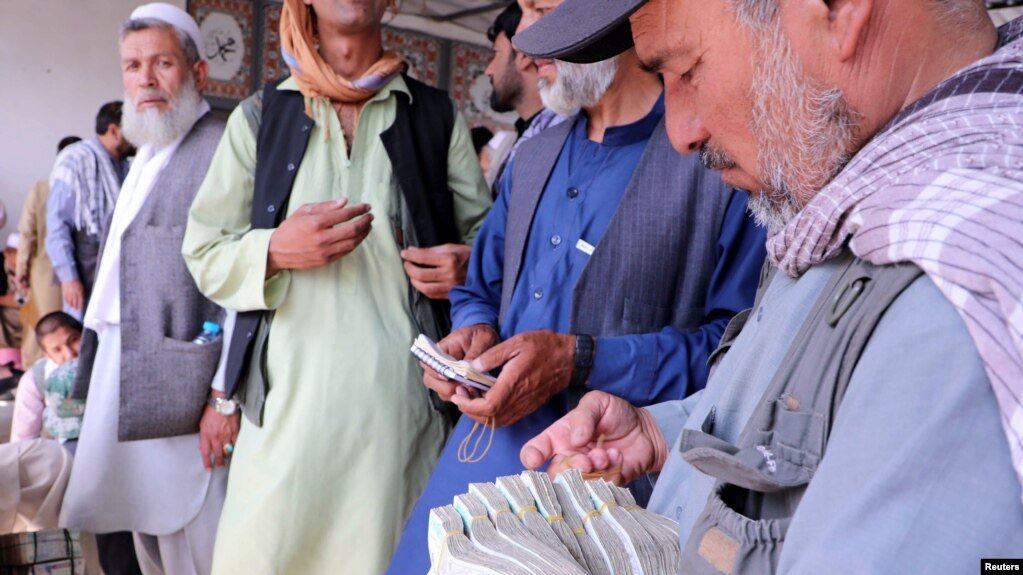

United Nations: Highlights that the Afghan economy, particularly regions impacted by the severe earthquakes in October last year, are still facing challenges. The UN Development Programme (UNDP) stated this on Thursday, emphasizing how ongoing limitations on women and girls’ rights continue to hinder their fundamental freedoms and impede economic growth.
The United Nations Development Programme (UNDP) has reported that the Afghan economy, particularly the regions impacted by the devastating earthquakes in October last year, is still experiencing significant challenges. As restrictions on women and girls persist, hindering basic rights and economic progress, the situation remains dire.
Kanni Wignaraja, Director of UNDP’s Regional Bureau for Asia and the Pacific, shared her recent observations after visiting Afghanistan. She stated that 69% of the population is “subsistence insecure,” meaning they lack adequate basic resources. Wignaraja also highlighted the severe consequences of continuous natural disasters on the country, with many regions facing a “dramatic” scarcity of water, further impeding development efforts.
Since the Taliban took control in 2021, Afghanistan’s economy has contracted by 27%, leading to economic stagnation. Unemployment rates have doubled, and now only 40% of the population has access to electricity.
In various sectors, including finance, the economy has faced significant challenges, with limited economic activities like exports and public spending. Small and medium enterprises (SMEs) and farmers now serve as the backbone for this struggling economy.
Additionally, concerns have been raised regarding the impact on women and girls. The Taliban has imposed strict limitations on women, such as dress codes and employment opportunities across multiple sectors. Although they can work without restrictions in sectors like health and nursing, their employment in the public sector has decreased to approximately six percent, as stated by Ms. Wignaraja.
“The most significant obstacle is the ongoing decree prohibiting girls’ education. Being unable to progress beyond the sixth grade is a considerable hindrance,” she emphasized. She further explained that no girl graduated high school last year, making it difficult for them to transition from sixth grade to attending technical colleges, universities, or pursuing medical careers.
The UNDP official also highlighted the difficulties faced by local economies, particularly in the private sector, due to insufficient capital. UNDP is aiding microfinance projects; however, the lack of funds circulating in the system means the outcomes do not meet the necessary magnitude and extent to stimulate growth.
She conveyed optimism that the recent financial support from the World Bank for climate initiatives might inspire additional global investments in this area. Expressing her belief in community involvement, she stated, “We can still work directly with the community to make this happen.”
Ms. Wignaraja also visited Herat province, which was severely affected by last October’s earthquakes. Upon observing the stark differences between various villages, she mentioned her conversations with villagers, where she found some still living in tents without access to water, while others were gradually constructing permanent homes.
In summary, the UNDP official emphasized the importance of revitalizing household and local economies. She mentioned that people cannot sustain living in tents due to harsh conditions, like sandstorms. To address this, the UNDP is supporting around 75,000 women-owned and women-led micro and small businesses. These businesses, on average, employ six additional women and young individuals per enterprise, ultimately benefiting approximately 4.5 million people by supporting their households.
The UNDP official highlighted their modest investment in women’s businesses, spending around $42 per month on average. She commended the resilience and courage displayed by these female entrepreneurs. Through supporting women farmers, traders, and implementing direct cash assistance and household social protection programs, UNDP has managed to reach a significant portion of women in Afghanistan, accounting for one-quarter of the female population. She confidently stated that the nation’s progress will be shaped by these women’s boldness and determination.
