

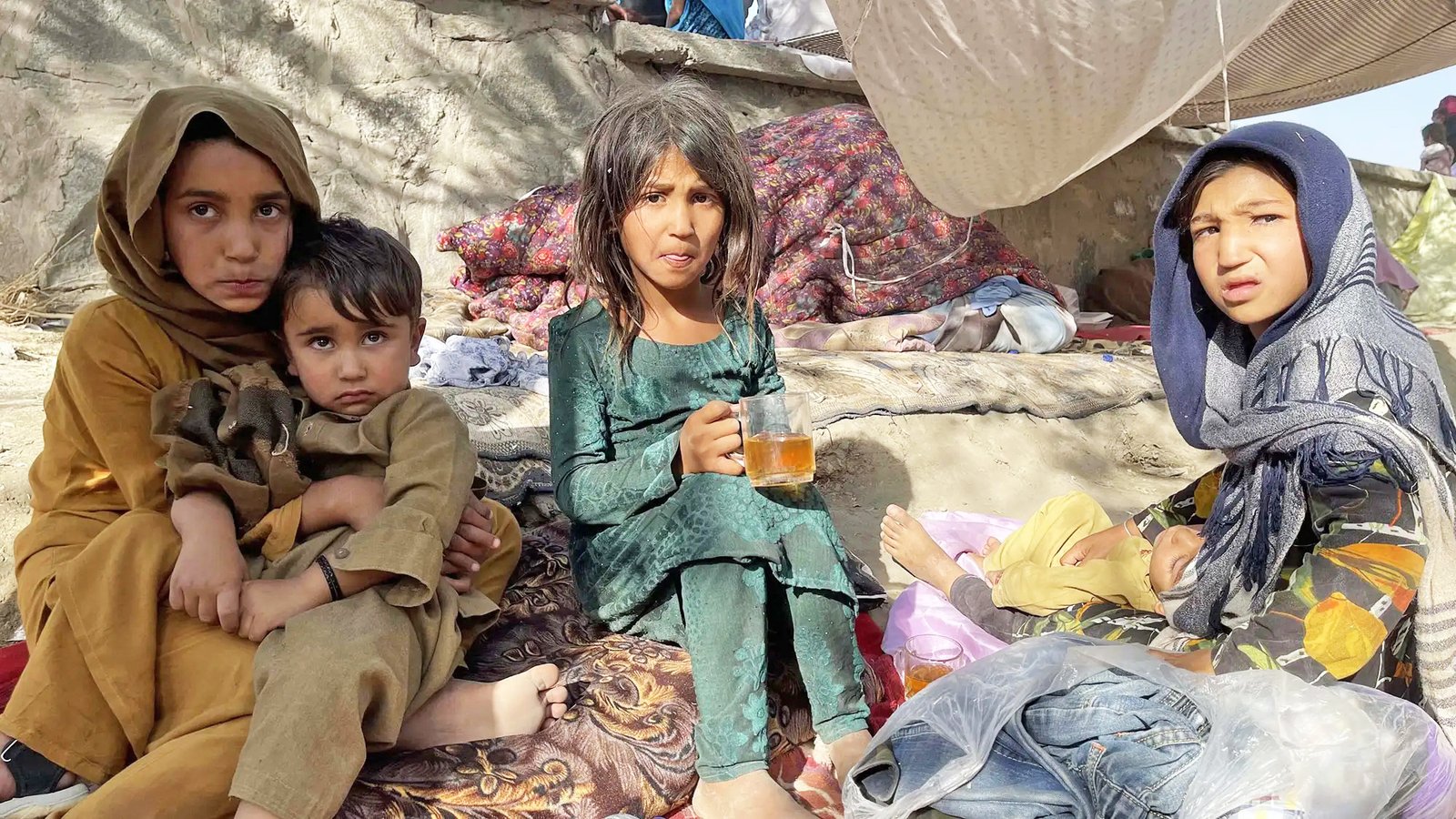

The harsh Afghan winter is just round the corner but with the country’s economy in tatters, the financial system broken down, billion of dollars in Afghan assets abroad frozen, and international community in no hurry to accord diplomatic recognition to their Taliban rulers, the people of the war-ravaged country are in no shape to weather it. No country is ready to go solo in recognising the Taliban government, with everybody waiting for a broad consensus on the matter to emerge.
Many high level meetings have been organised by the international and regional groups to sort out the matter without any success. In their first direct contact with Taliban representatives in Doha, Qatar since Taliban’s rise to power in Afghanistan, US diplomats made amply clear Washington is not in a hurry to recognise the Taliban government.
The resumption of direct contact between the US and the Taliban is a good omen, but the delay in recognising the Kabul government is neither in the interest of the US led international community nor for the Afghanistan.
The renewed US-Taliban talks continued for three days in the Doha, Qatar. Both sides termed the first direct negotiations as positive and held in a cordial atmosphere with a pledge to continue the talks.
In a statement, a State department spokesman Ned Price said the interagency delegation met with senior Taliban representatives in the capital Doha on Saturday and Sunday, their first meeting since the US troop withdrawal from Afghanistan in August.
“The U.S. delegation focused on security and terrorism concerns and safe passage for U.S. citizens, other foreign nationals and our Afghan partners, as well as on human rights, including the meaningful participation of women and girls in all aspects of Afghan society,” said Price.
The two sides also discussed the US’ provision of robust humanitarian assistance directly to the Afghan people. The US delegation reiterated that “the Taliban will be judged on its actions, not only its words,” the statement said.
But who is to be held responsible for the unstable economic situation of the Afghanistan – the US, international community, regional countries or the Taliban itself?
The Taliban leadership has shown little flexibility on many issues, concerning the world. The world is demanding the Taliban to keep its promises, pledged in the Doha Peace Agreement.
According to the peace deal, the US led foreign forces had to leave the Afghan
soil as per the agreed schedule. Not linking the future political government to the troops’ withdrawal was a clear message as the critics to the peace described it as, “the US withdrawal deal.” In any case, the US has kept its part of the bargain.
The Taliban had promised the future government in Afghanistan would be ‘all inclusive’ or politically agreed – and the world has seen evidence to the contrary. In a departure from their former position, the Taliban are now saying deciding on a government is an internal matter of Afghanistan.
The acting foreign minister of Afghanistan Amir Khan Muttaqi said as much in his press conference last month, urging the international community to come forward to help Afghanistan. “The pressure tactics should be avoided, as these tactics have not yielded any results in the past,” he said.
“We clearly told them that trying to destabilise the government in Afghanistan is good for no one,” Muttaqi told Afghan state news agency Bakhtar after the talks with the US delegation in Doha. The Taliban has repeatedly stated it would not accept members of the previous regime in the government. However, professionals with clean background would be included. The Taliban are insisting they represents all
segments of the Afghanistan. But the international community is still insisting to include people from other ethnic groups as part of the government.
Other issues that restrained the international community to recognise the Taliban government are the protection of human rights, women’s role in the government as well as in other spheres of the society, and girls’ access to education.
However, there is no progress on these issues as pledged by the Taliban. The Taliban leadership has not come up with a plan for the girls’ education, and women’s jobs. It is not clear when that plan will be unveiled. Women suffered a lot in the past rule of the Taliban, and the world is worried about a repeat of that episode.
Some countries including Pakistan, Qatar, Turkey, Russia, and China have been lobbying for engagement with the Taliban at the different world levels. The European Union has pledged to provide USD 1 billion in assistance to Afghanistan.
Some 10 countries participated in a Moscow conclave to discuss the current situation in Afghanistan. A Taliban delegation led by the deputy Prime Minister Abdus Salam Hanafi participated in the talks.
The participants of the talks vowed to respect the sovereignty, independence and territorial integrity of Afghanistan, said a joint statement issued at the end of the talks.
In order to obtain official recognition, the Taliban must improve the state management system and form “a truly inclusive government that adequately reflects the interests of all major ethno-political forces in the country,” the statement said. “This will be a fundamental prerequisite for the completion of the national reconciliation process in Afghanistan”.
Another issue the member countries consider important is that the Taliban pursue a moderate and wise internal and foreign policy, be friendly to Afghanistan’s neighbour states, and “achieve the shared goals of durable peace, security, safety, and long-term prosperity and respect the rights of ethnic groups, women, and children.”
The Moscow format meeting welcomed the Taliban’s “reaffirmed commitment” to
prevent the use of Afghan territory against other states and expressed readiness to provide assistance in fighting terrorist groups residing in Afghanistan, emphasising that their activities remain a matter of concern for the member countries.
Another reason for concern pointed out in the joint statement is the deteriorating humanitarian situation in Afghanistan.
The Taliban has been asking the US to unfreeze the billions of dollars in Afghan assets that were frozen by the US after the Taliban took over Kabul.
Afghanistan has been mainly relying on the foreign aid for the last four decades. It needs the world support to revive its economy. It needs a medium to long-term economic roadmap to become self-reliant. For now, it is mainly dependent on goods imported from abroad.
The international humanitarian community is pledging to help the people of Afghanistan on the humanitarian grounds and a roadmap for that is under review.
The Taliban has been holding talks with the different countries to resolve the outstanding issues peacefully. A high level delegation has visited Doha, Qatar; Ankara, Turkey; and Moscow, Russia to seek their support in getting their legitimacy.
A high level delegation of the Taliban led by the deputy prime minister Mullah Abdul Ghani Baradar and the acting foreign minister Amir Khan Muttaqi has been holding bilateral talks with the Chinese delegation.
The widespread want and hunger in the absence of a functional economy means any Afghans who can travel at all are leaving the country despite the Taliban assurances, the situation would improve soon. Thousands of skilled Afghans have already left the country fearing the worst political and economic crisis ahead, and many more are planning to leave. “Our children are asking for food, and there is no work to buy food for them,” one Afghan, who fled Afghanistan recently, told The Truth International (TTI).
weeks expecting there would be the revival of the economic activities, but the situation was going from bad to worse.”
Afghan citizens leaving the country seem to be taking the shortest path to an international border crossing point. Some are trickling into Iran in the West, others into Tajikistan in North, and may more into Pakistan through the Torkham and Chaman border crossings.
Pakistan has reopened the Torkham border crossing point, closed since the Taliban’s takeover. But it had to be closed as thousands of people reached the Torkham to cross into Pakistan.
The Taliban and Pakistan authorities have asked the people to show patience to avoid any mess. Pakistan has issued some 16,000 visas to Afghan nationals including students, patients, and traders.
Pakistan Ambassador to Afghanistan Mansoor Khan told TTI, “We have reopened the Torkham crossing point for Afghans with valid visas, as it was before the closure. The immigration authorities will only check the passports with visas.”
According to some Afghans who have recently reached Pakistan, the Taliban are not stopping the people to leave the country per force, but they are trying to convince them the situation will improve soon.
“We were stopped at every check post by the Taliban,” one Afghan refugee in Pakistan said. “They were friendly and asked us why we were leaving? They assured us the situation would soon be better”.
