



Tensions reached a critical point as Thailand launches airstrikes on Cambodia, targeting military installations along their disputed border. The escalation follows a deadly exchange of fire, resulting in at least 12 fatalities,11 civilians and one soldier, according to Thailand’s health ministry. The Thai government blamed Cambodia for rocket attacks on civilian areas, intensifying a long-standing territorial dispute.
The situation worsened a day after a Thai soldier lost his leg to a landmine planted near the border, prompting immediate retaliatory measures. In a swift military response, Thailand launches airstrikes on Cambodia, hitting what it identified as Cambodian military positions. These developments come amid diplomatic turmoil, with both countries downgrading relations as years of fragile peace unravel into open conflict.
A political twist further complicates the crisis. Thai Prime Minister Paetongtarn Shinawatra was recently suspended following a leaked phone call with Cambodia’s former leader Hun Sen. In the conversation, she appeared to criticize the Thai military’s handling of the situation. This incident deepened internal divisions and undermined the government’s authority just as Thailand launches airstrikes on Cambodia, escalating hostilities in the region.
The border tensions have long roots, particularly around areas like the Ta Muan Thom Temple and the Preah Vihear temple, historic sites often at the heart of conflict. Cambodia accused Thai troops of entering restricted areas and using drones, while Thailand defended its actions as necessary after repeated provocations. When Thailand launches airstrikes on Cambodia, the Cambodian defense ministry responded by condemning the air raid near the Preah Vihear temple as a “brutal, barbaric, and violent military aggression” and a violation of international law.
This dispute traces back to May, when a clash in the Emerald Triangle, a sensitive border zone shared by Thailand, Cambodia, and Laos, left a Cambodian soldier dead. Both sides claimed self-defense, yet troops continued amassing along the border. Despite diplomatic efforts at de-escalation, mutual distrust led to hardened military postures. The landmine incident was the final trigger, after which Thailand launches airstrikes on Cambodia, stating it was defending its sovereignty and protecting its people.
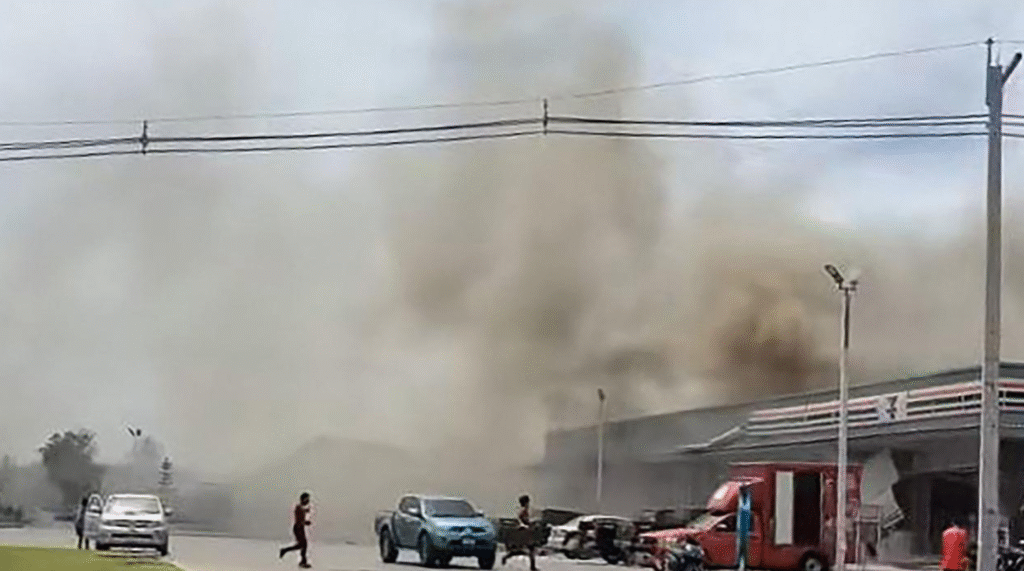
Japan has expressed grave concern and urged both nations to resolve the issue through peaceful dialogue. Foreign Minister Takeshi Iwaya emphasized the importance of bilateral cooperation, stating a stable relationship is essential for regional peace. However, after Thailand launches airstrikes on Cambodia, the Thai acting prime minister declared that diplomatic talks would remain suspended until the fighting stops. He urged the international community to condemn Cambodia’s alleged targeting of civilians, describing the neighboring state as a “war-monger” ignoring human rights.
Cambodia, for its part, vowed to retaliate. It has not released any figures for its civilian casualties but pledged a decisive response. The mutual accusations and military actions signal that the crisis could widen unless swift diplomatic intervention occurs. As of now, Thailand launches airstrikes on Cambodia marks one of the most dangerous flashpoints in Southeast Asia in recent years, threatening regional stability and drawing international scrutiny.
