

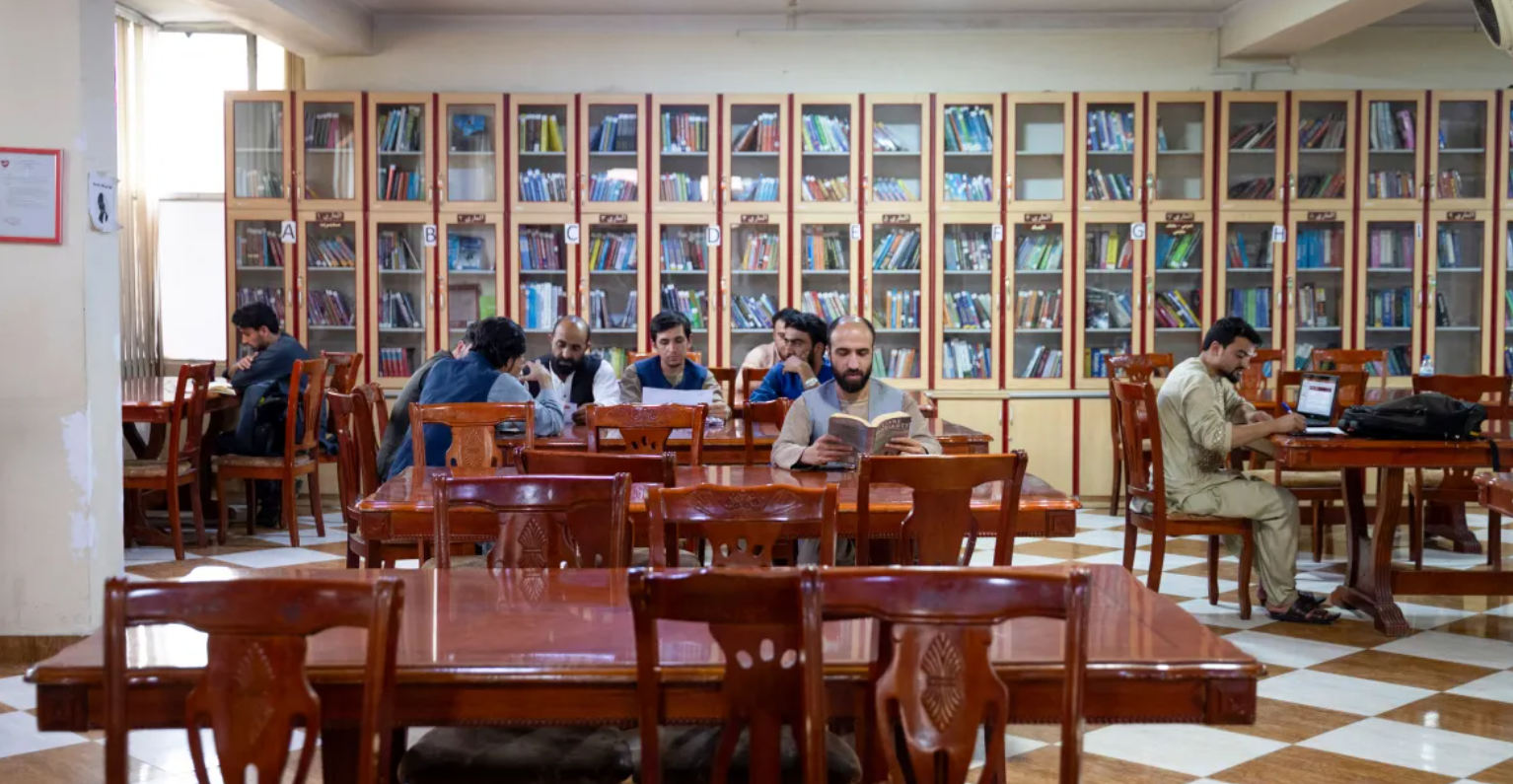

The Taliban government in Afghanistan has introduced new restrictions targeting education, removing books authored by women and banning several university subjects. The move further tightens the group’s grip on academic life, particularly impacting women and access to international knowledge sources.
Ban on Books by Women Authors
A total of 680 books were flagged as problematic by Taliban authorities, with around 140 written by women. These titles, which include academic and scientific works such as Safety in the Chemical Laboratory, were deemed “anti-Sharia” and against Taliban policies.
A member of the committee overseeing the review of books confirmed that no publications authored by women will be permitted in Afghan universities. This decision reflects the Taliban’s broader policies that restrict women’s participation in education, work, and public life.
Subjects Removed from University Curriculums
In addition to banning women’s books, the Taliban prohibited the teaching of 18 university subjects. Six of these subjects specifically focused on women, including Gender and Development, Women’s Sociology, and The Role of Women in Communication. According to Taliban officials, these courses were considered incompatible with their interpretation of Sharia law.
This move is part of a series of academic and social restrictions imposed since the Taliban regained power four years ago. Earlier, authorities discontinued midwifery training programs, cutting off one of the last educational opportunities available to women.
Impact on Women and Girls
Women remain the most affected by these restrictions. Girls have already been barred from attending school beyond the sixth grade. Now, with the removal of women’s books and the elimination of courses on gender issues, female voices are further erased from Afghanistan’s academic landscape.
Zakia Adeli, a former deputy minister of justice and one of the authors whose books were banned, expressed disappointment but not surprise. She noted that the Taliban’s record of restricting women’s rights made such measures inevitable.
Iranian Authors Also Targeted
The new guidelines, issued in late August, also banned works by Iranian writers and publishers. Around 310 of the restricted titles are linked to Iran. Officials indicated that the decision was made to prevent “the infiltration of Iranian content” into Afghan education.
The strained relationship between Afghanistan and Iran has influenced this policy. Tensions over water rights and the forced return of over 1.5 million Afghan migrants from Iran this year have added pressure to bilateral ties.
Academic Concerns Over Quality of Education
University lecturers have voiced alarm over the new bans. Books by Iranian scholars and translators were considered vital for connecting Afghan universities with global academia. Their removal creates a significant educational gap.
A professor at Kabul University explained that faculty members now attempt to create replacement materials themselves, although questions remain about whether such content can meet international academic standards.
Broader Pattern of Restrictions
The decision follows other Taliban-imposed limitations, such as the recent ban on fiber-optic internet in ten provinces, justified as a measure to prevent immorality. These restrictions highlight a broader trend of increasing isolation and censorship within Afghanistan’s education and communication systems.
The Taliban’s removal of women’s books and academic subjects represents another step toward silencing female perspectives and isolating Afghanistan from the global academic community. While officials frame these measures as aligned with Sharia principles, the impact is a widening educational void that limits opportunities for future generations.
