


Mass Killings
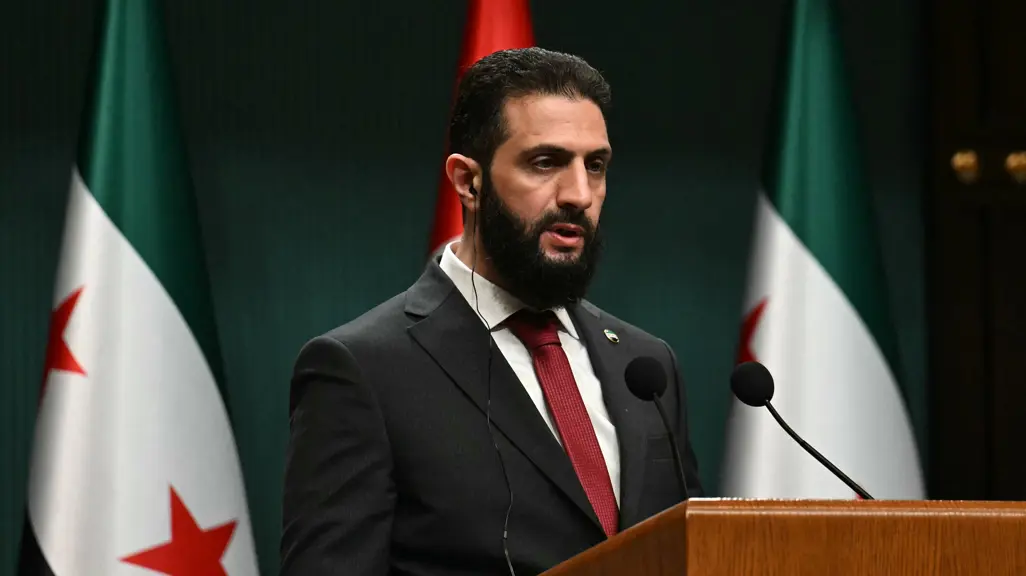
Syrian President Ahmed al-Sharaa has called for national unity and peace following reports that over 1,000 people were killed in violent clashes along Syria’s Mediterranean coast. The recent bloodshed marks the deadliest unrest since the overthrow of Bashar al-Assad in December.
The violence erupted on Thursday between Syria’s new security forces and loyalists of the former government in the Alawite heartland, escalating into the most significant challenge to the new administration since Sharaa’s coalition took power. Addressing worshippers at a mosque in Damascus, Sharaa stressed the need for national cohesion, saying, “We must preserve national unity (and) civil peace as much as possible and, God willing, we will be able to live together in this country.”
The Syrian Observatory for Human Rights reported that at least 745 Alawite civilians were killed in Latakia and Tartus provinces. According to the Britain-based monitor, many of these deaths occurred in “executions” carried out by security personnel or pro-government fighters, often accompanied by widespread looting of homes and businesses. In addition to the civilian casualties, 125 security force members and 148 pro-Assad fighters were killed, bringing the total death toll to 1,018.
In response, Syria’s state news agency SANA confirmed that security forces had been deployed to Latakia, Jableh, and Baniyas to restore order. A resident of Baniyas, Samir Haidar, 67, stated that his two brothers and niece were among those killed by “armed groups” that entered homes.
He also alleged that some of the attackers were foreign fighters. Despite being an Alawite himself, Haidar was part of the leftist opposition to the Assad regime and had spent over a decade imprisoned under their rule.
The Syrian Defence Ministry announced that security forces had reasserted control over several areas previously attacked by Assad loyalists. In a video statement released by SANA, Defence Ministry spokesperson Hassan Abdul Ghani warned that “it is strictly forbidden to approach any home or attack anyone inside their homes.”
The government also took precautionary measures, with Education Minister Nazir al-Qadri ordering schools in Latakia and Tartus to remain closed due to “unstable security conditions.” Additionally, power outages were reported across Latakia province following attacks on the electrical grid by Assad loyalists.
The violence reportedly began after the security forces arrested a wanted suspect in a predominantly Alawite village, triggering retaliatory clashes. While there was a “relative return to calm” by Saturday, authorities continued reinforcing security measures. Roads leading to the coastal regions were blocked to “prevent violations,” though the Defence Ministry did not specify which groups were responsible.
Mustafa Kneifati, Latakia’s provincial security director, reassured citizens that the authorities would not allow further unrest, stating, “We will not allow for sedition or the targeting of any component of the Syrian people.” Despite these assurances, the crisis has intensified concerns about sectarian violence and reprisals against the Alawite community, which had long been associated with the Assad regime.
The new ruling coalition, led by Sharaa’s group Hayat Tahrir al-Sham (HTS), initially emerged from the Syrian branch of Al-Qaeda. Though still designated as a terrorist organization by multiple governments, including the United States, HTS has attempted to moderate its stance since Assad’s fall, promising to protect Syria’s religious and ethnic minorities.
However, fear persists within the Alawite community that they will face retribution for the Assad family’s legacy of repression, including mass disappearances and torture.
Social media has been flooded with posts mourning Alawite victims, while the Observatory has reported “multiple massacres” in recent days, with women and children among the dead.
Activists released disturbing footage showing piles of civilian bodies outside homes, with bloodstains on the ground and grieving women nearby. Other videos appeared to depict men in military uniforms executing individuals at close range. AFP has not independently verified these reports.
Religious leaders, including the heads of Syria’s three main Christian churches and the spiritual leader of Syria’s Druze community, have issued statements urging an immediate end to the bloodshed. Meanwhile, reinforcements from northern Syria have been dispatched to Latakia to confront Assad loyalists.
Analysts warn that the escalating violence signals deeper instability. Aron Lund of the Century International think tank noted that the new government “lacks the tools, incentives, and local support base to engage with disgruntled Alawites.” He added, “All they have is repressive power, and a lot of that… is made up of jihadist zealots who think Alawites are enemies of God.”
As Syria’s leadership faces this growing crisis, the ability of the new government to maintain control and prevent further sectarian violence remains uncertain.
