

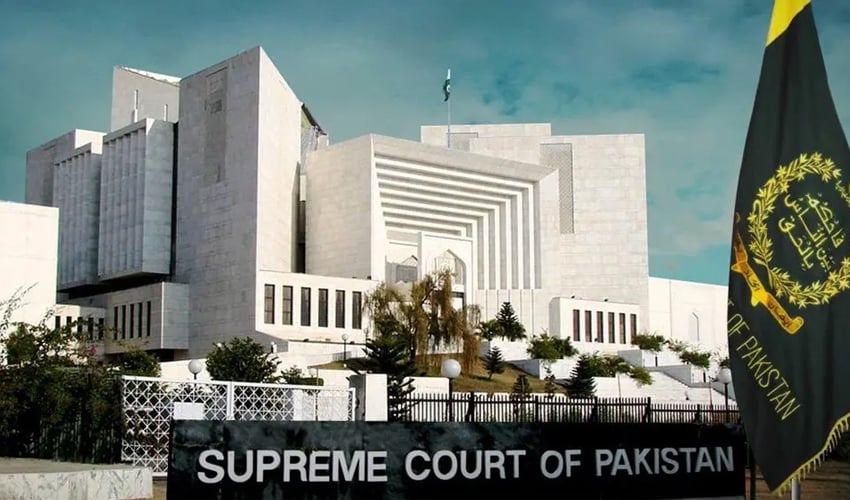

ISLAMABAD: The Supreme Court’s constitutional bench on Monday reserved its verdict on a series of intra-court appeals challenging the landmark ruling that prohibited the trial of civilians in military courts.
A seven-member bench, headed by Justice Aminuddin Khan, concluded hearings and announced that a short judgment will be issued later this week. The bench had been reviewing 38 intra-court appeals filed by the federal and provincial governments, as well as the Shuhada Forum Balochistan, against the top court’s October 23, 2023 decision.
That earlier verdict had declared the military trials of civilians — specifically those accused in the May 9, 2023 riots — as unconstitutional. However, the court had temporarily allowed military courts to continue trials while reserving final judgment on their legality.
Since then, 85 Pakistan Tehreek-e-Insaf (PTI) activists were sentenced to two to ten years of rigorous imprisonment for their alleged involvement in attacks on military installations and monuments. In January, the military accepted mercy petitions from 19 of the 67 convicted individuals on humanitarian grounds, according to Inter-Services Public Relations (ISPR).
Arguments Presented During Monday’s Hearing
During proceedings, Attorney General for Pakistan Mansoor Usman Awan stated that the May 9 violence targeted 39 military facilities — 23 in Punjab, 8 in Khyber Pakhtunkhwa, and one in Sindh — and was the result of “organized planning.” He argued that even if the events were in response to political developments, such acts could not be justified.
“Our country’s strategic geography means we face constant security threats,” Awan said. He added that the military had taken internal disciplinary actions for security lapses, including retiring three senior officers — a Lieutenant General, a Brigadier, and a Lieutenant Colonel — without pension or benefits for negligence during the Jinnah House attack.
A final verdict on the legality of trying civilians in military courts is expected within days and could have significant implications for civil-military relations and judicial oversight in Pakistan.
