

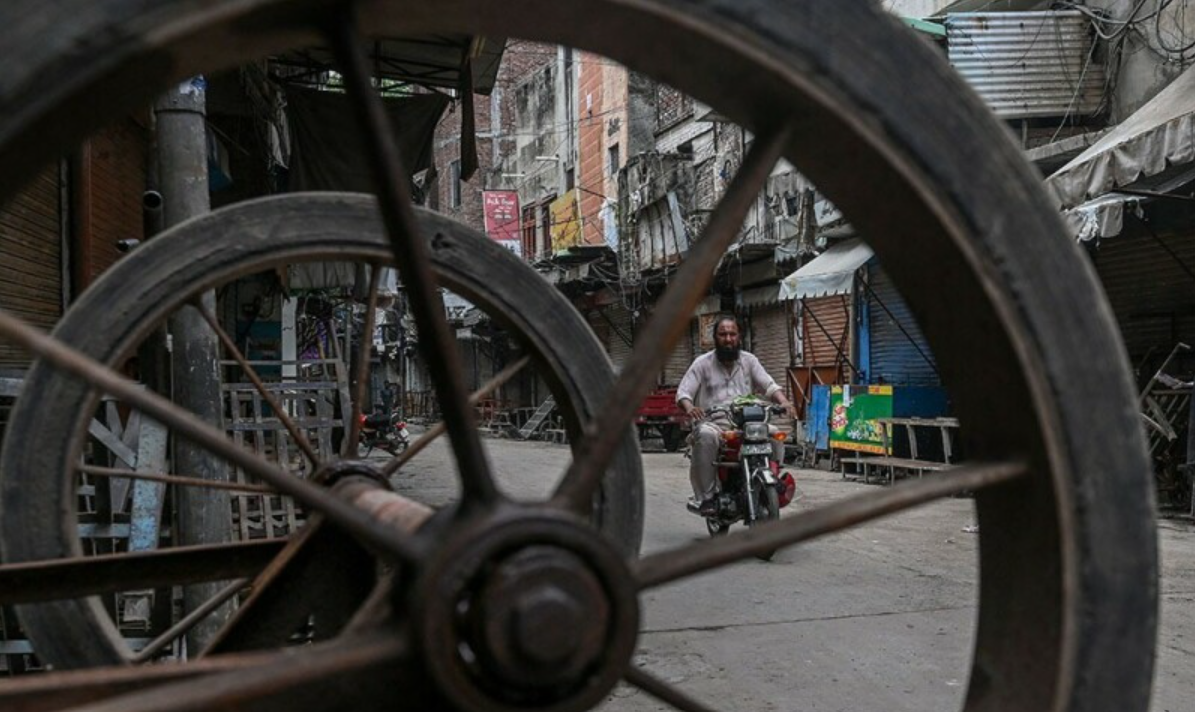

A powerful strike shut down Karachi and Lahore on Saturday in protest against anti-business taxation, with markets, industries, and transport operations grinding to a halt. The business community, united against anti-business taxation introduced under the Finance Act 2025-26, warned of an escalation if the government fails to meet their core demands.
The Karachi and Lahore Chambers of Commerce and Industry jointly called for the strike, marking an unprecedented show of resistance against anti-business taxation. In Karachi, nearly 90% of commercial activity was suspended. From industrial zones to retail markets, operations ceased as stakeholders collectively voiced opposition to anti-business taxation laws.
KCCI President Jawed Bilwani said the city had never before witnessed such unified action, attributing the strike’s scale to public outrage over anti-business taxation measures. He confirmed that production halted across all seven industrial zones, and no export consignments moved to the port. Although Karachi Port Trust claimed normal functioning, transporters had already withdrawn services, stopping the flow of imported goods.
The economic impact of the shutdown, according to Mr. Bilwani, is significant given Karachi’s contribution, around 70% of federal tax revenues and 54% of national exports. He stressed that the protest was peaceful but fueled by rising frustration over anti-business taxation provisions, especially Sections 37A and 37B of the Sales Tax Act, which permit arrests without due process.
Other contested provisions include Section 21(s), which penalizes cash-based transactions, and the removal of the Final Tax Regime for exporters. Despite extended meetings with Finance SAPM Haroon Akhtar Khan and receiving verbal assurances, Mr. Bilwani said the community demands formal written commitments to end their strike against anti-business taxation.
Lahore experienced a similar shutdown, with traders from Shah Alam Market, Urdu Bazaar, Anarkali, and Azam Cloth Market closing their shops. While the FPCCI had announced withdrawal, LCCI-led markets proceeded with full closure. LCCI President Mian Abuzar Shad labeled the protest a historic stand against anti-business taxation, vowing to continue until demands are met.
Traders criticized the Federal Board of Revenue’s enhanced authority under the new act, especially regarding e-invoicing systems, 16% tax on property rent, and 20% tax on large transactions. Talks with top government officials brought no resolution, intensifying the city-wide resistance to anti-business taxation.
Meanwhile, business operations in Islamabad and Rawalpindi remained unaffected. The Islamabad Chamber of Commerce opted to wait for the government’s final response to protest concerns. However, the All Pakistan Anjuman Tajiran announced a nationwide campaign beginning July 26, promising phased action if anti-business taxation is not revised.
Their president, Ajmal Baloch, blamed the bureaucracy for misleading policymakers and warned that failure to act would fuel a wave of national unrest. The business community has made it clear that unless the government addresses their grievances on anti-business taxation, further action is inevitable.
