

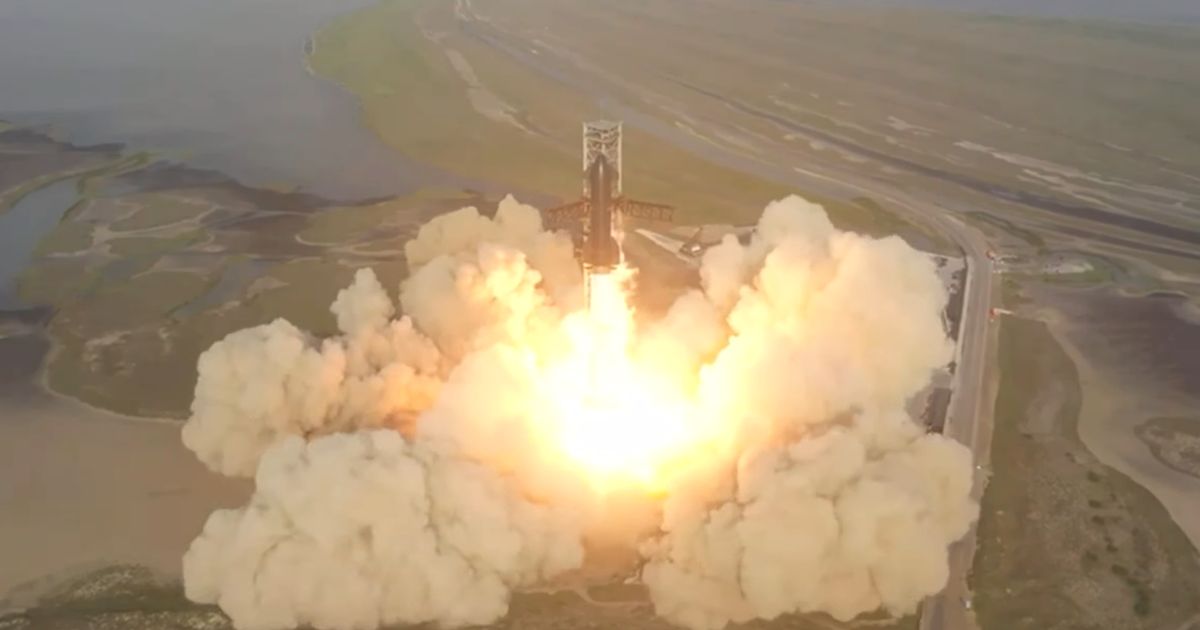

One of Elon Musk’s SpaceX Starships exploded late Wednesday night during a routine static fire test at the company’s Starbase facility in Texas, marking another setback in the billionaire’s ambitious goal of making humanity a multiplanetary species.
According to a statement posted on Facebook by Cameron County authorities, the Starship 36 experienced a “catastrophic failure and exploded” shortly after 11:00 PM local time (0400 GMT Thursday). A video accompanying the post captured the moment of the explosion—showing the massive rocket attached to the launch arm, followed by a sudden flash and a towering fireball.
SpaceX confirmed the incident, stating that the rocket had been preparing for its tenth flight test when it “experienced a major anomaly while on a test stand at Starbase.”
“All personnel are safe and accounted for,” SpaceX noted on social media. “A safety perimeter around the site was in place throughout the operation. There are no hazards to nearby communities, and we urge the public not to approach the area while recovery operations are underway.”
Authorities clarified that the rocket was not scheduled for liftoff at the time. The explosion occurred during a “routine static fire test,” a standard pre-launch procedure in which the rocket’s engines are ignited while the vehicle remains anchored to the ground to prevent lift-off.
Starbase, located along the southern Texas coast near the Mexico border, serves as the primary testing and launch site for SpaceX’s Starship program.
Standing at 403 feet (123 meters), Starship is the largest and most powerful rocket ever built. Designed to be fully reusable, it can carry payloads of up to 150 metric tonnes and is central to Musk’s vision of colonizing Mars.
This latest explosion follows a string of previous Starship test failures. In late May, a prototype was destroyed over the Indian Ocean after the Super Heavy booster failed to complete a controlled splashdown in the Gulf of Mexico. Earlier tests also ended in failure, with upper-stage components breaking apart over the Caribbean.
Despite the setbacks, SpaceX continues to push forward with its Starship development, aiming to revolutionize space travel through rapid reusability and heavy-lift capabilities.
