

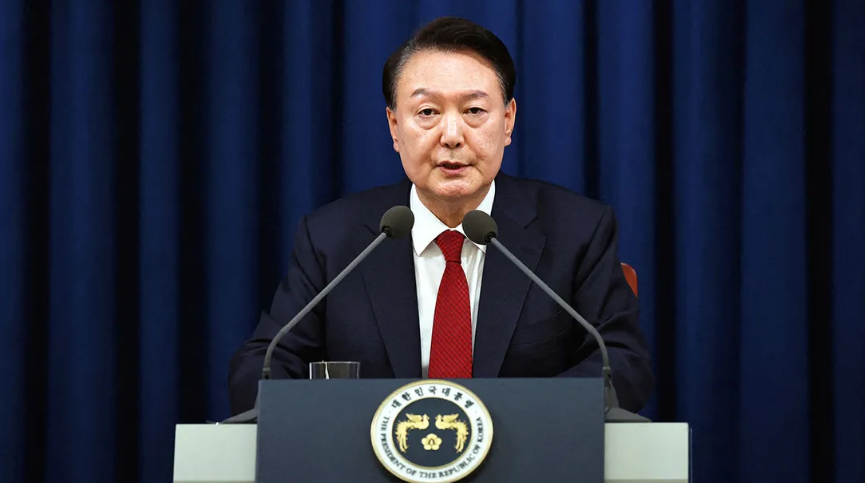

South Korean prosecutors have requested a 10-year prison term for former President Yoon Suk Yeol over his attempt to impose martial law in December 2024. The former leader briefly suspended civilian rule, deploying armed soldiers to parliament for the first time in over four decades. The decree lasted about six hours before opposition lawmakers voted it down and scaled fences to enter the building. Massive public protests erupted during the short-lived martial law, leading parliament to impeach Yoon.
Yoon was removed from office in April 2025 by the Constitutional Court and has faced multiple trials linked to his martial law declaration. In May, he was indicted for abuse of power, specifically for excluding cabinet members from a martial law meeting and allegedly obstructing investigators from detaining him in January. Prosecutors now seek a decade-long prison sentence on charges including obstruction of justice.
The Seoul court is expected to announce its verdict in the coming month. Yoon defended his actions this month, claiming his decision was justified to combat “pro-China, pro-North Korea, and traitorous activities.” Legal experts note that Yoon faces three other trials, including allegations of leading an insurrection, which could carry the death penalty if proven.
Yoon Suk Yeol is the second South Korean president to be removed from office and the third to be impeached by parliament. His martial law case has drawn international attention due to the unprecedented suspension of civilian rule and the political turmoil it caused.
The prosecution’s request for a 10-year term underscores the seriousness of the charges and the broader implications for governance and accountability in South Korea. The case also raises questions about executive power limits and the role of the judiciary in upholding constitutional authority.
Observers have highlighted that Yoon’s brief martial law attempt marked a historic moment, being the first in more than 40 years, and the legal consequences could set a precedent for future leaders. Meanwhile, the ongoing trials against the former president continue to dominate national discussions, reflecting deep political divisions.
In conclusion, the upcoming verdict in Yoon Suk Yeol’s martial law trial will determine the former president’s fate and serve as a critical test for South Korea’s legal and political institutions. The case emphasizes the need for checks and balances and demonstrates the judiciary’s role in preserving democratic governance.
