


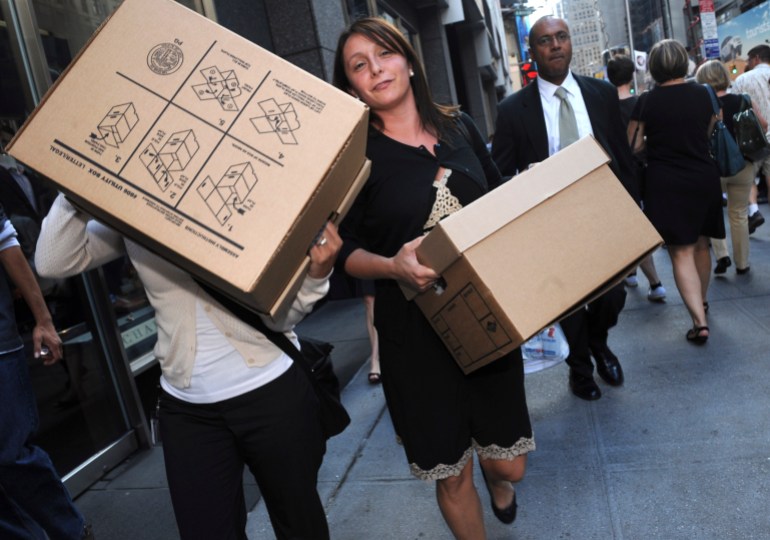
The images of hundreds of employees with boxes in their hands marching out of the New York City headquarters of Lehman Brothers after the company declared bankruptcy on September 15, 2008 became one of the enduring images of the global financial crisis, a visual shorthand for how an industry-leading firm can come to ruin and pull a nation — and the world — down with it.
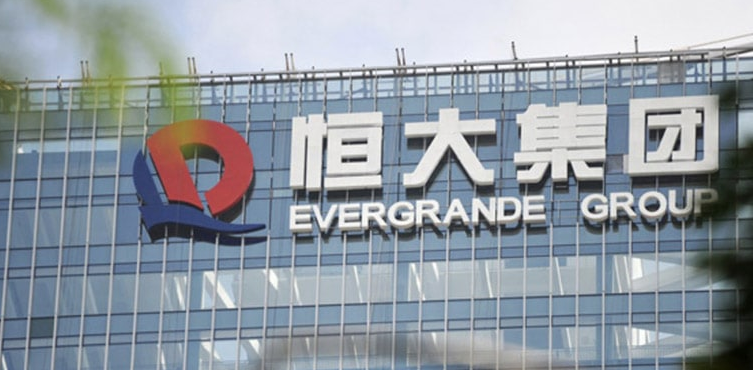
Now, the images of disgruntled China Evergrande Group investors, employees and vendors camped outside the firm’s headquarters in Shenzhen in recent weeks have the potential to become a shorthand of their own.
The real estate firm is in serious trouble. On Monday, it failed to make interest payments to at least two of its largest bank creditors, Bloomberg News reported, and it looks like it will also miss paying about $83.5m in dollar-bond interest due on Thursday.

Investors are worried an Evergrande debt default could send shock waves through the Chinese and global economies, much as Lehman Brothers did to the United States and the world in 2008.
But China in 2021 isn’t the US in 2008, and what’s less clear is to what lengths the Chinese government is willing to go to stave off the social and financial upheaval a messy Evergrande collapse could cause.
So will Evergrande prove to be China’s Lehman Brothers moment, or is the firm too big to fail in President Xi Jinping’s China? Here’s what you need to know.
Recap. What sort of firm is Evergrande?
Evergrande currently holds the dubious title of the world’s most indebted real estate developer. Founded in 1996 by Hui Ka Yan, it has grown into one of the biggest firms in China and has in the process made Hui the 53rd richest person on Forbes’s Billionaires 2021 list and the 10th wealthiest on its China Rich List 2020.
The company currently has 1,300 real estate projects in 280 cities in China, according to its website, and is also involved in electric vehicle production, property management, film and TV production, theme park construction, life insurance, healthcare, football and food and baby products.
So how badly in debt is Evergrande?
The company has $300bn in liabilities and its leadership has made it clear it doesn’t have the means to pay its various creditors on time.
That has investors inside and outside of China majorly worried, including about a potential contagion effect.
What is that?
Simply put, it’s the fear that turmoil or crisis in one large company or country could spread to others. When Lehman Brothers filed for bankruptcy, for example, it had a contagion effect on the other major financial institutions with which it had trading relationships.
It turned out that the US banking industry was made up of a relatively small number of players whose assets, interests and fates were more closely intertwined than many thought. When Lehman fell, it sent shock waves through many other firms in the US and beyond.
And thanks to globalisation, the links between entire countries’ economies are stronger and more numerous than ever before, so when the US experienced its 2008-2009 financial crisis, the ripple effects were felt in markets all over the world.
Similarly, as China is the world’s second-largest economy, what happens in China with Evergrande has the potential to affect financial institutions and nations around the world.
Is the Evergrande saga already having a ripple effect?
Yes. Hong Kong’s Hang Seng Index fell 3.3 percent on Monday, and its properties index fell a whopping 6.69 percent to hit a 52-week low. Both the broader index and the properties index closed up on Tuesday, however.
