

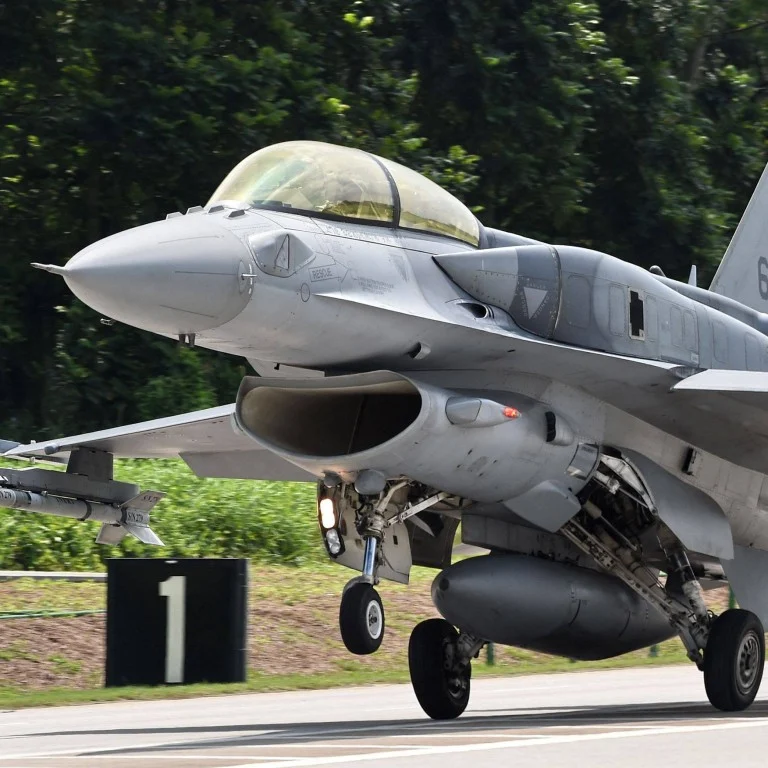

On Wednesday, at 12:35 p.m. (0435 GMT), tragedy struck when a Singapore Air Force F-16 plane crashed at Tengah Air Base, an event that has drawn attention to the critical nature of military aviation operations. Singapore’s defense ministry promptly issued a statement, shedding light on the incident.
According to the ministry, the aircraft encountered an unforeseen issue during take-off, prompting the pilot to swiftly execute emergency protocols in an attempt to mitigate the situation. Despite the pilot’s efforts, the plane was unable to avert the crash, leading to a swift and thorough response from emergency services.
Fortunately, amidst the chaos, there was a glimmer of relief as the pilot managed to successfully eject from the stricken aircraft. Reports indicate that the pilot is conscious, responsive, and has the ability to move independently, a testament to the effectiveness of safety protocols and pilot training.
As authorities work diligently to unravel the circumstances surrounding the crash, investigations are underway to determine the root cause of the incident. Such inquiries are crucial not only for understanding what went wrong but also for implementing measures to prevent similar occurrences in the future.
Meanwhile, the crash has brought renewed attention to the F-16 Fighting Falcon, a stalwart in military aviation. Developed by General Dynamics (now Lockheed Martin), the F-16 has earned its stripes as a highly maneuverable and adaptable aircraft, trusted by air forces worldwide.
Despite the inherent risks associated with military aviation, the F-16’s combat prowess and reliability remain undisputed. Through continuous upgrades and advancements, the F-16 continues to evolve, ensuring its relevance on the modern battlefield and reaffirming its position as a cornerstone of air superiority.
