

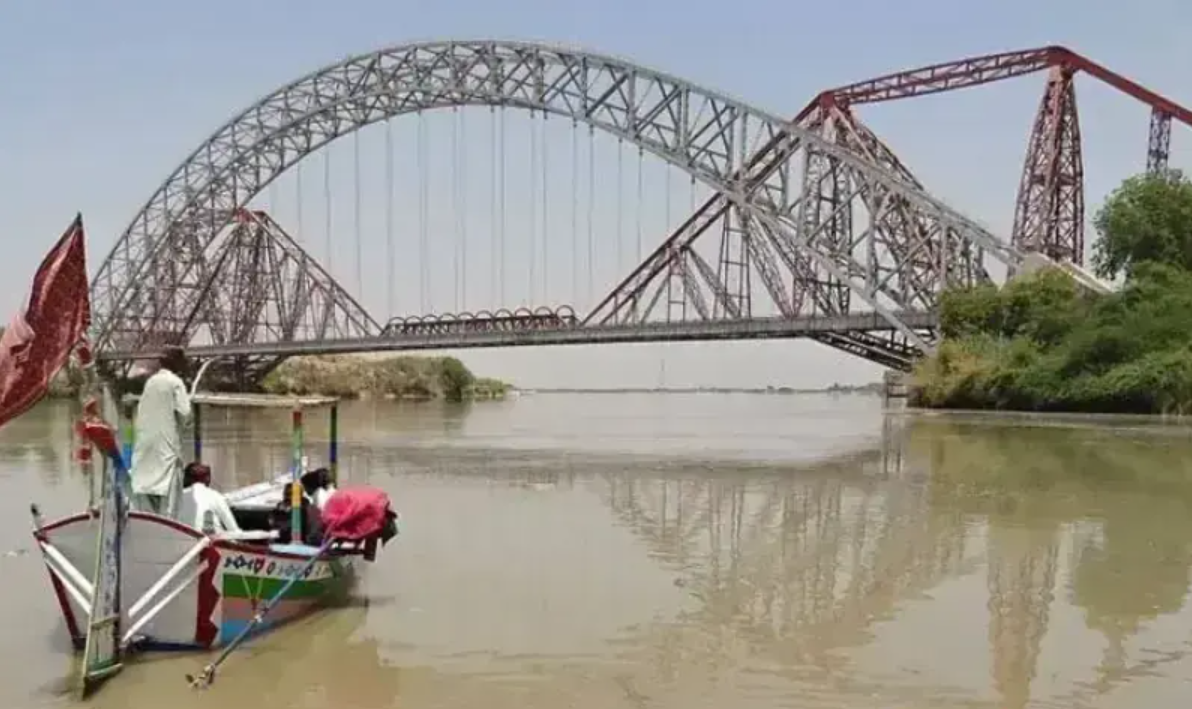

Floods from the Indus River continue to devastate Sindh, overwhelming protective embankments, destroying crops, and displacing thousands of families. Entire communities remain stranded as rising waters swallow agricultural lands, livestock, and homes.
Collapse of Embankments in Naushahro Feroze
A high-level flood persisted in Naushahro Feroze where the central loop embankment at Kandiaro collapsed. This barrier was constructed to safeguard the historic village of Bakhri, yet its failure allowed water to flow into Bakhri, Pir Mehdi, and surrounding settlements. The breach inundated agricultural fields, leaving entire crops destroyed and communities cut off.
Ghotki Gas Supply Remains Suspended
In Ghotki, flooding has paralyzed operations at the OGDCL Qadirpur gas field for the sixth consecutive day. Six blocks of the site are submerged, with water damaging the ERW system. Gas production from 10 wells remains halted, disrupting regional supply and worsening economic strain.
Villages Cut Off in Kandhkot and Dadu
More than 80 villages in Kandhkot’s katcha belt remain isolated as floodwaters block road access. Residents, left without food or fodder, rely heavily on private boat operators since relief efforts are yet to reach.
In Dadu, breaches at three points of the Zamindara embankment submerged large swathes of Mehar’s riverine areas. Over 50 villages lost road connectivity, while hundreds of acres of sesame, rice, and cotton fields were destroyed. Families have taken shelter on roadside embankments to survive.
Rising Waters in Thatta and Ubauro
Floodwaters surged into Thatta district, submerging dozens of villages and thousands of acres of cultivated land. A flood peak of 306,000 cusecs flowed toward the sea, inundating Yar Muhammad Mallah and neighboring settlements. This prompted mass evacuations as homes disappeared underwater.
In Ubauro near Guddu Barrage, rising river levels inundated Ronti’s katcha belt, forcing more families to flee.
Sujawal and Daharki Face Crisis
In Sujawal, most riverine settlements are underwater. Families were compelled to move to higher ground and protective embankments. Meanwhile, stagnant waters worsened health conditions, with displaced communities reporting outbreaks of diarrhea, malaria, and skin infections.
Daharki’s agricultural lands were destroyed, triggering a severe fodder shortage. Farmers reported livestock weakened from hunger as fodder prices soared beyond reach. Families struggling to feed cattle now face the threat of losing their only livelihood.
Risk of Super Flood Recedes but Challenges Persist
Authorities stated that the immediate threat of a “super flood” has eased. However, heavy inflows from Guddu Barrage continue to strain fragile embankments. The worsening conditions highlight the vulnerability of Sindh’s riverine communities to climate-driven disasters.
The Indus River floods have laid bare the fragility of Sindh’s protective infrastructure. Collapsed embankments, submerged farmlands, stranded villages, and disrupted energy supplies illustrate the scale of the crisis. Without urgent relief and long-term planning, riverine populations will remain trapped in a cycle of disaster and displacement.
