

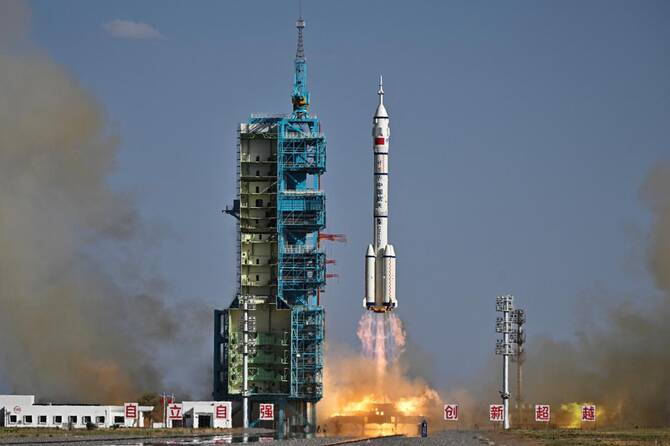

On Wednesday, China’s Shenzhou-19 crew capsule successfully touched down in the country’s northern region, concluding its mission one day later than planned due to unfavorable weather at the landing site.
Launched in October 2024 aboard a Long March-2F rocket from the Jiuquan Satellite Launch Centre, Shenzhou-19 and its three-person crew spent their time aboard the Tiangong permanent space station conducting scientific experiments and assisting with station maintenance. Crewed missions have been a pillar of China’s space ambitions for over 20 years, with activity intensifying after Tiangong was declared complete in November 2022.
The three astronauts—two men aged 48 and 34 on their first flight, and a 35-year-old female astronaut—are all officers in the People’s Liberation Army Air Force. Among their experiments was testing bricks made from simulated lunar soil in microgravity, a project designed to inform construction materials for a planned lunar research outpost targeted for completion by 2035.
China’s rapid progress in both crewed and uncrewed space operations has drawn international attention, with its next major goal being a manned lunar landing by 2030. Shenzhou missions typically last around six months, with a brief overlap period allowing incoming and outgoing crews to transfer responsibilities before the station handover.
