

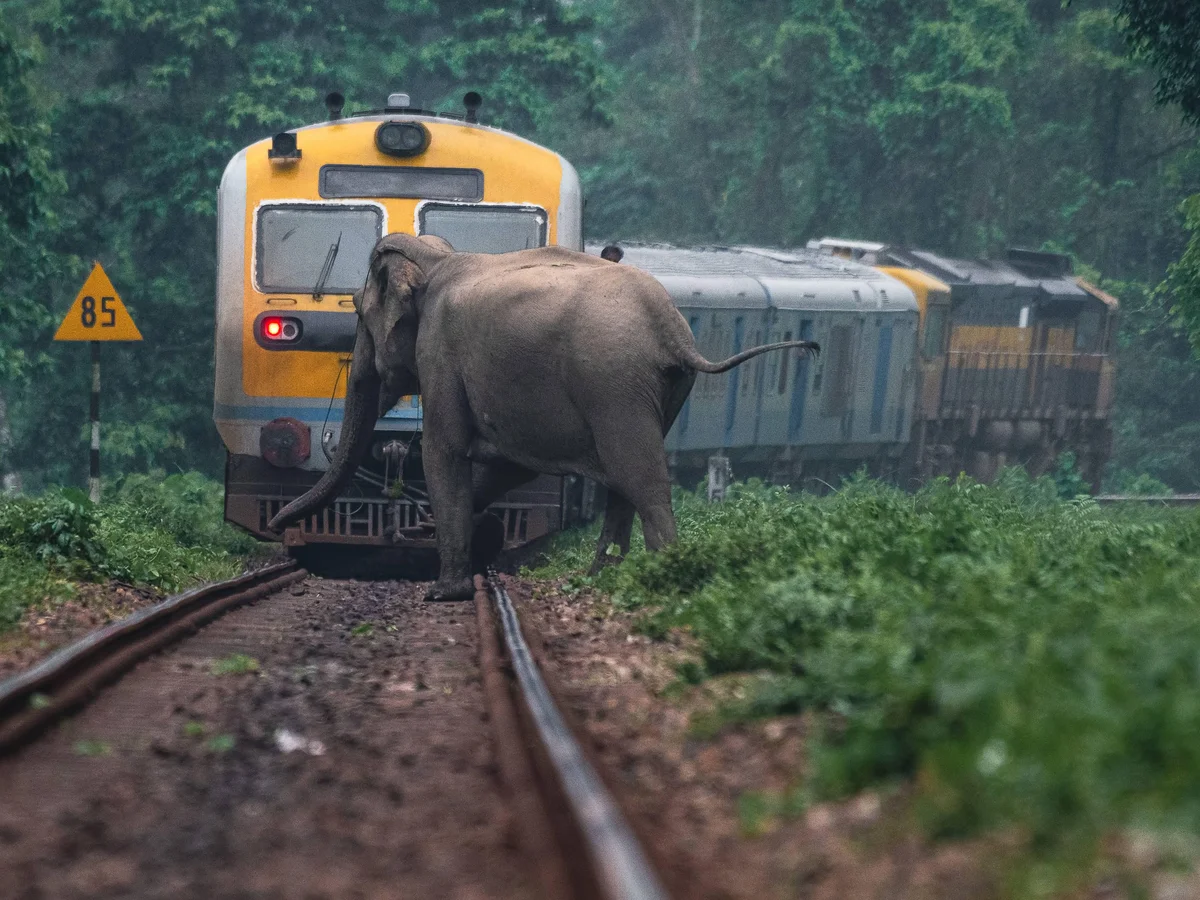

A tragic train accident in India’s northeast has killed seven wild elephants. The incident has renewed concerns about wildlife safety and rail infrastructure. Officials confirmed the accident happened early Saturday in Assam state. No passengers were hurt, but the impact on wildlife was severe.
Assam is home to one of India’s largest elephant populations. The state holds more than 4,000 wild elephants. India has an estimated 22,000 elephants nationwide. Human and animal conflict remains a growing issue in the region.
Train Derailment After Sudden Elephant Crossing
The accident occurred when a passenger train struck a herd of elephants on the tracks. The train was traveling from Mizoram to New Delhi. It passed through a forested stretch of Assam when the collision happened.
Senior Assam police official V.V. Rakesh Reddy confirmed the details. Seven elephants died instantly at the site. One elephant was injured and managed to escape into nearby forest land. Forest officials later began tracking the wounded animal.
The collision caused major damage to the train. Five coaches derailed due to the impact. Railway authorities said no passengers were injured. Emergency teams reached the site quickly to secure the area and assist travelers.
Indian Railways spokesperson Kapinjal Kishore Sharma explained the sequence of events. He said the train driver spotted the herd on the tracks. The driver applied emergency brakes immediately. Despite the effort, the elephants collided with the moving train.
The accident did not occur in a designated elephant corridor. Authorities had already imposed speed limits in known wildlife crossing zones. This stretch of track fell outside those protected areas.
Wildlife Protection Gaps Exposed
The incident has exposed gaps in wildlife protection measures. Conservationists say elephants often roam beyond marked corridors. They search for food and water due to shrinking forest cover.
Deforestation remains a major cause of elephant movement. Expanding rail lines and roads cut through traditional habitats. Construction projects push animals closer to human settlements. This increases the risk of deadly encounters.
Railway officials have installed warning systems in some regions. These include signage and speed restrictions. However, experts say more advanced detection systems are needed. Real-time animal movement alerts could help prevent such tragedies.
Forest officials in Assam have launched an inquiry. They are assessing whether additional safety measures are required. Joint patrols between railway and forest departments are also being discussed.
Rising Human and Elephant Conflict in India
Human-elephant conflict has increased across India. Parliamentary data highlights the scale of the problem. A total of 629 people were killed by elephants during 2023 and 2024. Many incidents occurred near farms and forest edges.
Elephants also face growing threats. Train collisions have killed dozens in recent years. Conservation groups argue that infrastructure planning must consider wildlife routes.
Saturday’s accident has sparked fresh debate. Environmental activists are urging stronger coordination between railways and wildlife authorities. They say protecting elephants is vital for ecological balance.
As cleanup work continues, the tragedy serves as a stark reminder. Development without safeguards can come at a heavy cost. Both human lives and wildlife remain at risk without urgent action.
