

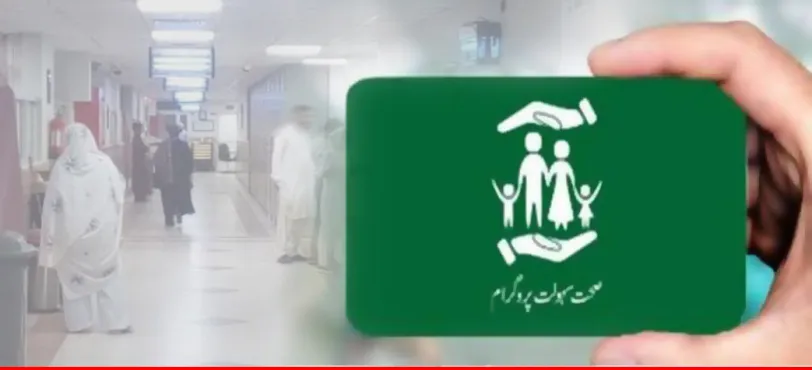

The Ministry of National Health Services is actively working to make the Sehat Sahulat Card a permanent component of the federal government’s healthcare framework, officials confirmed on Wednesday.
This significant move aims to institutionalize the popular health insurance initiative, ensuring sustained access to free medical care for millions of underserved families across Pakistan.
The proposal for permanent retention of the Sehat Sahulat Card has already been submitted to the Executive Committee of the National Economic Council (ECNEC) for formal approval. Once ratified, the program is expected to benefit approximately 2.7 million families residing in Islamabad, Azad Jammu and Kashmir (AJK), Gilgit-Baltistan (GB), and the Tharparkar district of Sindh. These regions currently depend on the federal scheme to access essential healthcare services.
Muhammad Arshad, head of the Sehat Sahulat Card program, spoke about the development, stating, “The Sehat Sahulat Card is going to be maintained permanently under the federal programme. The matter has been sent to ECNEC for approval.” He emphasized that this step represents a crucial advancement towards achieving universal health coverage, especially for vulnerable and marginalized communities living in remote areas of the country.
The Sehat Sahulat Card program provides comprehensive health coverage, including hospitalisation, surgical procedures, maternity care, and chronic disease management.
Beneficiaries can seek treatment at over 600 empanelled hospitals, encompassing both public and private healthcare facilities nationwide. The initiative helps alleviate the financial burden of medical expenses for low-income families, enabling them to receive quality healthcare without worry.
Initially launched as a federal support mechanism for low-income households, the Sehat Sahulat Card program has since been expanded by provincial governments in Punjab and Khyber Pakhtunkhwa, which now operate their own versions of the scheme.
However, areas lacking devolved health infrastructure—such as Islamabad, AJK, GB, and parts of Sindh—continue to rely heavily on the federal program. The decision to make the card permanent at the federal level will ensure continuity of healthcare access for these regions, preventing any disruption in service.
Overall, formal approval of this proposal will mark a major milestone in Pakistan’s efforts to provide universal health coverage and improve the well-being of its most vulnerable citizens. By making the Sehat Sahulat Card a permanent fixture, the government aims to safeguard health rights and reduce healthcare inequality across the country.
