

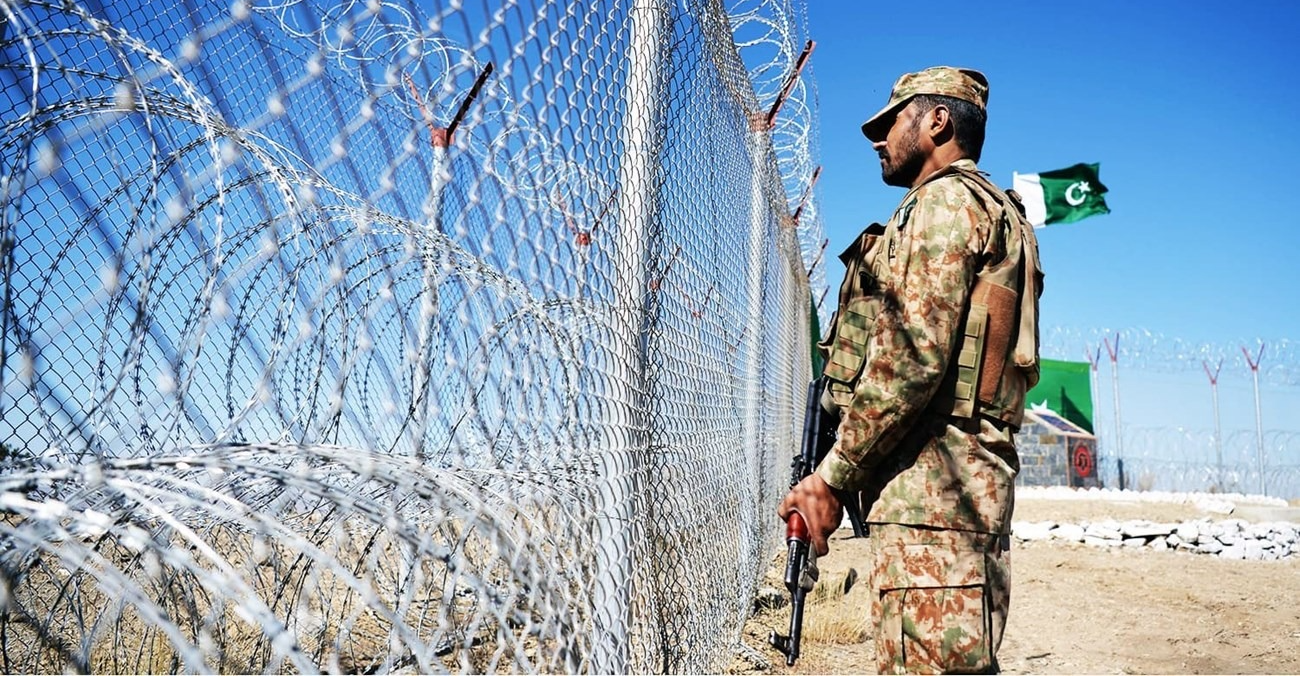

ISLAMABAD: Pakistani security forces have successfully foiled an infiltration attempt along the Pakistan-Afghanistan border, detaining five alleged Afghan suicide bombers who were found hiding in a mosque.
Acting on intelligence reports, security personnel established checkpoints at five strategic locations near the border. The attempted breach occurred on July 17, when a group of militants crossed into Pakistani territory around 5:00 PM, advancing toward the Aziz Khel and Mandi Khel areas by 6:25 PM.
Suicide bombers’ age and identity
The detained individuals, aged between 15 and 18, include three who possessed valid Afghan identification cards. Authorities have since moved them to an undisclosed location for interrogation, as area-wide search operations continue.
Security officials report that this is the latest in a series of attempted infiltrations along the volatile border. In recent months, several operations have disrupted similar incursions. A major operation conducted between April 25 and 27 resulted in the deaths of 71 militants. Another attempt on July 4 saw 30 militants killed, while 16 were neutralized during an earlier clash on March 23.
Sources allege that these militants have received backing from India, accusing New Delhi of supporting terrorist networks with the intent to destabilize Pakistan. Despite these threats, authorities affirm that security forces remain vigilant and fully prepared to counter any future incursions.
Uzbekistan, Afghanistan, and Pakistan sign tri-lateral agreements
Pakistan’s Deputy Prime Minister and Foreign Minister Ishaq Dar met with Afghan Foreign Minister Amir Khan Muttaqi in Kabul on Thursday, where both leaders reaffirmed their commitment to strengthening bilateral ties, enhancing trade and transit cooperation, and accelerating regional connectivity projects.
The visit focused on deepening economic integration and ensuring continuity in Pakistan-Afghanistan relations. Federal Minister for Railways Hanif Abbasi also attended the high-level talks.
Key Outcomes of the Meeting:
- Agreement to maintain momentum in bilateral relations.
- Commitment to expanding trade, transit, and security cooperation.
- Pledge to advance regional economic development and complete key infrastructure and connectivity projects.
- Plan to sign a joint feasibility study agreement for the Pakistan-Afghanistan-Uzbekistan railway corridor.
Deputy PM Dar was welcomed in Kabul by the Afghan Deputy Foreign Minister. Pakistan’s Ambassador to Afghanistan, Abdur Rehman Nizamani, was also present.
According to the Foreign Office, Dar led a high-level delegation that included Pakistan’s Special Representative for Afghanistan, the Minister for Railways, and the Secretary of Railways.
The centerpiece of the visit was the agreement on a joint feasibility study for the proposed trilateral railway line, which aims to enhance regional trade routes connecting South Asia with Central Asia.
