

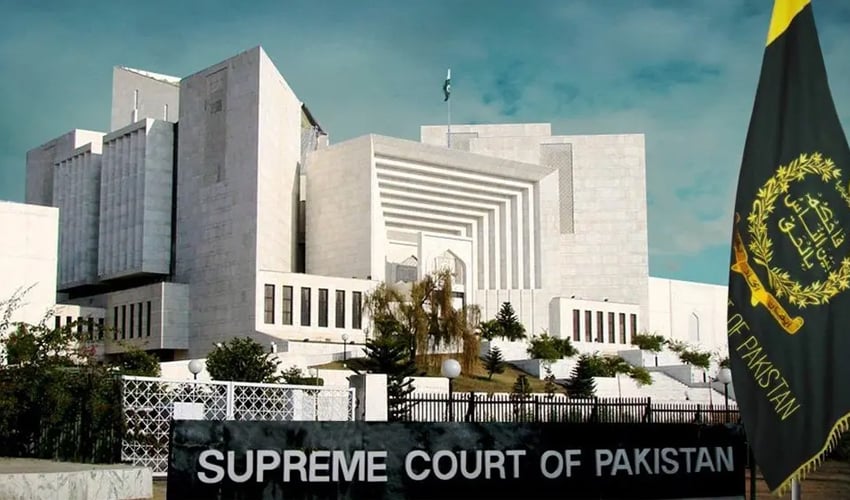

The Supreme Court has directed a litigant to provide evidence if any educational institution in Pakistan is teaching an objectionable translation of the Holy Quran. The court stated that such translations could be blocked if found to be incorrect.
The petition, which calls for “appropriate legislation regarding compulsory teaching of the Holy Quran and Islamiat in schools,” was heard by a seven-member constitutional bench headed by Justice Amin Ud Din Khan.
The court instructed that the petition be assigned a serial number and issued notices to the respondents.
Earlier, Advocate Aneeq Khattana urged the court to direct the government to fully implement Article 31 of the Constitution (promoting an Islamic way of life) throughout Pakistan and to issue a restraining order against violations of this provision.
Justice Hasan Azhar Rizvi, commenting on the petitioner’s claim that there were no arrangements for teaching the Quran in Sindh and Balochistan, noted that he had learned to read the Holy Quran (Nazira) in a school in Sindh in 1971-72. Justice Naeem Akhtar Afghan expressed surprise as well, pointing out that the Balochistan Assembly had passed legislation for the compulsory teaching of the Quran.
The petitioner, however, argued that technological advancements have allowed individuals to tamper with the correct translation of the Quran, although there is an approved government translation.
Justice Muhammad Ali Mazhar noted that such tampered translations could be blocked. The court then directed the petitioner to provide evidence if there was any instance of an objectionable translation being taught and adjourned the proceedings for the next hearing.
