

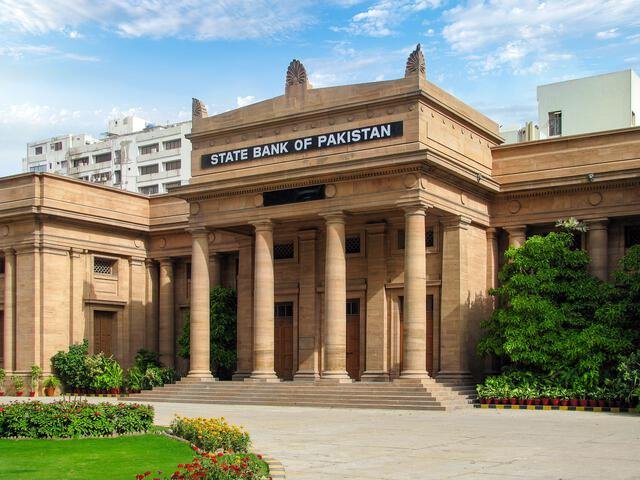

The State Bank of Pakistan (SBP) has warned that the country’s economic growth for the current fiscal year is likely to fall short of the official target, signaling continued challenges for the national economy.
During a session of the National Assembly’s Standing Committee on Finance and Revenue held on Tuesday under the chairmanship of Syed Naveed Qamar, SBP officials projected that Pakistan’s GDP growth for FY26 may reach only 3.2%, significantly below the government’s target of 4.2%. This development reflects persistent structural and external pressures that have constrained economic expansion in recent years.
Deputy Governor Dr. Inayat Hussain provided the committee with details regarding the central bank’s outlook on foreign exchange reserves. According to his projections, reserves are expected to reach $15.5 billion by December and $17.5 billion by the end of June.
Dr. Hussain cautioned that any artificial appreciation of the rupee could increase the import bill and further strain reserves, emphasizing that the current exchange rate is at a “right level,” neither overvalued nor undervalued. He also noted that the SBP intervenes in the currency market only when there is an excess supply of dollars, highlighting that in July alone, the government purchased $720 million from the market, while $7.8 billion were bought during the last fiscal year.
The SBP also raised concerns regarding inflation, indicating that consumer price pressures could exceed the bank’s target during the final quarter of the fiscal year, from April to June. The IMF has reportedly allowed a 1.2% permissible gap between the rupee and the dollar, giving some flexibility in managing currency fluctuations.
Over the past decade, Pakistan’s GDP growth has averaged around 3%, while remittances for the current year are estimated at $40 billion. In an effort to bolster inflows, the government reinstated an incentive scheme offering banks 20 riyals for every $200 transaction after observing a slowdown in remittances following the withdrawal of a previous scheme.
The session also saw committee members debating broader economic policy issues. Sharmila Faruqui questioned whether interest rates should be adjusted in light of ongoing inflationary pressures, with the next monetary policy review scheduled for September 15.
Chairman Naveed Qamar criticized the Ministry of Industries and Production for failing to brief the committee regarding the carbon levy under the new electric vehicles policy, highlighting concerns about parliamentary oversight and transparency. The committee deferred a briefing on the policy, stressing the need for proper accountability.
Additionally, the NA panel discussed the Corporate Social Responsibility (CSR) Bill 2025 proposed by the SECP, which would require profit-making companies to allocate 1% of net profits to social initiatives.
While Qamar suggested making it mandatory, Minister of State Bilal Azhar Kayani opposed the move, arguing it would act as a new tax. Concerns were also raised regarding the imposition of a 10% GST in ex-FATA, with committee members suggesting BISP subsidies for affected residents to offset the financial impact.
Overall, the session underscored ongoing challenges for Pakistan’s economy, including subdued growth, rising inflation, currency volatility, and the need for effective parliamentary oversight of fiscal and industrial policies. The SBP’s projections indicate that policymakers will need to adopt a careful mix of monetary and fiscal measures to stabilize the economy while balancing growth and inflationary pressures.
