

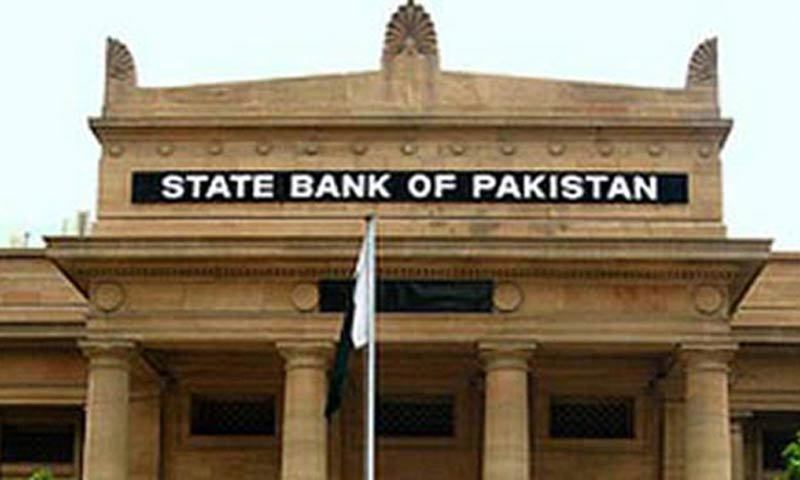

The Monetary Policy Committee (MPC) met today, and the State Bank of Pakistan (SBP) will publish its new monetary policy following the meeting (Monday).
The MPC meeting today is the first one under the leadership of SBP Governor Jameel Ahmad and Finance Minister Ishaq Dar.
The News’ poll of analysts indicates that the SBP’s MPC would maintain the benchmark interest rate at 15%.
Despite a lack of external financing, central bank authorities are likely to maintain the same interest rates as inflation subsides due to falling global commodity prices and a slowdown in the economy brought on by flooding.
This assumption of no adjustment in the policy rate was sparked by the September inflation reading, which showed a decrease in the consumer price index inflation (CPI) from 27.3 percent in August to 23.2 percent in September.
Since the beginning of 2022, the SBP has increased the policy rate by 525 basis points in an effort to control spiralling inflation and reduce import costs. Some economists think that interest rates have peaked or have recently peaked.
With local fuel costs falling by almost 5%, central bank policymakers are unlikely to see any threat to the prognosis for inflation in the upcoming months. Cost cuts for gasoline and diesel aid in controlling increases in food prices and transportation costs.
The majority of economists predicted that in October and November, the CPI inflation would slow to 22% and 20%, respectively. This fiscal year, average inflation was predicted to be between 19 and 21 percent. For the fiscal year 2022–2023, the SBP predicted inflation to be between 18 and 20 percent.
In light of the strengthening of the current account balance and the appreciation of the currency, the SBP’s MPC seems constrained to continue its current position on policy. From $1.2 billion the previous month to $703 million in August, the current account deficit decreased.
According to independent economist Saad Hashemy, “I anticipate status quo in monetary policy due to recent strengthening of the PKR, some easing in inflation as September’s inflation came in below expectations, as well as global slowdown and weaker commodity prices that will keep pricing pressures lower in coming months.”
Ishaq Dar, the freshly appointed finance minister, has committed to control inflation and bring down interest rates. As a result, the SBP won’t have to act aggressively in the future.
Inflation has decreased, while restrictive regulations and the floods have already hampered the economy, according to Fahad Rauf, head of research at Ismail Iqbal Securities, who also anticipates that the policy rate would remain steady this time. Rauf continued, “The finance minister is also opposed to further increases.”
Any stability benefits from the resuming of the IMF bailout package in August have been undone by the terrible floods, leaving Pakistan’s economic condition in an extremely precarious state. The SBP predicted that the nation will require $33.5 billion in outside borrowing for FY2023, before the floods. To reach that number, the challenging objective of practically reducing the current account deficit and debt rollovers from allies has to be met.
The floods have changed projections. It is projected that exports will decrease and imports will rise in order to make up for the essential goods lost in the flooding of millions of hectares of agricultural land.
Hashemy claims that Pakistan’s ongoing difficulty in obtaining outside funding. He stated that the markets would closely monitor the State Bank’s instructions on this front.
In its most recent monetary policy statement, the MPC stated that it planned to continue to be data-dependent going forward, paying close attention to monthly inflation, inflation expectations, developments on the fiscal and external fronts, as well as global commodity prices and interest rate decisions by major central banks.
The SBP’s current foreign exchange reserves, which total $8 billion, are hardly enough to pay imports for a month.
There are some indications that the next payment from the IMF will be speedier and front-loaded to help Pakistan deal with the floods. The administration expects further funding from other multilateral lenders. Each of Qatar, Saudi Arabia, and the United Arab Emirates pledged $5 billion in investments. Pakistan is negotiating a payment restructuring with bilateral debt holders including the Paris Club.
