

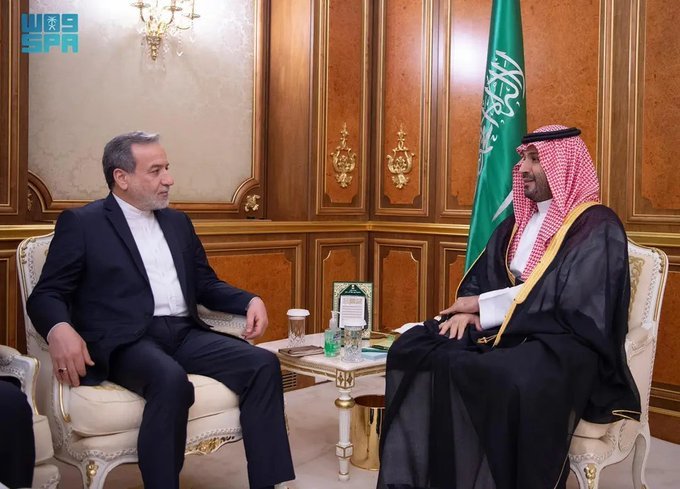

Saudi Arabia will not allow the United States to use KSA airspace to attack Iran. Saudi Crown Prince Mohammed bin Salman gave this assurance to Iranian President Masoud Pezeshkian today.
Saudi Crown Prince said that Riyadh will not allow its airspace or territory to be used for military action against Tehran, according to the state news agency SPA.
The assurance comes as uncertainty continues to cloud the region following renewed warnings from US President Donald Trump about possible military escalation involving Iran. Moreover, the statement signals Saudi Arabia’s intent to prevent further destabilisation in the Gulf.
Riyadh and Tehran stress dialogue over confrontation
During a phone call with Pezeshkian, the crown prince reaffirmed Saudi Arabia’s support for diplomatic efforts that could resolve disputes through dialogue and strengthen regional security and stability. Iranian media reported that Pezeshkian welcomed any initiative, within the framework of international law, that could help prevent war. Consequently, both sides appeared to underline the importance of de-escalation at a time of heightened geopolitical anxiety.
The Saudi position followed a similar declaration from the United Arab Emirates, which has also said it would not permit any military action against Iran using its airspace or territorial waters. Together, these stances reflect growing concern among Gulf states about being drawn into a wider conflict.
US military signals raise concerns across region
Tensions intensified after Trump said last week that an “armada” was heading toward Iran, although he added that he hoped force would not be necessary. Speaking again on Tuesday, he said another US armada was moving toward Iran and expressed hope that Tehran would agree to a deal with Washington. His comments referred to concerns about Iran’s nuclear programme and warnings against violent crackdowns on protesters.
Meanwhile, two US officials said that a US aircraft carrier and accompanying warships had arrived in the Middle East, expanding Washington’s capacity to defend its forces and, if required, conduct military operations. These developments have unsettled regional capitals, which fear the economic and security fallout of conflict.
Iran has faced months of unrest, with human rights groups alleging that security forces killed thousands of people during protests. They have described the crackdown as the most severe since the 1979 revolution. Iranian authorities, however, have blamed the violence on terrorists and foreign-backed rioters, rejecting accusations of widespread abuses.
