

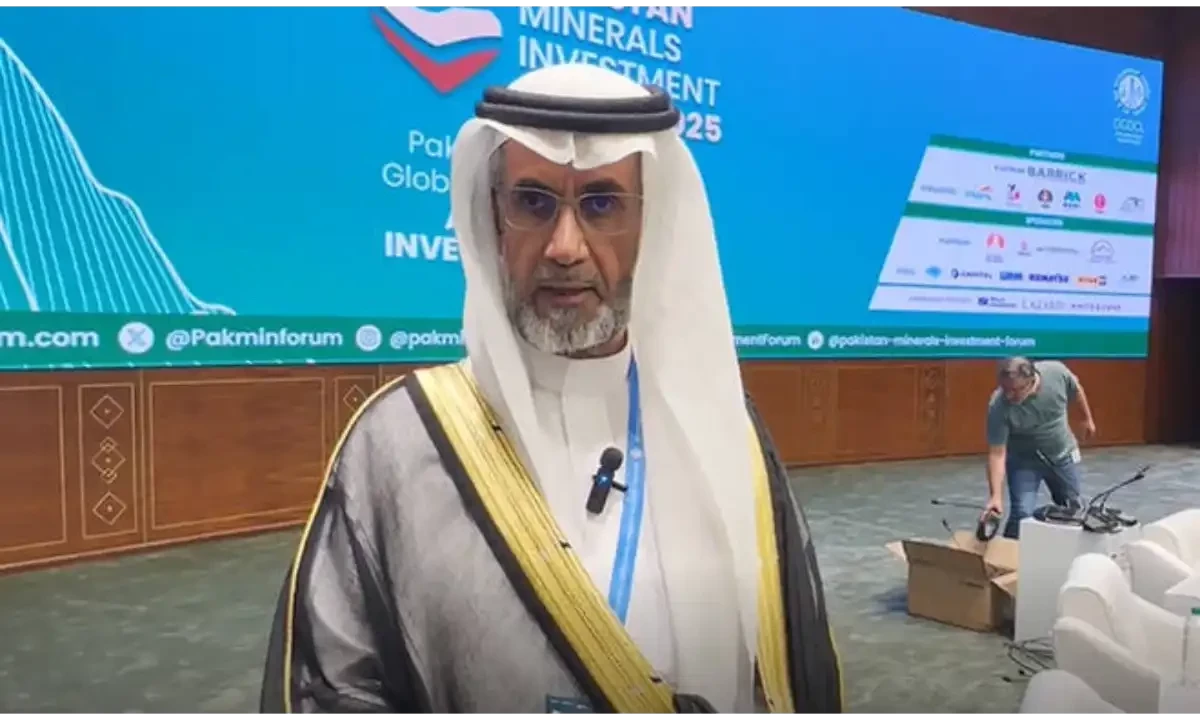

Saudi Arabia and Pakistan have reached an agreement to strengthen their cooperation in geological surveys, with a focus on knowledge exchange and scientific expertise. The collaboration is expected to enhance both nations’ capabilities in exploring and utilizing their natural resources.
Engineer Abdullah Muftar Al-Shamrani, CEO of the Saudi Geological Survey, shared that this partnership will extend beyond simple collaboration, aiming to foster a deeper exchange of knowledge and experience to advance the geological sectors in both countries.
Pakistan, with an estimated $6 trillion in natural resources, is eager to unlock the potential of its vast mineral reserves. Geological surveys play a crucial role in assessing the land and its materials, allowing for better exploration and utilization of resources. Despite having substantial deposits of salt, copper, gold, and coal, Pakistan’s mineral sector currently contributes only 3.2% to its GDP and holds a mere 0.1% share in global mineral exports.
Al-Shamrani, who is in Islamabad for the two-day Minerals Investment Forum, revealed that a meeting took place the day before between the geological survey departments of both countries. He noted, “We have agreed to work together, sharing experiences, observations, and scientific knowledge, which will benefit both nations.”
The collaboration is seen as a significant, mutually beneficial partnership. A Saudi delegation, including government officials and investors, also attended the Minerals Summit, where productive discussions were held with Pakistani companies. Both sides are now exploring additional opportunities for cooperation.
Pakistan is home to vast gold and copper reserves, with the Reko Diq mine in southwestern Balochistan standing out as one of the largest undeveloped copper and gold deposits in the world. With an estimated 5.9 billion tons of raw minerals, the Reko Diq site holds the potential to significantly boost Pakistan’s economy once developed.
