

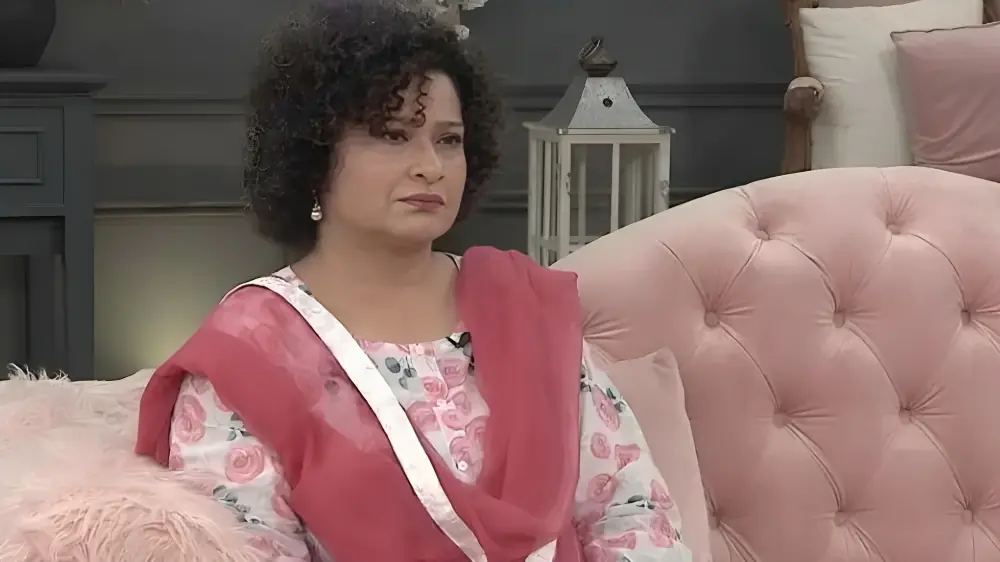

Actor urges emotional readiness and mental well-being before taking on parenthood
Renowned actor Sania Saeed has raised a powerful and urgent concern: many people in Pakistan become parents without being emotionally or mentally prepared for the responsibility. Speaking on Nida Yasir’s morning show, in an episode focused on recent shocking cases of parental violence against children in Karachi, Saeed did not mince words in calling out the country’s lack of awareness around mental health and its impact on parenting.
The discussion followed tragic incidents, including a mother accused of murdering her two children and a father who drowned himself along with his kids — both in separate cases. Also featured on the episode were ASP Nida Junaid from Karachi South and clinical psychologist Dr. Uzma Ali, who emphasized how unaddressed psychological issues can spiral into dangerous outcomes.
Saeed, however, tackled the core issue: many individuals become parents without examining whether they are emotionally stable, mature, or capable of raising a child.
“Most people in our country aren’t equipped for parenting. Not every couple deserves to have a child — not unless they’re ready,” Saeed stated. “Is their relationship healthy? Do they understand each other well enough? Are they emotionally mature enough to handle the responsibility?”
She criticized a harmful cultural narrative that often encourages couples to have children to “fix” a strained marriage.
“We often hear: ‘If a couple isn’t getting along, give them a child — that’ll bring them closer.’ But we’re forcing them into a responsibility they’re not ready to handle,” she said.
Saeed also addressed the stigma around mental health in Pakistan, noting that even educated individuals often dismiss psychological help.
“I’ve heard people say they don’t believe in mental health — that talking to someone can’t help. But if someone can’t manage themselves emotionally, how can they raise a child?”
Dr. Uzma Ali added that emotional intelligence is often learned — or not learned — in the home.
“We all deal with emotions differently, depending on what we see growing up. In some families, unhealthy emotional regulation is the norm — and those patterns get passed on to the next generation.”
Saeed’s message was clear: parenting is not just about physical care — it’s about emotional and psychological nurturing, something impossible to offer if one is battling their own unresolved mental health issues.
“Until we normalise seeking therapy and acknowledge that mental health matters, we will keep seeing these tragedies,” she warned.
The segment marked a rare instance of mainstream Pakistani television openly addressing mental health as a foundational element of parenting — and life. Saeed’s candid remarks served as a wake-up call, pushing for a cultural shift toward self-awareness, emotional maturity, and responsible parenthood.
