

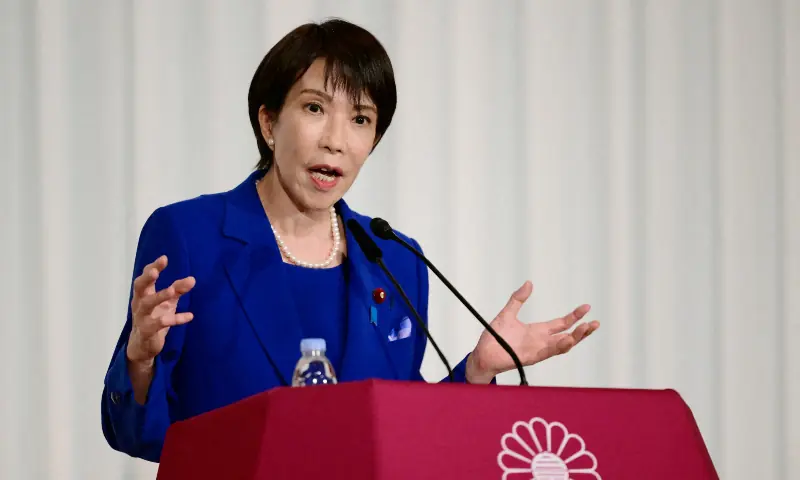

Japan’s ruling Liberal Democratic Party (LDP) has chosen hardline conservative Sanae Takaichi as its new leader, positioning her to become the country’s first female prime minister in a historic yet potentially divisive shift in Japanese politics.
Takaichi, 64, secured victory over moderate contender Shinjiro Koizumi, taking the helm of a party in crisis after a sharp loss of support under outgoing leader Shigeru Ishiba. A parliamentary vote on October 15 is expected to confirm her premiership, given the ruling coalition’s majority.
Takaichi, a staunch advocate of the late Shinzo Abe’s “Abenomics,” has pledged aggressive spending and looser monetary policy to tackle Japan’s economic woes. Her stance, however, has unsettled investors already concerned about the country’s soaring debt.
Analysts suggest her election has lowered the likelihood of the Bank of Japan raising interest rates this month. She has also hinted at renegotiating a trade deal with U.S. President Donald Trump, reinforcing close ties with Washington but potentially unsettling global markets.
Internationally, her nationalist views are likely to cause unease. Regular visits to the controversial Yasukuni shrine, calls to revise Japan’s pacifist constitution, and support for closer security ties with Taiwan are expected to draw sharp responses from China and South Korea. Still, Taiwan welcomed her victory, with President Lai Ching-te hailing her as a “steadfast friend.”
Domestically, Takaichi inherits a divided LDP facing growing challenges from opposition parties, including the populist Sanseito, which has capitalized on discontent over immigration and rising prices.
Echoing their rhetoric, she has vowed tougher measures against tourists and migrants, citing concerns about rule-breaking visitors.
While her victory has been hailed as a breakthrough in Japan’s male-dominated political landscape, critics note her socially conservative agenda appeals more to men than women. Takaichi, inspired by Margaret Thatcher, has pledged to work tirelessly, declaring in her victory speech: “I have thrown away my own work-life balance and I will work, work, work.”
Her leadership signals both a historic milestone for gender representation in Japan and a period of uncertainty as her hardline policies test Japan’s economy, society, and regional relations.
