
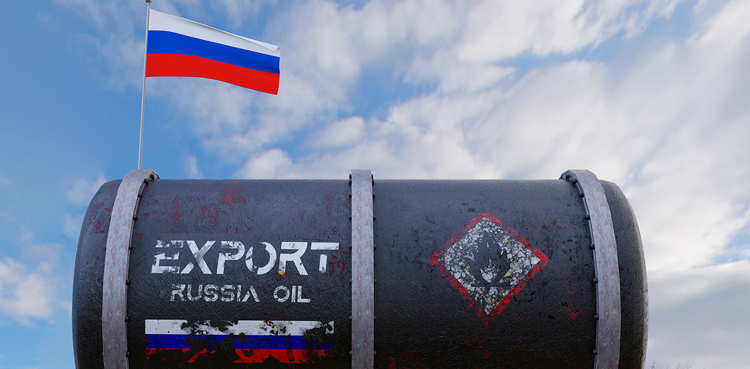

The price of Russia’s Urals crude climbed above $116 per barrel last week, reaching its highest level since 2013, according to a report by Bloomberg.
Data showed that on April 2, shipments from the Baltic Sea port of Primorsk sold for $116.05 per barrel. Meanwhile, cargoes from the Black Sea port of Novorossiysk reached $114.45. As a result, prices have surged roughly 230% since December, when Urals traded below $40 under pressure from U.S. sanctions.
The sharp increase comes as governments scramble to stabilize energy markets בעקבות disruptions caused by the closure of the Strait of Hormuz. This critical route typically carries about one-fifth of global oil supplies. Consequently, supply constraints have pushed prices higher worldwide.
Amid the الأزمة, Russia has strengthened its position as a key alternative supplier, particularly for Asian economies that rely heavily on Middle Eastern imports. At the same time, the United States has issued a temporary sanctions waiver to allow limited sales and delivery of Russian crude and petroleum products.
Furthermore, current prices significantly exceed the $59-per-barrel threshold set under Russia’s fiscal “budget rule,” boosting inflows into its National Wealth Fund. According to analyst Alexei Tretyakov of AriCapital, Russia could generate around 1 trillion rubles ($12.7 billion) in oil and gas revenues in April—nearly double the levels recorded earlier this year.
Earlier estimates by the Financial Times suggested the surge was adding up to $150 million in daily revenue to the Russian state budget.
However, ongoing Ukrainian drone strikes on energy infrastructure are beginning to disrupt export capacity. Therefore, analysts warn that Moscow may struggle to fully capitalize on the price windfall despite favorable market conditions.

