

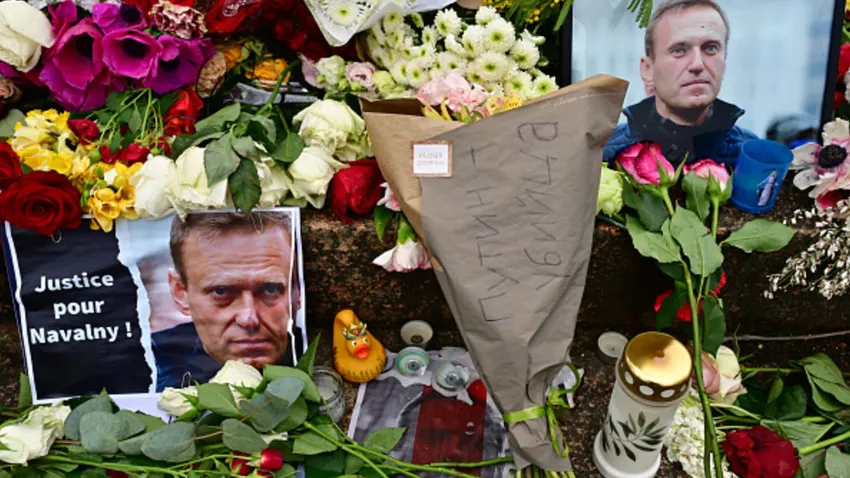

In the desolate expanse of the Russian Far North, a legal battle is set to unfold as Lyudmila Navalnaya, the mother of the late opposition leader Alexei Navalny, seeks justice after being denied access to her son’s body. The unfolding saga, marked by secrecy and restriction, underscores the intensifying tensions between the Kremlin and its critics.
Lyudmila Navalnaya’s journey to the remote IK-3 prison, where her son met his untimely demise, took a grim turn as authorities prevented her from laying eyes on his lifeless form since her arrival on Saturday. The situation escalated on Tuesday when she directly appealed to Russian President Vladimir Putin, imploring him to release her son’s body for a proper farewell.
The upcoming legal proceedings, slated to occur behind closed doors in the Arctic city of Salekhard on March 4, center around a complaint highlighting alleged “illegal acts.” Navalny’s allies, taking to social media, revealed the court’s decision to delve into the matter more than two weeks after the opposition leader’s death, adding an air of mystery to the unfolding narrative.
In a poignant video address, Lyudmila Navalnaya beseeched Putin, emphasizing that the resolution rested solely with the Russian president. Her impassioned plea called for the immediate release of Alexei’s body to facilitate a humane and dignified burial.
The emotional turmoil extended as Navalny’s widow, Yulia Navalnaya, echoed the call for a respectful farewell, emphasizing the significance of allowing him to be “buried with dignity.” Despite the gravity of the situation, Putin has maintained a conspicuous silence on the demise of his principal political adversary, further fueling speculation and apprehension.
As the legal proceedings loom, the international community watches closely, scrutinizing the developments in a case that has not only heightened tensions within Russia but also sparked global concerns regarding human rights and political dissent. The outcome of this legal battle may significantly shape the narrative surrounding Navalny’s tragic end and the broader implications for political opposition in Russia.
