

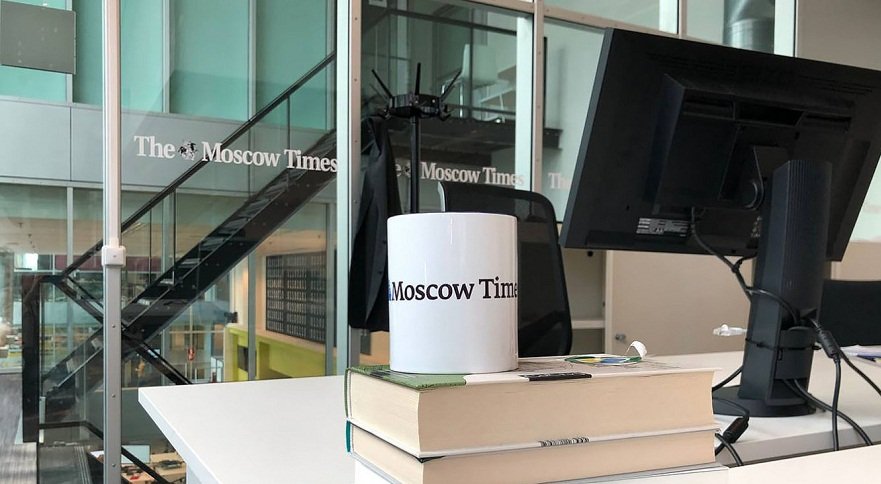

MOSCOW: Russia’s Prosecutor General’s Office has labeled The Moscow Times as “undesirable,” effectively banning anyone from working with or having links to the organization under threat of criminal prosecution.
“The work of the outlet is aimed at discrediting the decisions of the leadership of the Russian Federation in both foreign and domestic policy,” the office stated. It also accused The Moscow Times of publishing “unreliable socially significant information” to discredit the government’s actions regarding the war in Ukraine, according to The Moscow Times.
This designation prohibits The Moscow Times from operating inside Russia, puts staff members at risk of imprisonment, and criminalizes any engagement with the outlet. Russians have even been fined for reposting links and articles from “undesirable organizations,” as reported by the independent Mediazona news website.
Despite these restrictions, The Moscow Times’ founder, Derk Sauer, vowed to continue their work: “Of course, we will continue with our work as usual: independent journalism. That’s a crime in Putin’s Russia,” he said in a post on X (formerly Twitter).
The “undesirable” list aims to crack down on foreign NGOs and bans Russians from collaborating with or donating to them. The law has since been used to target independent news outlets, human rights groups, environmental organizations, and educational institutions.
Editors’ Note
The Moscow Times was founded in 1992 in Russia to deliver independent, high-quality news about the country to English speakers. For over 30 years, we have stayed true to this mission, expanding with a Russian-language service in January 2022.
Russia’s full-scale invasion of Ukraine — and the subsequent passage of repressive wartime censorship laws — forced our newsroom into exile. The labeling of The Moscow Times as “undesirable” is the latest effort to suppress our reporting on the truth in Russia and its war in Ukraine, including blocking our website and naming us a “foreign agent.”
We join a long list of high-quality independent media that have also been named “undesirable,” including Meduza, Dozhd, Novaya Gazeta Europe, The Insider, IStories, Proekt, Doxa, and more.
This designation will make it even more difficult for us to do our jobs, putting reporters and fixers inside Russia at risk of criminal prosecution and making sources even more hesitant to speak to us.
We refuse to give in to this pressure. We refuse to be silenced.
