


Russia added its voice to growing international appeals for India and Pakistan to ease mounting tensions triggered by the recent deadly attack in Pahalgam, as Islamabad intensified its diplomatic outreach to prevent further escalation.
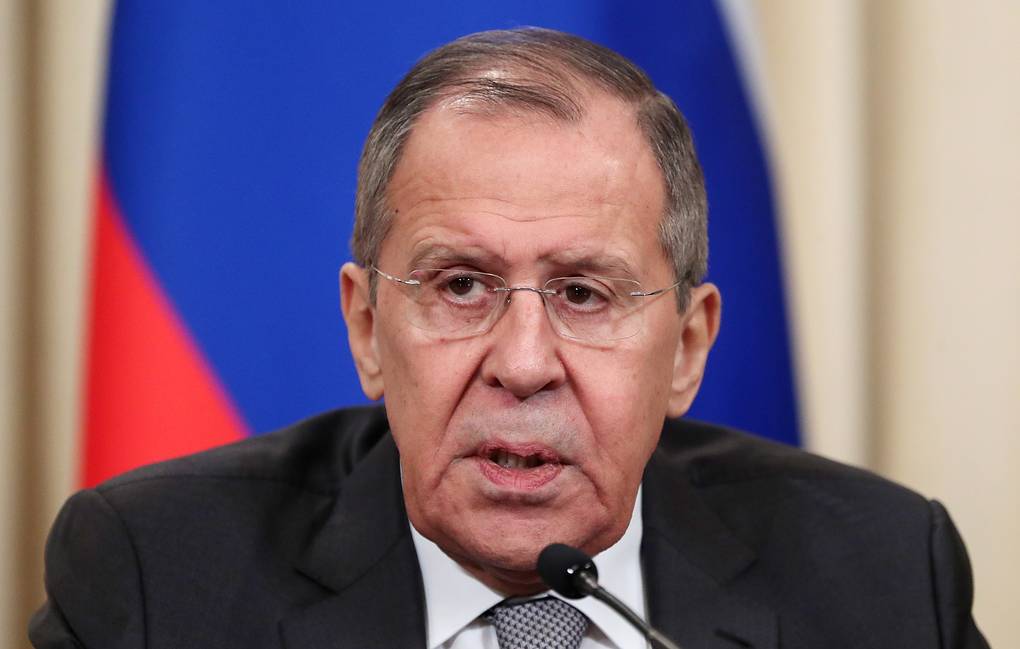
Russian Foreign Minister Sergey Lavrov held a phone call with his Indian counterpart, S. Jaishankar, to address the deteriorating situation. The two ministers discussed both bilateral cooperation and the worsening state of India-Pakistan relations following the terror incident in Pahalgam.
Lavrov urged both nations to resolve their differences through political and diplomatic means, in accordance with the Simla Agreement of 1972 and the Lahore Declaration of 1999. His remarks underscored Moscow’s traditional emphasis on bilateral dialogue over confrontation.
The Russian intervention follows a flurry of international diplomatic activity. EU foreign policy chief Kaja Kallas had earlier reached out to both Indian and Pakistani foreign ministers, urging restraint and renewed dialogue. Similarly, U.S. Vice President JD Vance expressed hope that India’s response to the Pahalgam attack would not spark a broader regional conflict.
Russia’s call for calm comes despite its longstanding strategic partnership with India, rooted in Cold War history. However, Moscow’s neutral stance in this instance signals unease with New Delhi’s growing alignment with Washington, especially as it appears to yield limited strategic dividends in crises like this.
Meanwhile, New Delhi’s diplomatic campaign has faltered in recent days, as it struggles to produce concrete evidence linking Pakistan to the Pahalgam attack. While top U.S. officials, including former President Donald Trump, strongly condemned the violence, they stopped short of assigning blame—marking a shift from previous administrations that readily framed Kashmir as a nuclear flashpoint.
The absence of hard proof has weakened India’s international narrative, turning what was expected to be a unifying global moment into a diplomatic letdown.
