

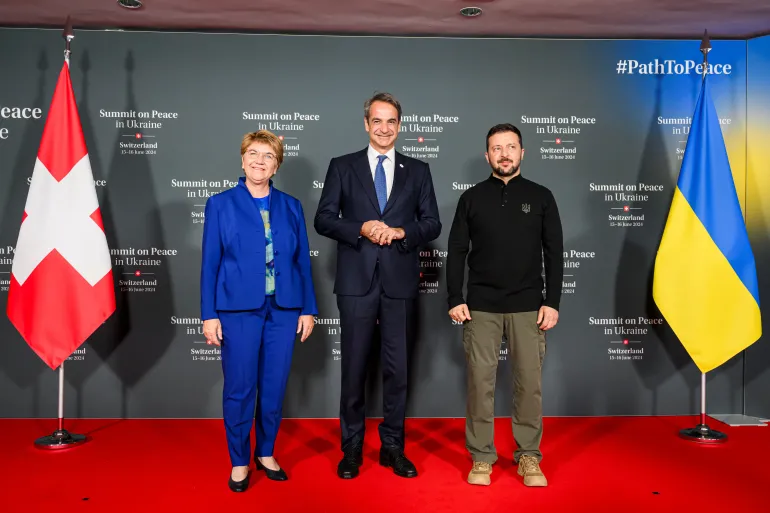

On March 6, a missile fired by Russia exploded near Ukrainian President Volodymyr Zelenskyy during a visit to Odesa, where Greek Prime Minister Kyriakos Mitsotakis was also present. The incident underscored Greece’s significant role and the geopolitical complexities surrounding its support for Ukraine.
Greece has been a steadfast ally of Ukraine, providing essential military aid since the conflict’s onset. Early support included sending two C-130 aircraft loaded with rifles, ammunition, and grenades. The Greek government has since supplied 20,000 artillery shells, Stinger missiles, and BMP-1 armored vehicles. Greece is also preparing to send critical infrastructure components like high-voltage transformers to aid in Ukraine’s war-torn regions.
Strategically, Greece’s port of Alexandroupolis has become a crucial hub for military supplies heading to Ukraine, especially following the closure of Turkey’s Bosphorus Strait to military traffic. This has positioned Greece as a key conduit for arms and equipment.
Despite its support, Greece faces internal and external challenges. Russian authorities have condemned Greece’s aid, describing it as “criminal” and warning of repercussions for ethnic Greeks in Ukraine. Public opinion in Greece has shifted significantly; once favorable towards Russia, support has dwindled to about 30% due to the invasion.
Greece’s commitment extends beyond material aid. The country is considering sending its S-300 air defense system to Ukraine, provided it receives a Patriot missile battery in exchange. Negotiations for a 10-year assistance agreement with Ukraine are also underway.
Greece’s military and diplomatic efforts highlight a delicate balance between international support and national security concerns, reflecting its strategic position in the ongoing conflict.
