
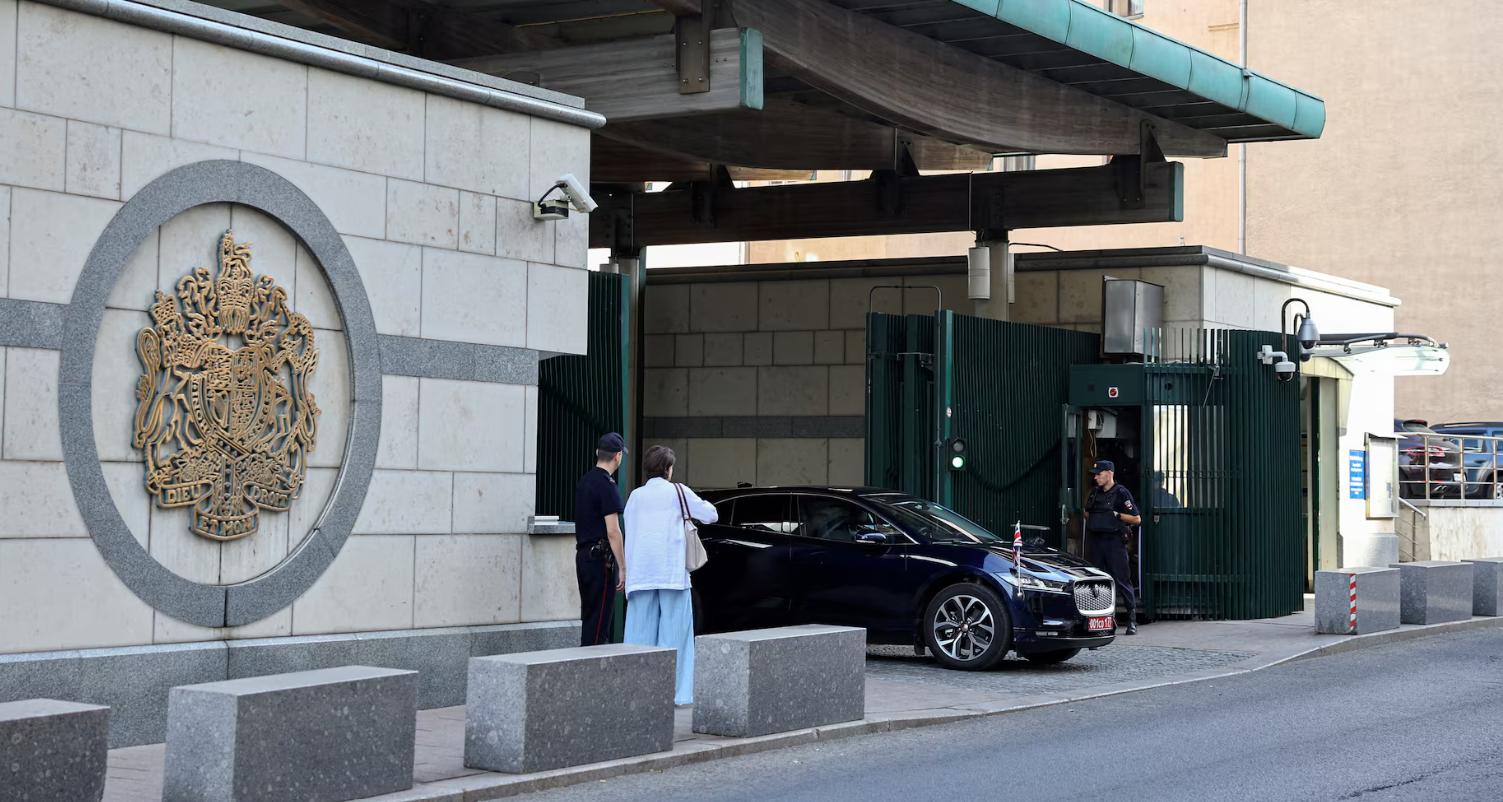

Tensions between the United Kingdom and Russia escalated on Monday after Moscow expelled a British diplomat, accusing him of espionage.
The diplomat, 29-year-old Albertus Gerhardus Janse Van Rensburg, serving as embassy secretary, was accused by Russia’s FSB security service of engaging in “subversive intelligence activities threatening Russia’s security.” Authorities ordered him to leave Russia within two weeks.
However, London swiftly dismissed the allegations. A spokesperson for the British foreign ministry described the charges as “complete nonsense” and “malicious,” stating that Russia was making unfounded claims about their diplomat’s legitimate work.
Over the past decade, the UK and Russia have repeatedly expelled embassy staff, each side citing espionage concerns. Typically, such expulsions are followed by reciprocal actions, reflecting the tense diplomatic history between the two nations.
The Russian foreign ministry summoned Britain’s charge d’affaires following the incident and warned against any retaliatory measures. Nevertheless, the UK maintained that Moscow was conducting an “aggressive and coordinated campaign of harassment” against its diplomatic personnel.
Diplomatic relations between London and Moscow are already strained, particularly over the ongoing conflict in Ukraine. Historically, espionage and intelligence activities have further complicated interactions. For example, in 2006, former FSB officer Alexander Litvinenko was poisoned in London with radioactive polonium. British investigators attributed the killing to the Russian secret service.
Similarly, in 2018, Russian double agent Sergei Skripal was targeted with the nerve agent Novichok in Salisbury, England. The attack resulted in one civilian fatality and prompted one of the largest expulsions of Russian diplomats by Western nations in decades.
Analysts say these repeated incidents highlight a pattern of espionage accusations used to exert diplomatic pressure, while fostering public distrust between the two countries. The latest move against Janse Van Rensburg underscores the fragile nature of UK-Russia relations and the persistent shadow of intelligence conflicts.
Despite Russia’s claims, the UK remains firm, emphasizing that its diplomatic staff operate lawfully and transparently. Authorities reaffirmed that they will continue to monitor the situation while maintaining standard diplomatic protocols.
Experts warn that unless managed carefully, such incidents could further escalate tensions, potentially affecting trade, security cooperation, and international negotiations. Both nations are being urged to exercise restraint and avoid actions that could spiral into a larger diplomatic confrontation.
The expulsion of Janse Van Rensburg serves as the latest reminder of the delicate balance between diplomacy and intelligence, especially in a world where geopolitical tensions are increasingly intertwined with covert operations and public narratives.

