

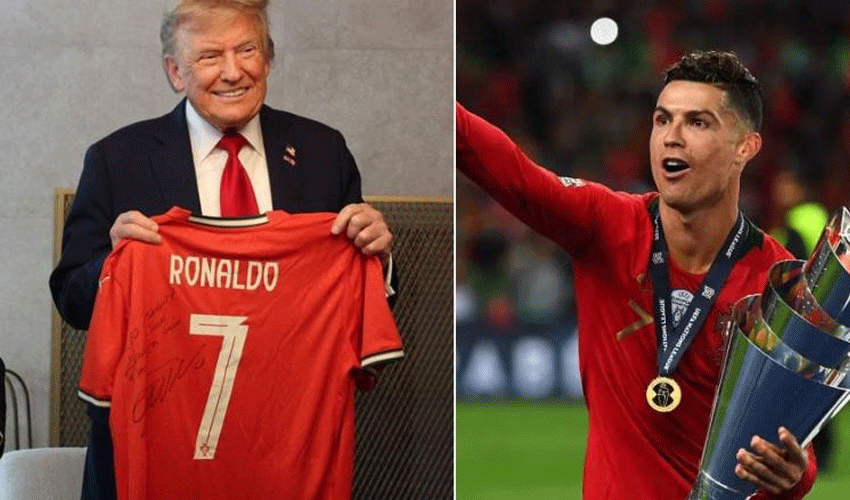

Portuguese football legend Cristiano Ronaldo has gifted a signed Portugal national team jersey to U.S. President Donald Trump, bearing the handwritten message: “Playing for Peace.”
The gesture, rich in symbolism, took place on the sidelines of the G7 Summit in Alberta, where world leaders have gathered to address global challenges, including rising tensions between Iran and Israel.
The shirt was personally delivered to Trump by former Portuguese Prime Minister António Costa, who attended the summit as a special guest. A long-time friend of Ronaldo, Costa reportedly helped coordinate the presentation.
Currently playing for Al Nassr FC in Saudi Arabia, Ronaldo remains one of the most globally recognized athletes. His message, coming at a time of growing global instability, is being widely seen as a call for unity and diplomacy through the universal language of sport.
The phrase “Playing for Peace” — penned above his signature — has been interpreted as a personal appeal from the five-time Ballon d’Or winner to prioritize harmony over conflict.
The meeting between Trump and Costa drew significant media interest, particularly due to the jersey exchange. Trump, who has ramped up international engagements ahead of the U.S. presidential election, was photographed holding the shirt during private conversations at the summit.
This is not Ronaldo’s first foray into symbolic or humanitarian gestures. Over the years, he has donated millions to hospitals, funded disaster relief efforts, and advocated for children in war-affected regions. The footballer is known for using his platform to support causes beyond the pitch.
While his future at Al Nassr remains a topic of speculation — with reported interest from clubs preparing for the FIFA Club World Cup — sources suggest Ronaldo is leaning toward extending his stay in the Middle East.
Although the G7 is not traditionally a stage for sporting diplomacy, Ronaldo’s gesture underscores the growing intersection between sports and international affairs. Diplomats and analysts note that such acts, while symbolic, can powerfully shape public discourse and offer a human touch to complex geopolitical issues.
