

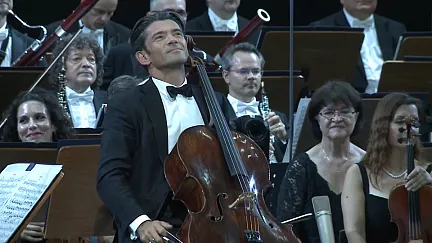

Romania’s George Enescu Festival, one of Europe’s premier classical music events, continues to flourish even amid budgetary constraints. The 27th edition of the state-sponsored biennial festival, named after the country’s most celebrated composer and launched in 1958, concluded on Sunday with a dazzling performance by the Royal Concertgebouw Orchestra.
Despite Romania’s public spending cuts, audiences are growing, reflecting the festival’s evolving scope that blends classical repertoire with contemporary works and Eastern European influences.
This year’s festival attracted over 4,000 world-renowned artists, including legendary pianist Martha Argerich, violinists Anne-Sophie Mutter and Renaud Capuçon, alongside major orchestras such as the London Royal Philharmonic and Rome’s National Academy of Santa Cecilia.
Distinguished conductors like Klaus Mäkelä, Daniel Harding, and Vasily Petrenko also graced the podium. For many, witnessing artists of this caliber in Bucharest has been a once-in-a-lifetime experience, creating unforgettable cultural moments.
With more than 90% of its $17 million budget funded by the Romanian culture ministry, the festival has successfully defended its state backing.
Cristian Măcelaru, Enescu’s artistic director, emphasized that cultural investment not only enriches society but also brings economic value. Despite fiscal austerity, the festival has retained strong political and public support.
Expanding its reach, the Enescu Festival is engaging younger and more diverse audiences by incorporating 21st-century composers and ensembles like the Ukraine Freedom Orchestra.
Innovative venues, such as immersive art museums and Bucharest’s Club Control, reflect the organizers’ commitment to broadening the festival’s appeal beyond traditional concert halls.
As attendance rises, Măcelaru’s vision is to create a festival that offers something for everyone, whether seasoned classical music lovers or newcomers. The growing popularity of the Enescu Festival underscores Romania’s resilience in preserving and expanding its cultural heritage on the global stage.
