

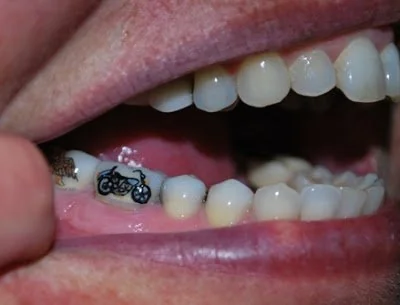

A rising trend among young people in China is the practice of tattooing teeth, sparking debate and concern within the dental community. Unlike conventional tattoos on the skin, which can be erased or fade with time, tooth tattoos are permanent once applied to dental crowns or caps.
According to foreign media reports, tattoos on the body, such as on the hands, waist, or neck, are losing popularity, with younger generations opting instead for more unconventional expressions of identity—this time through their teeth.
These tattoos are not directly etched onto natural teeth but are created on 3D-printed crowns that fit over them. The dental crowns are produced using aerospace-grade materials, making them durable but also difficult to replace once engraved.
The designs range from romantic initials, partners’ names, and lucky numbers to motivational words and personal symbols, reflecting both cultural trends and personal expressions.
The service costs around 2,000 yuan (approximately 280 U.S. dollars) at various dental clinics in China, making it a relatively accessible cosmetic modification for youth eager to stand out.
Despite its growing popularity, dental professionals are voicing serious concerns. A Shanghai-based dentist explained that engraving letters or patterns on crowns weakens their overall strength, making them prone to breakage or damage.
This compromises both the functionality and safety of the crowns, potentially leading to long-term dental issues. Additionally, the permanence of these tattoos means that unlike skin art, they cannot be easily undone, heightening the risk for individuals who later regret their choice.
Experts are advising caution, warning that prioritizing fashion over oral health may carry significant consequences. While tooth tattoos are gaining traction as a form of self-expression, the potential harm to dental integrity raises important questions about whether the trend should be embraced or avoided in the interest of health.
