

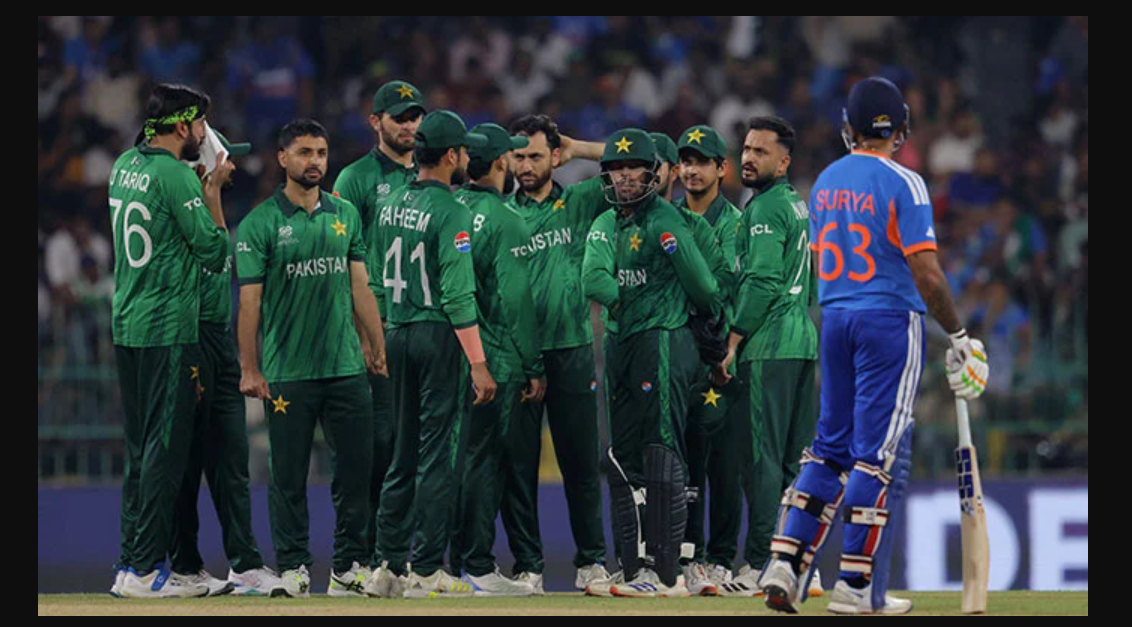

Geopolitical tensions between Pakistan and India are now affecting international cricket, raising concerns about future tournament hosting.
The International Cricket Council (ICC) is reportedly considering relocating the 2029 ICC Champions Trophy and the 2031 ICC Men’s Cricket World Cup from India to Australia. Both tournaments are currently scheduled to be hosted by India, with the World Cup co-hosted by Bangladesh.
This discussion comes amid rising uncertainty following the ICC Men’s T20 World Cup 2026. Pakistan initially announced it would boycott its February 15 group-stage match against India, citing solidarity with Bangladesh. Bangladesh was removed from the tournament after refusing to travel to India due to security concerns.
Following high-level deliberations involving the Pakistan Cricket Board and ICC officials, Pakistan ultimately confirmed participation in the match against India. Analysts suggested this decision averted a potential financial loss estimated at $250 million.
Tensions between the two nations have remained elevated since the May 2025 conflict. The Asia Cup 2024 had already witnessed strained relations, and the post-match protocol during recent T20 World Cup matches reflected continued friction. Indian players, including their captain, refrained from handshakes with Pakistani players.
Cricketing tensions between Pakistan and India predate the May 2025 war. In December 2024, the Pakistan Cricket Board and the Board of Control for Cricket in India implemented a “hybrid model” for ICC events. Under this arrangement, both countries agreed not to play ICC-hosted matches in each other’s territory, instead using neutral venues during the 2024–2027 rights cycle.
Currently, Pakistan and India meet only in multi-nation ICC tournaments. The last bilateral series occurred in 2012–13, during Pakistan’s tour of India. Political tensions have prevented India from touring Pakistan for bilateral cricket for over a decade.
The ICC is now reportedly holding contingency discussions to safeguard future tournaments. Officials aim to identify backup venues in case escalating tensions disrupt scheduled events. Australia is a prime candidate due to its experience hosting high-profile India–Pakistan matches.
In the past, Australia successfully hosted Pakistan–India matches during the 2015 ICC Cricket World Cup and the 2022 ICC Men’s T20 World Cup. The 2015 fixture at the Adelaide Oval drew 41,587 spectators, while the 2022 match at the Melbourne Cricket Ground attracted 90,293 fans. These examples demonstrate Australia’s capacity to host large, high-stakes matches securely.
Pakistan–India cricket relations remain heavily influenced by broader political dynamics. While both countries are nuclear-armed neighbors, cricket serves as a barometer for diplomatic tensions. Future ICC events now require careful planning to avoid cancellations or withdrawals that could undermine tournament credibility.
Analysts note that relocating events to neutral venues like Australia could preserve both fan interest and commercial revenue. The ICC, sponsors, and national boards are reportedly evaluating multiple scenarios, with contingency planning now considered critical.
Pakistan’s initial hesitation during the T20 World Cup 2026 highlights the ongoing challenges in organizing cricket fixtures involving these two nations. Financial implications, fan sentiment, and player safety remain central to decision-making.
Cricket administrators have emphasized that such relocations are temporary measures. They seek to maintain fair competition while managing geopolitical risks. Meanwhile, Australia’s cricket infrastructure and history of hosting major Pakistan–India matches make it a logical alternative.
As tensions continue, the ICC may provide official announcements regarding venue changes for the 2029 Champions Trophy and 2031 World Cup in the coming months. Fans, teams, and sponsors are closely monitoring developments.
Ultimately, the evolving Pakistan–India relationship underscores the broader challenge of balancing sport, diplomacy, and security. Cricket may serve as both a casualty and a potential bridge amid regional tensions.
