

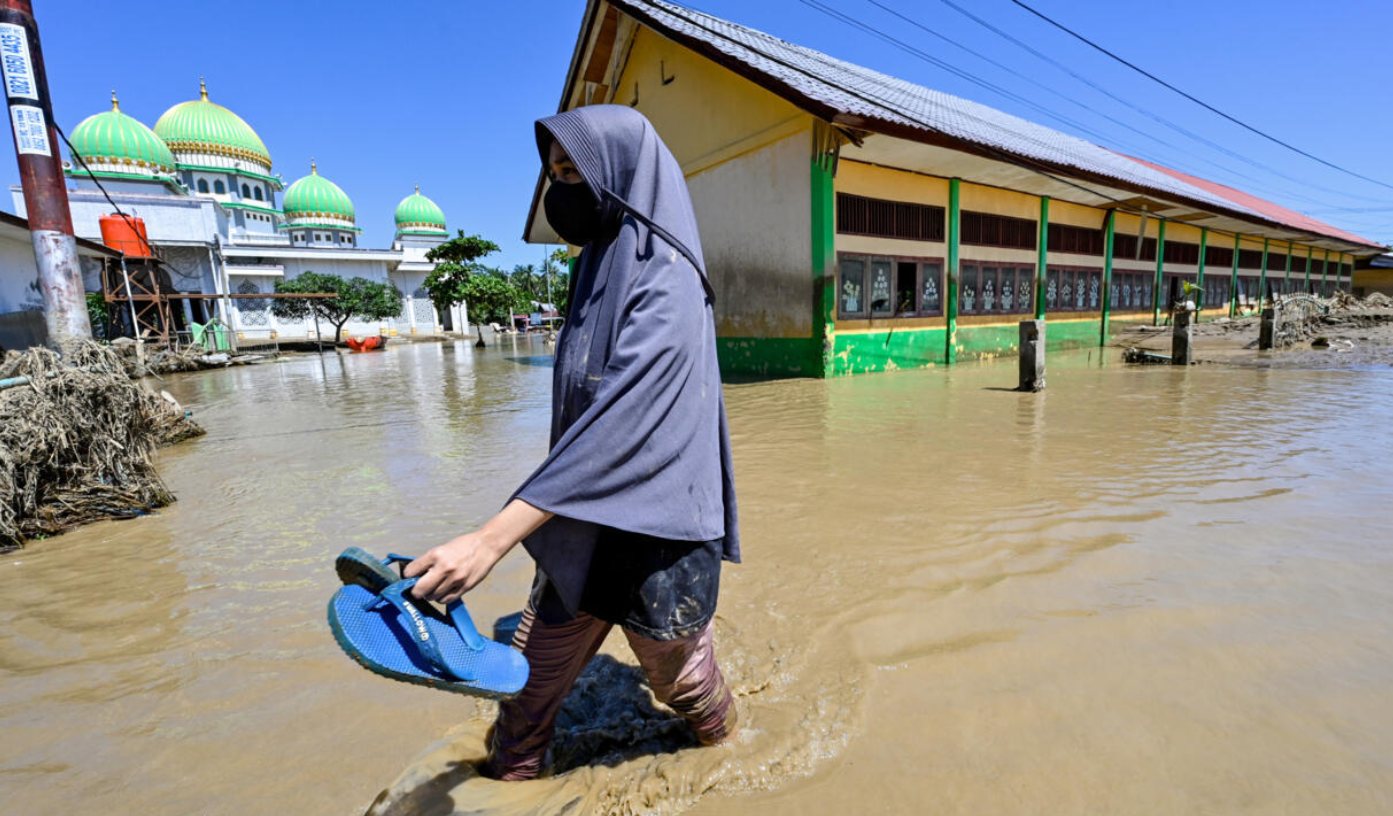

Southeast Asia is facing a worsening humanitarian emergency as deadly floods and landslides devastate large regions across Indonesia, Thailand and Malaysia. The combined death toll has risen to at least 480 people, and authorities fear the number may climb as rescue teams continue searching for hundreds who remain missing.
The scale of destruction is immense, and the fast-changing situation has left communities isolated for days. Although local responders are working around the clock, the challenges are mounting due to difficult terrain, blocked roads and persistent rainfall.
Indonesia Faces its Deadliest Flooding in Years
Indonesia has suffered the worst impact so far. The country has reported 316 deaths, and 289 people are still unaccounted for. Heavy monsoon rains triggered sudden flooding and landslides across Sumatra, which is the hardest-hit region.
Several areas remain cut off. Two cities, Central Tapanuli and Sibolga, have been unreachable since the disaster began. Because access roads collapsed or were buried under landslides, emergency teams have been unable to bring in relief supplies.
Authorities deployed two warships from Jakarta to deliver food, water and medical support. These ships are expected to arrive in Sibolga on Monday. However, rescuers warn that difficult sea conditions may slow operations.
Villages Still Waiting for Help
In Sungai Nyalo, located around 100 kilometres from Padang, floodwaters have mostly receded. Yet, thick mud still covers homes, farms and vehicles. Roads are blocked, and residents say that no official assistance has reached them.
Many villagers have refused to leave their homes despite the harsh conditions. They fear that abandoning their properties will make recovery even harder once the crisis eases.
Across northern Sumatra, the destruction is visible everywhere. Debris blocks most routes, making it hard to transport injured survivors or deliver essentials. In some towns, damaged buildings and uprooted trees reveal the violent power of the floods.
Environmental Losses Add to the Tragedy
The floods did not only affect people. Wildlife has also suffered significant losses. In one example, an endangered Sumatran elephant was found buried in thick mud near damaged structures in Meureudu town.
The incident highlights how severe weather increasingly threatens vulnerable species that are already struggling for survival.
Thailand Faces One of Its Worst Floods in a Decade
Thailand is also battling widespread flooding after intense rainfall across several provinces. The country has confirmed at least 162 deaths, making this one of its deadliest floods in recent years.
Authorities continue to deliver supplies while soldiers and volunteers work to clear debris. Many communities remain submerged, and rescue teams are using boats to reach stranded families. Although conditions have slightly improved in some regions, officials warn that recovery will take time.
Thai Government Announces Cash Support
To support grieving families, the government has announced compensation of up to two million baht for households that lost loved ones. While this measure offers some relief, public criticism of the overall response continues to grow.
Two officials have already been suspended due to alleged negligence during the early stages of the disaster. Many citizens believe that early warnings were delayed, which left residents unprepared for the severity of the flooding.
Malaysia Also Hit by Monsoon Damage
Malaysia reports two deaths after severe flooding in Perlis state. Entire neighbourhoods were inundated, forcing families to flee with limited belongings. The situation in Malaysia remains more stable than in Indonesia or Thailand, yet the fear of rising water levels persists.
Monsoon Season Intensifies Each Year
The annual monsoon season, which usually lasts from June to September, brings heavy rainfall every year. However, experts note that storms have become more intense and more unpredictable.
This year, a tropical storm added extra force to the monsoon system. As a result, Southeast Asia experienced higher rainfall within shorter periods, which overwhelmed drainage systems and caused flash flooding.
Climate Change Deepens the Crisis
Climate change continues to reshape rainfall patterns across the region. Scientists warn that warmer temperatures increase the chance of extreme weather.
As storms become more powerful, the risk of landslides and rapid flooding also rises. Because many communities live near riverbanks or forested hills, they face higher danger when heavy rainfall persists.
Communities Brace for More Rain
Although floodwaters have receded in a few areas, emergency officials say that more rain is possible. Because soil in affected regions is already soaked, even moderate rainfall can trigger new landslides.
Rescuers are urging residents in high-risk zones to stay alert and move to safer locations if conditions worsen.
Humanitarian Needs Grow by the Hour
Thousands of people have been left homeless. Many families are now living in temporary shelters without electricity or clean drinking water. Access to healthcare also remains limited, especially in remote areas.
Aid organisations are trying to provide basic supplies, yet demand is rising rapidly.
Food, drinking water, tents and medical support are urgently needed. Emergency teams say that the next 48 hours will be critical for reaching trapped survivors before conditions deteriorate.
Governments Push for Faster Response
Authorities across Southeast Asia have increased coordination to speed up relief efforts. However, the wide geographic impact of the floods means that resources are stretched thin.
Because several communities remain cut off, air and sea operations are essential. Yet strong winds and turbulent seas complicate every rescue attempt.
Despite these challenges, governments continue to deploy additional personnel and equipment. Officials say that restoring access to isolated towns remains the top priority.
A Region on High Alert
As rescue workers race against time, Southeast Asia remains on high alert. The scale of destruction shows how quickly extreme weather can overwhelm even prepared communities.
Although search efforts continue, many families are still waiting for news about missing loved ones.
The coming days will determine whether authorities can prevent the death toll from rising further. For now, Indonesia, Thailand and Malaysia are united by a shared struggle against a powerful and increasingly unpredictable monsoon season.
