

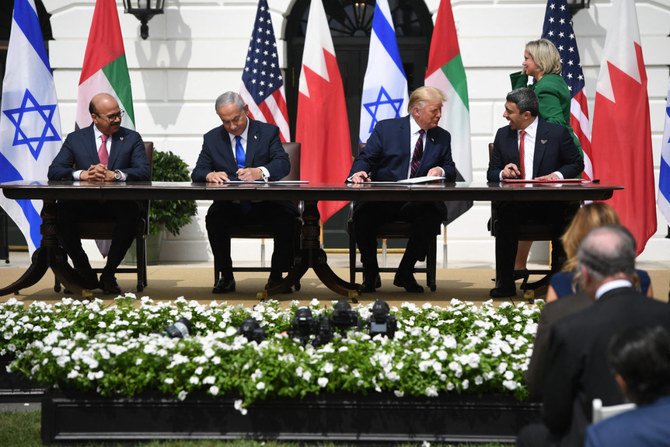

Prominent religious political parties across Pakistan have unequivocally rejected the Abraham Accords, reaffirming their opposition to any recognition of Israel and the proposed two-state solution for Palestine. The stance was made clear during an all-parties conference held in Islamabad, organized by the Milli Yakjehti Council. More than 25 religious scholars and political leaders from various parties attended the event and issued a joint declaration, calling the Accords a betrayal of the Palestinian cause.
Addressing the gathering, Jamaat-e-Islami chief Hafiz Naeem ur Rehman emphasized that Pakistan’s historical position has always supported a single, sovereign Palestinian state with Jerusalem as its capital. “No matter what global diplomatic shifts take place, Pakistan must stand firm on its principled stance. Any steps toward recognizing Israel under the Abraham Accords will be met with resistance and widespread public protests,” he warned.
Participants denounced the normalization of ties with Israel by some Muslim countries, stressing that the Palestinian struggle for liberation cannot be compromised by geopolitical deals.
Demands for Domestic Reforms and Protection of Islamic Values
Beyond foreign policy, the conference addressed a range of national issues. Milli Yakjehti Council President Abul Khair Zubair announced the creation of an action committee to counter what he termed “efforts to undermine Islamic values.” He particularly criticized recent legislative debates on child marriage and family laws, describing them as contrary to Islamic teachings.
The attendees demanded that the government immediately convene an all-parties conference to address the deteriorating security situation in Balochistan and Khyber Pakhtunkhwa. They warned of nationwide protests if what they called “anti-Islamic laws” were not withdrawn in line with the Islamic Ideological Council’s recommendations.
The conference also voiced support for Iran’s right to develop peaceful nuclear technology and welcomed renewed diplomatic efforts to stabilize Pakistan-Afghanistan relations.
In their concluding remarks, the participants urged the government to take immediate steps to ease inflation, reduce fuel and utility prices, and provide emergency relief to those affected by recent floods and torrential rains across the country.
