

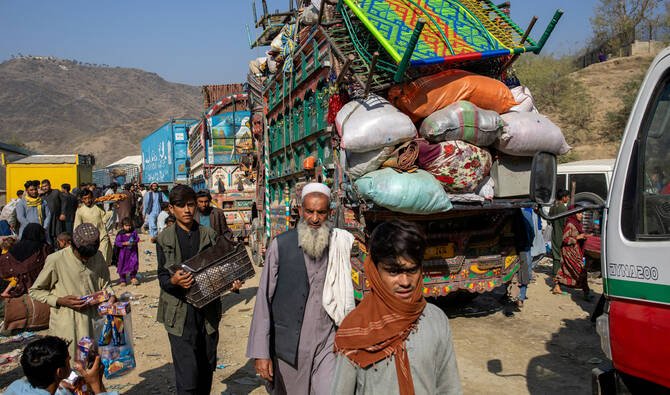

Afghan Refugees
ISLAMABAD: State Minister for Interior Affairs Talal Chaudhry has confirmed that Pakistan has set a firm deadline of June 30 for registered Afghan nationals, including those holding Proof of Registration (PoR) cards, to voluntarily return to Afghanistan.
Chaudhry stated in an interview that after this date, formal deportation procedures will begin for those who remain in the country.
He emphasized that Afghan refugees have long been guests in Pakistan and will be treated with dignity and respect during the repatriation process. This move is part of Pakistan’s broader One Document Policy, which aims to regulate the status of foreign nationals, particularly Afghan refugees.
According to this policy, a total of 857,157 undocumented individuals, mostly Afghan nationals, have already been repatriated since its enforcement. Chaudhry further stated that any future Afghan nationals wishing to return to Pakistan must comply with international norms by obtaining proper visas.
The second phase of the repatriation program concluded on March 31, 2025, and targeted Afghan Citizen Card holders. Now, the focus has shifted to PoR cardholders, who have until the end of June to return to Afghanistan voluntarily.
The United Nations High Commissioner for Refugees (UNHCR) has expressed concern about the potential risks of forced deportations. UNHCR spokesperson Qaisar Khan Afridi highlighted that many of the refugees, including former Afghan government officials, civil society activists, musicians, and educated professionals, could face severe dangers if forced to return to Afghanistan.
Afridi also mentioned that there have been reports of arrests of Afghan refugees in parts of Punjab, including those who are registered. However, Chaudhry categorically denied these allegations, stating that no such incidents had been officially reported and that previous claims of forced deportations were found to be false upon verification.
Chaudhry further assured that Afghan refugees who fail to leave by the deadline will not be immediately deported. Instead, they will first be notified and then moved to refugee holding centers, where they will receive food, shelter, medical assistance, and travel facilities. He stressed that the repatriation process is organized and humane, aiming to avoid any chaos.
Addressing concerns over fraudulent practices, Chaudhry warned of the risks posed by counterfeit Pakistani passports, which have been seized in Gulf countries, Saudi Arabia, and European nations.
In light of this, Pakistan has tightened internal controls to prevent illegal activities. He underscored the importance of abiding by immigration laws, stating that just as Pakistanis are expected to follow immigration rules abroad, Afghan citizens must respect Pakistan’s laws while residing in the country. He concluded by stating that lawlessness would not be tolerated in today’s globalized world.
