

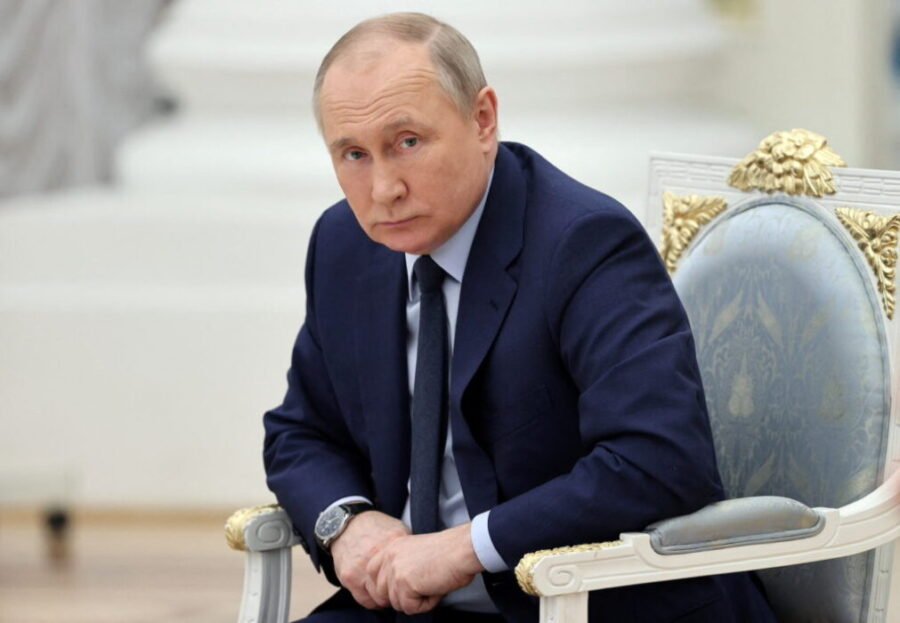

Russian President Vladimir Putin on Thursday affirmed Iran’s right to pursue peaceful nuclear energy, stating that Moscow maintains “a very good relationship with Iran” and is prepared to support Tehran’s nuclear energy interests.
Speaking to senior editors from major news agencies in St. Petersburg, Putin said Russia is willing to assist Iran by taking enriched uranium out of the country and supplying nuclear fuel for its civilian energy program.
When asked about the potential for regime change in Iran, Putin urged caution, stating that any intervention should be evaluated based on whether it truly achieves its intended goals. “Before getting involved in something, one should always assess whether the main objective is being met,” he said.
Meanwhile, European diplomatic efforts continue. A German diplomatic source told Reuters that the foreign ministers of Germany, France, and Britain will meet with Iran’s foreign minister in Geneva on Friday for nuclear talks. The meeting, coordinated with the United States, will be preceded by discussions with the European Union’s top diplomat, Kaja Kallas, at the German consulate in Geneva.
These diplomatic developments unfold as hostilities between Iran and Israel intensify. On Wednesday, Iran launched two missile barrages at Israel in the early morning hours, with explosions heard over Tel Aviv. In response, Israel warned residents in parts of southwestern Tehran to evacuate ahead of planned airstrikes on Iranian military sites.
Iranian media reported that Israeli strikes targeted a university affiliated with Iran’s Islamic Revolutionary Guard Corps (IRGC) in eastern Tehran, as well as the Khojir ballistic missile complex — the same facility previously hit by Israeli airstrikes in October.
In a related statement, Turkish President Recep Tayyip Erdoğan also commented on the unfolding situation, though details of his remarks were not immediately available.
