

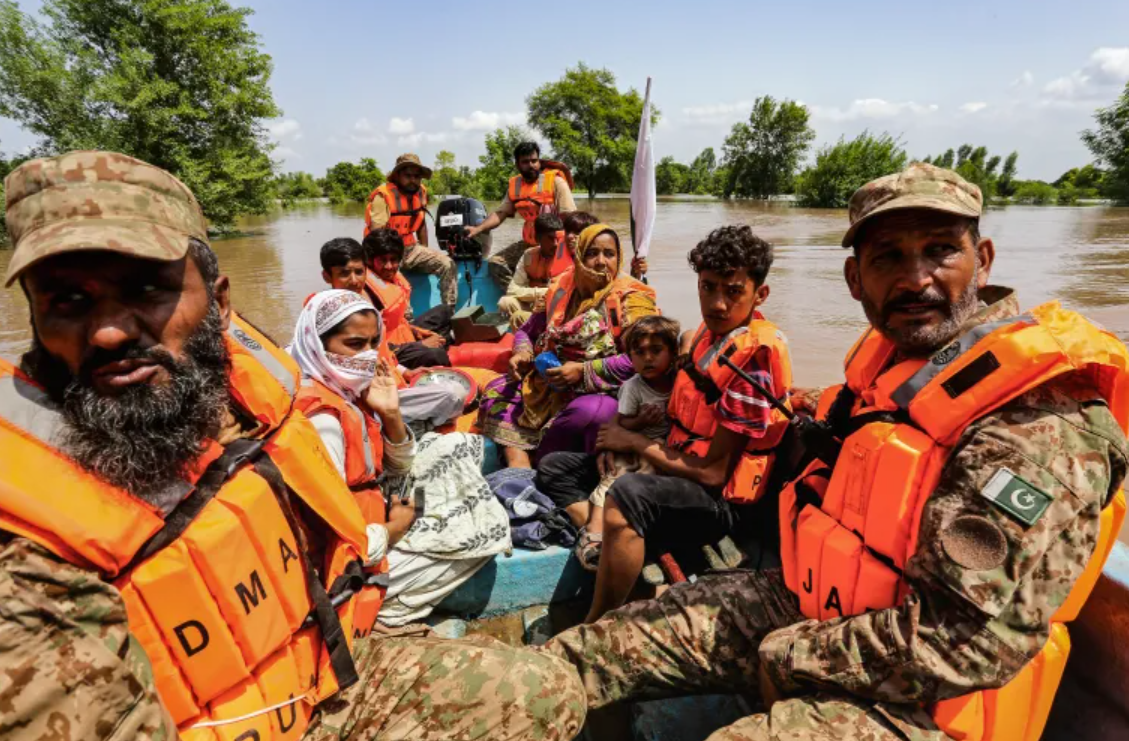

Pakistan’s Punjab province is facing its worst flooding crisis in years, with nearly 300,000 people evacuated within just 48 hours following new flood alerts. Officials confirmed that the total number of displaced individuals has now surpassed 1.3 million since evacuations began last month.
India’s Water Release Triggers Emergency
Authorities revealed that the latest wave of evacuations followed heavy rains and water releases from dams across the border in India. Water flowing into low-lying regions of Punjab caused widespread devastation, forcing thousands to flee their homes in Muzaffargarh, Narowal, and Sialkot districts.
Floodwaters have submerged dozens of villages, prompting emergency efforts to redirect overflowing rivers onto farmlands in an attempt to protect major cities.
Rescue Operations Intensify
Rescue teams, supported by the military, are conducting one of the largest operations in Punjab’s history. Boats are ferrying stranded families and their livestock from inundated villages. Additionally, drones are being used to locate survivors trapped on rooftops, highlighting the scale of the disaster.
More than 3.3 million people across 33,000 villages have been affected so far. Relief authorities stated that those who lost homes and crops would be compensated, though the scale of damage is still being assessed.
Conditions in Relief Camps
According to disaster management officials, about 40,000 displaced people are currently staying in relief camps, where food, water, and essential items are being supplied. However, many survivors expressed dissatisfaction, citing a lack of facilities, clean drinking water, and delays in food delivery.
Displaced residents described the camps as overcrowded and unfit for long-term living. Heat, humidity, and frequent power outages have worsened the situation, raising fears of disease outbreaks.
Some families have chosen to remain close to their damaged homes instead of moving into the camps, citing inadequate support.
Government Response
Punjab Chief Minister Maryam Nawaz Sharif visited flood-affected districts, including Muzaffargarh, and met displaced families. She assured them of government support and pledged assistance for those who lost property and crops.
Despite these assurances, complaints from flood survivors continue, with many urging authorities to speed up the distribution of aid.
Cross-Border Impact
The flooding has not been confined to Pakistan. In India’s Punjab state, landslides and floods have killed at least 30 people while nearly 20,000 residents have been evacuated since early August. The disaster has once again highlighted the vulnerability of border regions to extreme weather events.
Historical Context
These floods are being described as the worst since 2022, when climate-induced flooding killed nearly 1,700 people in Pakistan. Experts warn that changing climate patterns are intensifying natural disasters, leaving millions in South Asia at heightened risk.
The Punjab floods have already displaced more than a million people, and with continued rains and rising river levels, the crisis is far from over. Relief operations are ongoing, but the combination of poor camp facilities, extreme heat, and food shortages has left survivors struggling.
As Pakistan braces for more water inflows from India, the situation underscores the urgent need for long-term climate adaptation and stronger cross-border water management strategies.
