

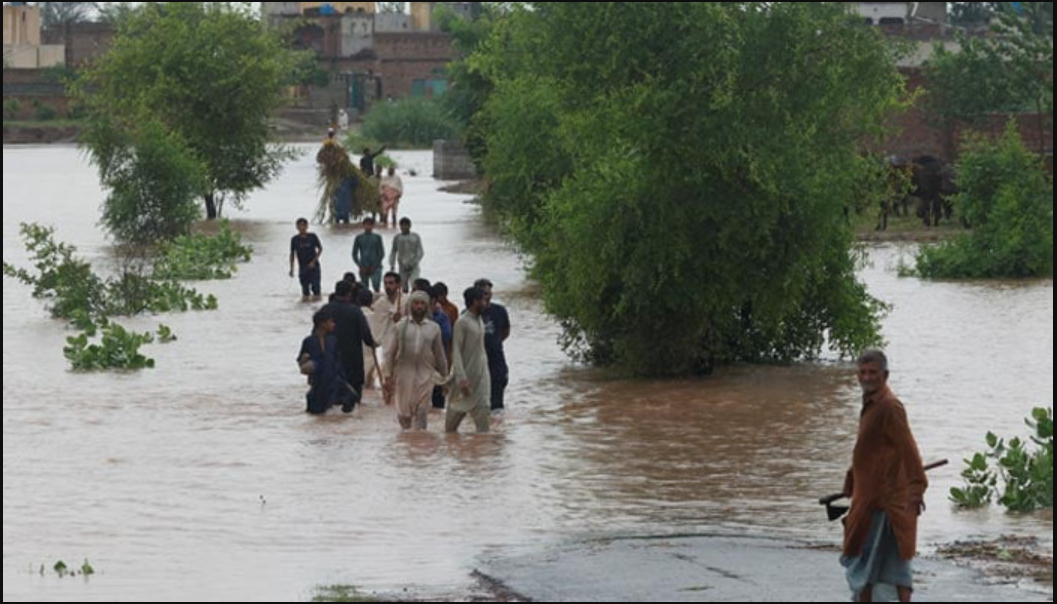

Severe monsoon rains have caused widespread flooding in Punjab, claiming at least 33 lives and affecting over 2 million residents. The Sutlej, Ravi, and Chenab rivers are now at “super flood” levels, prompting one of the largest rescue and relief operations in the province’s history.
Flood Situation in Punjab
Provincial Disaster Management Authority (PDMA) Director General Irfan Ali Kathia confirmed that thousands of villages are submerged. “Currently, the situation is very precarious,” he said. “All three major rivers are receiving high flows, and rescue operations are ongoing across the province.”
The PDMA reported that 2,200 villages have been inundated, and approximately 750,000 people have been evacuated to safer locations. Water levels at the Trimmu Barrage surged to 361,633 cusecs, marking a rise of over 100,000 cusecs in just one day. Officials are also relocating nearly 500,000 livestock to protect them from the floods.
Relief Efforts Underway
Authorities have set up relief camps to provide food, shelter, and medical services to affected communities. Monsoon rains are complicating drainage efforts and causing urban flooding in multiple cities. PDMA officials are working closely with district and tehsil administrations to coordinate rescue missions, ensuring that human lives remain the top priority.
Punjab Senior Minister Marriyum Aurangzeb highlighted the scale of the crisis, describing it as “unprecedented,” with all three rivers simultaneously in super flood stages. At Ravi Bridge, the water flow has reached approximately 500,000 cusecs. Similarly, high levels are being recorded at Khanki, Qadirabad, and Ganda Singh Wala on the Sutlej.
Over 400 veterinary camps have been established to care for displaced animals, providing fodder, shelter, and essential medical attention. Authorities are coordinating round-the-clock relief operations to mitigate the impact on both human and animal populations.
Broader Impact and Concerns
Since late June, floods across Pakistan have claimed more than 840 lives and caused extensive damage to infrastructure and property. In Punjab alone, the ongoing flooding is disrupting transportation, supply chains, and local economies.
Concerns are also rising regarding the Indus Waters Treaty, with allegations that India has not provided timely flood warnings, adding to the challenges faced by Pakistan in managing river flows.
Officials emphasize that the current response prioritizes human safety, livestock protection, and maintaining essential services. Citizens in flood-hit areas are urged to follow evacuation orders and cooperate with rescue teams.
Moving Forward
Authorities continue to monitor river levels and weather conditions closely. Relief operations are expected to continue until water levels subside and affected communities can safely return home. Coordination among provincial departments, rescue teams, and local volunteers remains critical to minimizing further loss and damage.
The Punjab floods of 2025 are a stark reminder of the vulnerability of riverine communities during extreme monsoon events, highlighting the need for improved flood management and preparedness.
