

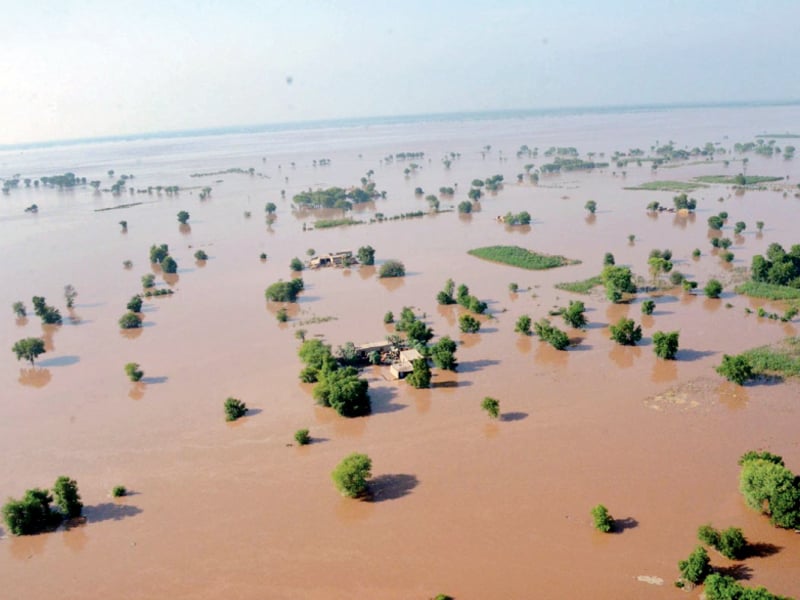

As monsoon rains threaten to intensify across the region, the Punjab government has placed the province on high alert, evacuating over 19,000 people from vulnerable areas along the Sutlej River. On Saturday, the river swelled to a dangerous high flood level of 129,866 cusecs at Ganda Singh Wala, prompting urgent action by the Provincial Disaster Management Authority (PDMA). The flood threat comes just a day before a new monsoon spell, forecast to hit from August 24 to 27, is expected to bring further heavy rains.
According to the Board of Revenue’s hydrological report, the high flood situation at Ganda Singh Wala is likely to persist for at least 48 more hours. District administrations across central and southern Punjab, especially in Kasur, Okara, Pakpattan, Bahawalnagar, and Vehari, have ramped up evacuation efforts. PDMA officials confirmed that 19,947 people have already been moved from at-risk areas near the Sutlej, Ravi, Indus, Chenab, and Jhelum rivers.
Khawaja Salman Rafique, Chairman of the Cabinet Committee on Disaster Management, emphasized the use of all available resources to protect human lives. Relief camps have been established with essential facilities including medicines, food, and clean drinking water. Public announcements are being made through mosques and local networks to alert residents and guide them to safety.
Situation Along Major Rivers Remains Fluid Amid Monsoon Threat
While the Sutlej remains the epicenter of flood concerns, river levels elsewhere present a mixed picture. The Indus River is rising at Tarbela and Kalabagh, while the Chenab and Ravi are reported to be stable. Hill torrents in Dera Ghazi Khan are under close observation but have remained within normal bounds so far.
In Multan, evacuation efforts have begun in Jalalpur Pirwala and surrounding areas. Deputy Commissioner Waseem Hamid Sindhu reassured that saving lives and protecting property remain top priorities. Punjab Relief Commissioner Nabil Javaid added that rescue teams have already been deployed in vulnerable areas and are ready to respond rapidly to any emergencies during the upcoming monsoon spell.
Gilgit-Baltistan Faces Flood Fallout, Emergency Response Underway
While Punjab braces for another wave of rain and flooding, Gilgit-Baltistan (GB) is already struggling with the aftermath of glacial floods. A glacial lake outburst flood (GLOF) in Talidas village has displaced over 3,000 people, destroying homes, roads, and infrastructure. According to the Human Rights Commission of Pakistan’s GB coordinator Israruddin Israr, this is the second-largest internal displacement in the region since the 2010 Attabad disaster.
The region’s early warning systems failed to alert residents in time. However, a local shepherd’s timely warning helped avert further loss of life, prompting the GB chief minister to announce a cash reward and honour the shepherd at a special ceremony. An alternative settlement is planned for the displaced families, and the federal government will be approached for support. Meanwhile, criticism has emerged regarding the UNDP’s Rs10 billion GLOF-II project, which reportedly failed to deliver timely warnings, prompting calls for an investigation.
