

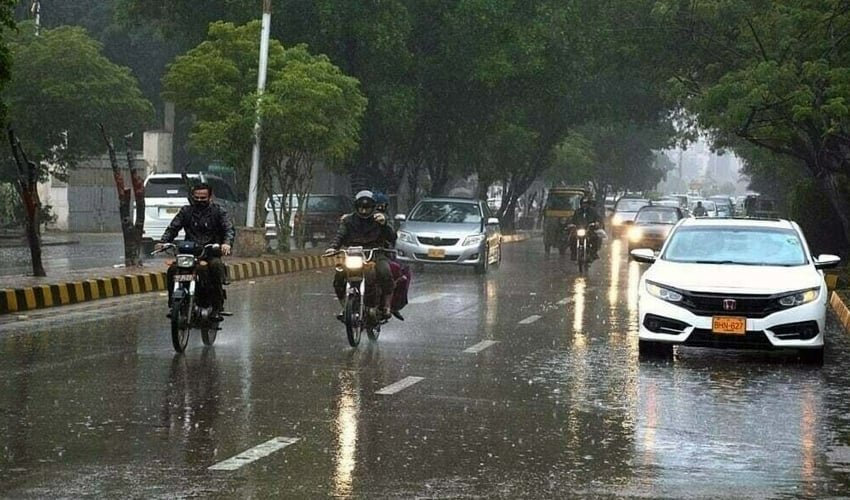

The ongoing monsoon activity across Pakistan has taken a new turn as the fifth spell, originally forecasted to end by July 31, has been extended due to sustained rainfall and active weather systems, according to the Meteorological Department. The extension comes amid continuous showers being experienced in several regions, prompting authorities to issue updated forecasts and warnings.
Meteorology Deputy Director Atif Irshad, explained that the prolonged spell is the result of dynamic weather systems interacting with prevailing atmospheric moisture.
“There has been significant progress in the overall weather pattern, which has led to the extension of the fifth spell,” he stated. This interaction is causing persistent rainfall across various parts of the country, particularly in Punjab and the upper regions.
“There has been significant progress in the overall weather pattern, which has led to the extension of the fifth spell,” he stated. This interaction is causing persistent rainfall across various parts of the country, particularly in Punjab and the upper regions.
Adding to the ongoing wet conditions, the Meteorological Department has now predicted the arrival of a sixth monsoon spell beginning on August 5, which is expected to continue until August 9. This new round of rain is likely to bring moderate to heavy showers across Punjab, Khyber Pakhtunkhwa, Sindh, and Balochistan. Cities such as Lahore and surrounding upper areas are likely to experience scattered rainfall during this period.
In the past 24 hours alone, several cities including Layyah, Bahawalnagar, Bahawalpur, Narowal, Bhakkar, Kasur, and Sialkot have received measurable rainfall. These showers have contributed to a noticeable drop in temperatures, bringing temporary relief and pleasant weather conditions for residents.
Meanwhile, the flow of rivers continues to play a crucial role in sustaining the ongoing monsoon systems. According to meteorological officials, rainfall in upper catchment areas has increased river water levels, which helps reinforce the moisture-driven systems currently impacting the region.
A low-level flood was earlier reported at Marala on the Chenab River, and similar conditions are being observed at Tarbela, Kalabagh, Chashma, and Taunsa along the Indus River. However, river flows in the Jhelum, Ravi, and Sutlej remain within normal limits.
A spokesperson for the Provincial Disaster Management Authority (PDMA) noted that while the main rivers are showing increased flow levels in some areas, the overall water levels in tributaries and smaller streams remain stable. The situation at key water reservoirs also reflects ongoing accumulation: Tarbela Dam is now 88% full, while Mangla Dam has reached 58% capacity.
Authorities are closely monitoring the developments, with the Met Office issuing advisories for potential urban flooding and waterlogging in low-lying areas, particularly if heavy rainfall continues during the upcoming sixth spell. Citizens are advised to stay updated on weather alerts and take necessary precautions, especially in flood-prone zones.
The extended monsoon season, while bringing much-needed water to agricultural regions, is also posing challenges in terms of flood management, infrastructure strain, and rural accessibility. As Pakistan braces for another wave of rainfall, government agencies and relief organizations remain on alert to ensure timely response and mitigation efforts.
